A touch of French style in the desert.
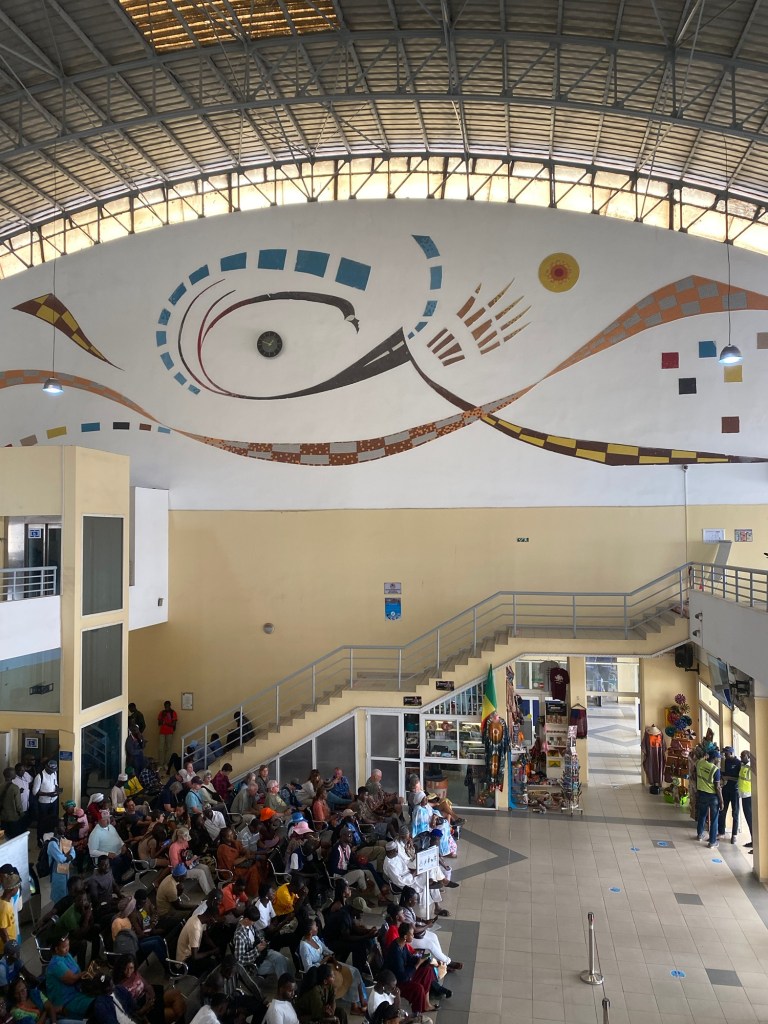
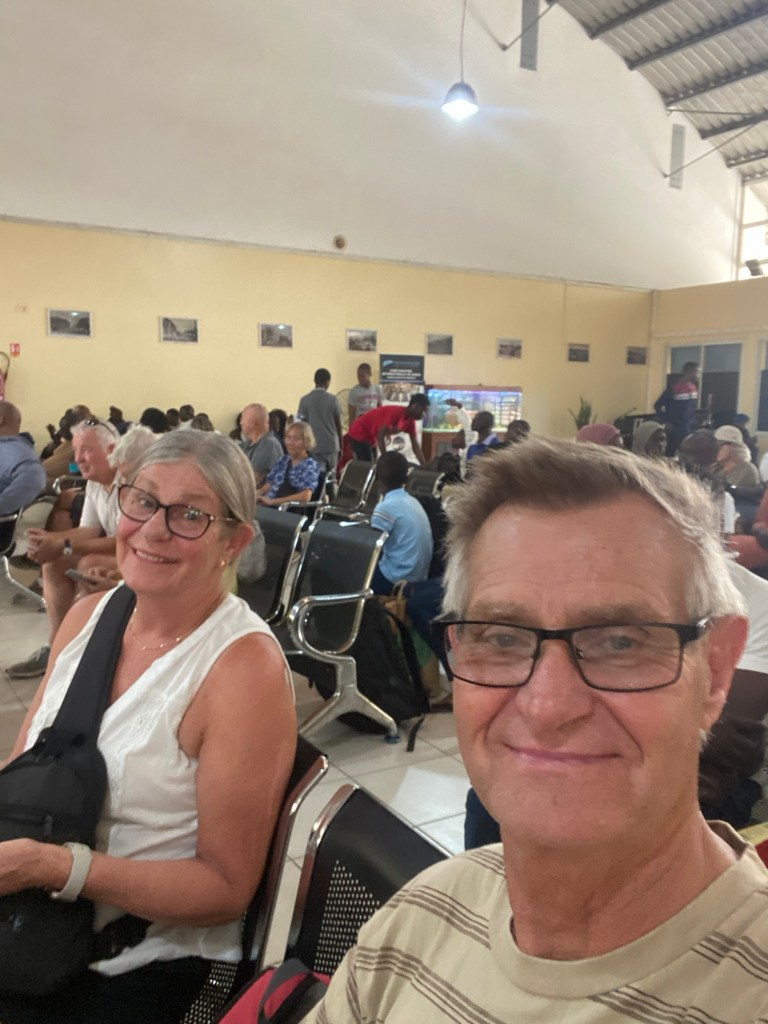
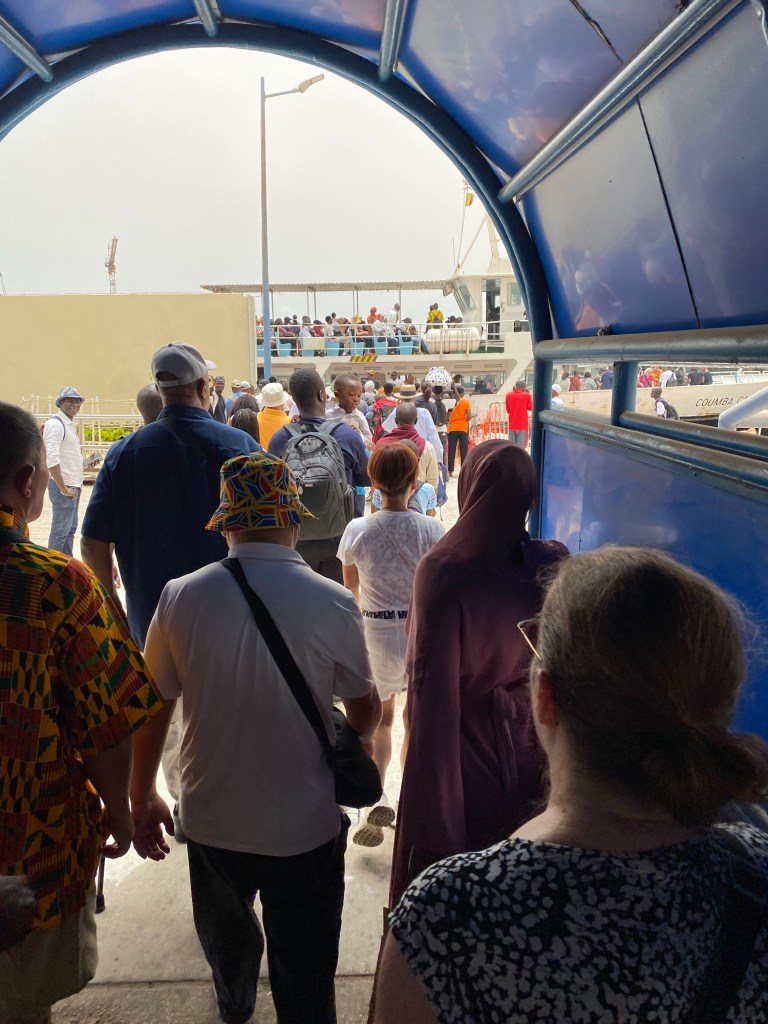
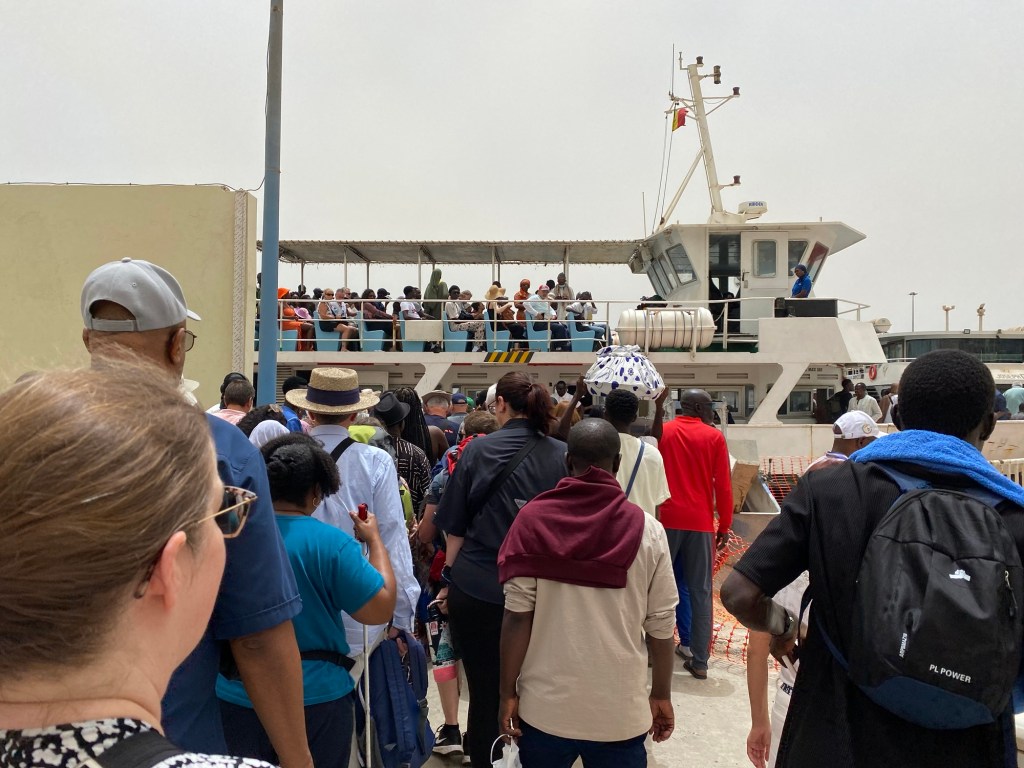
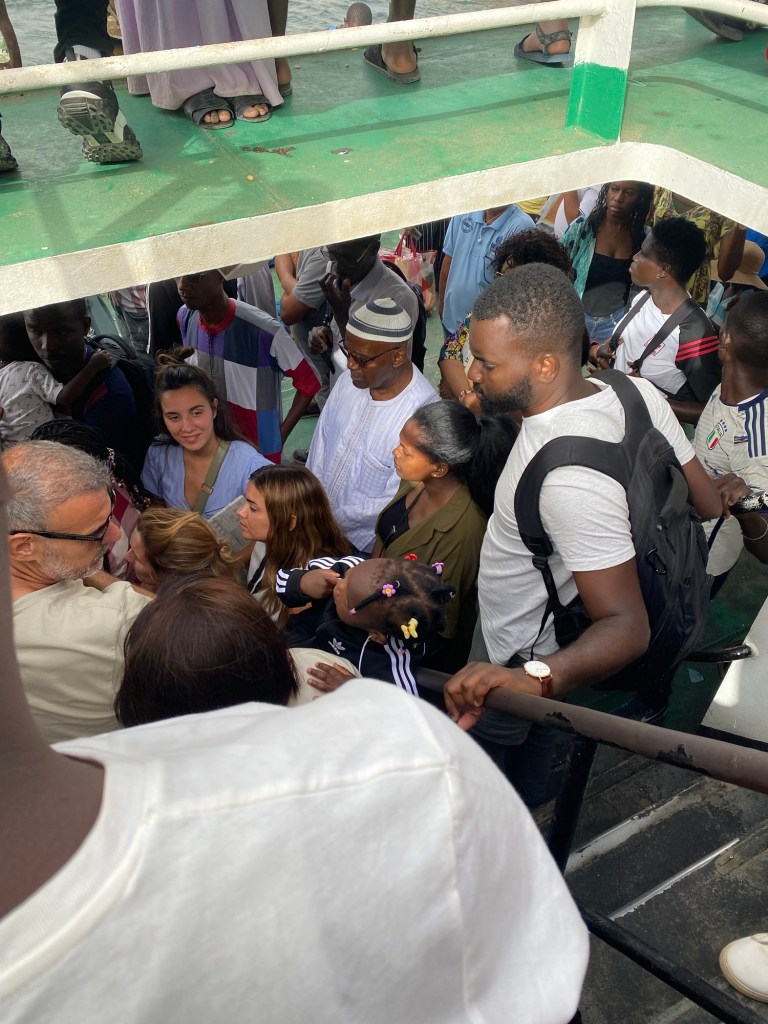
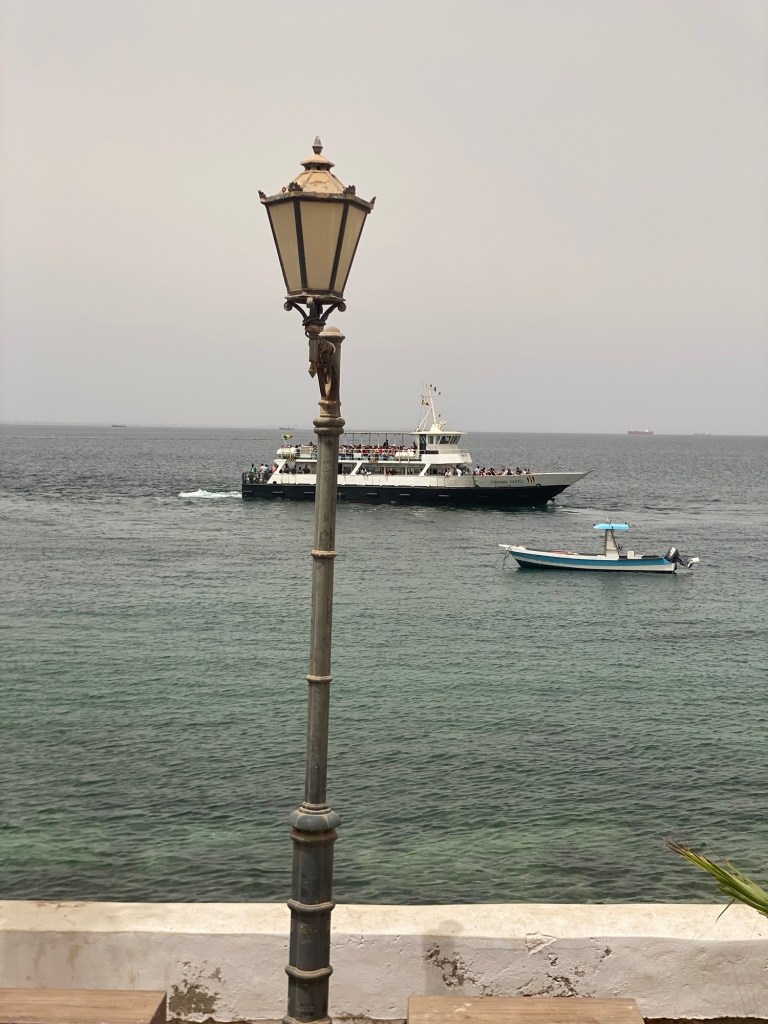
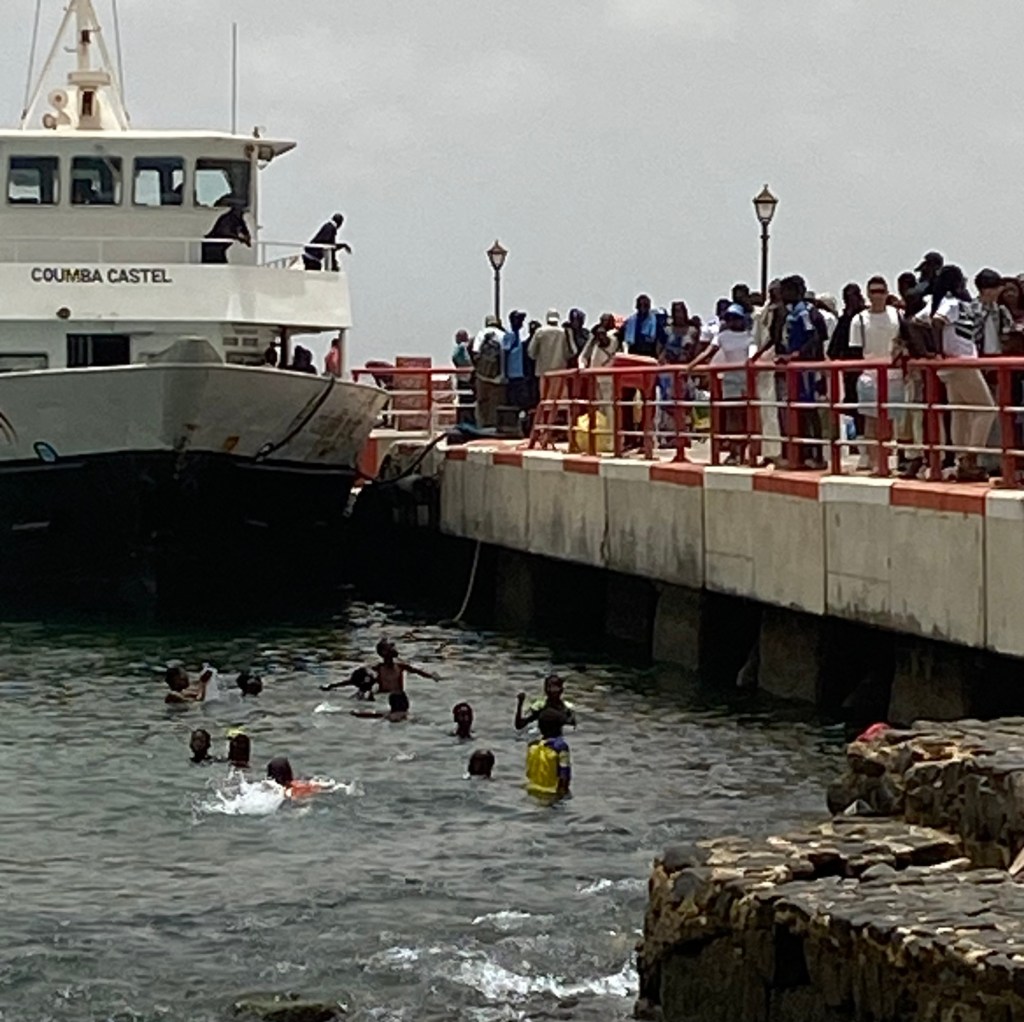
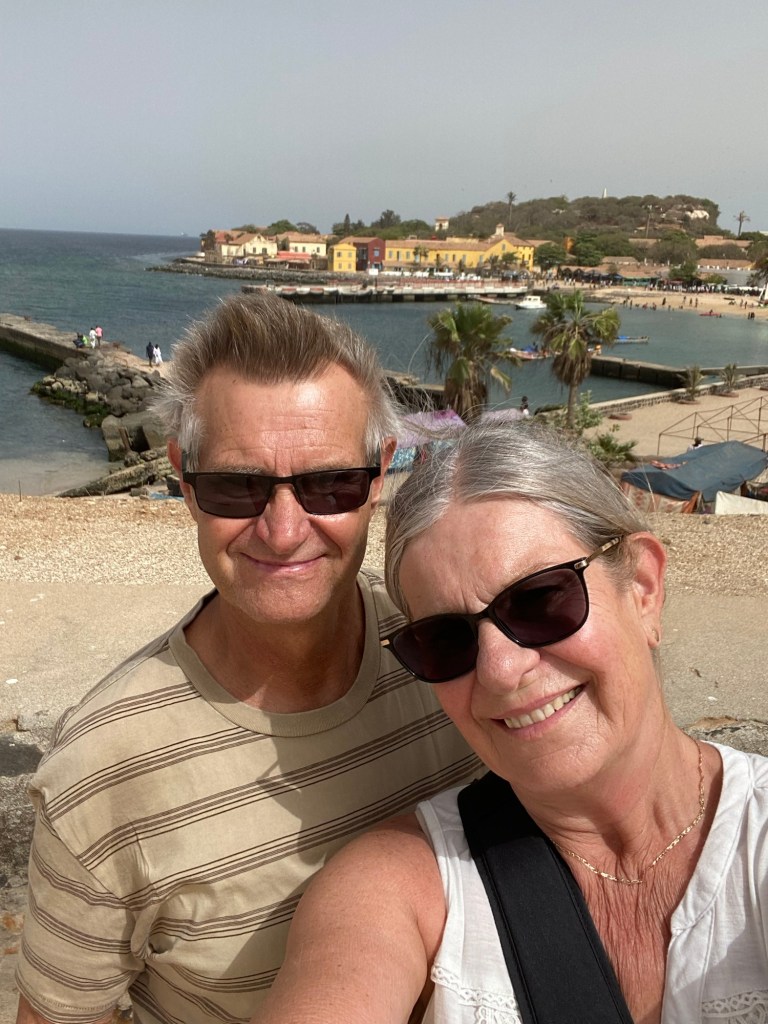
The first stop on our Dakar shore excursion was catching a ferry to the historic Gorée Island. Historic because it was the main centre for the slave trade on the West African coast. The slaves from here were sent to the Americas from the 15th to the 19th century until 1848. The 11am ferry had just left. This meant waiting around until 12:30! It felt as though the scene was being set as we were herded into a big hall on the ferry pier. Eventually we were loaded onto the ferry similar to the live cattle export trade but our journey had begun!Personal space was at a premium.
Gorée Island is a UNESCO world heritage site. It is known for its role in the transatlantic slave trade. The tourist attraction is a stark reminder of this dark chapter in history and serves as a reminder of human exploitation and as a sanctuary for reconciliation.
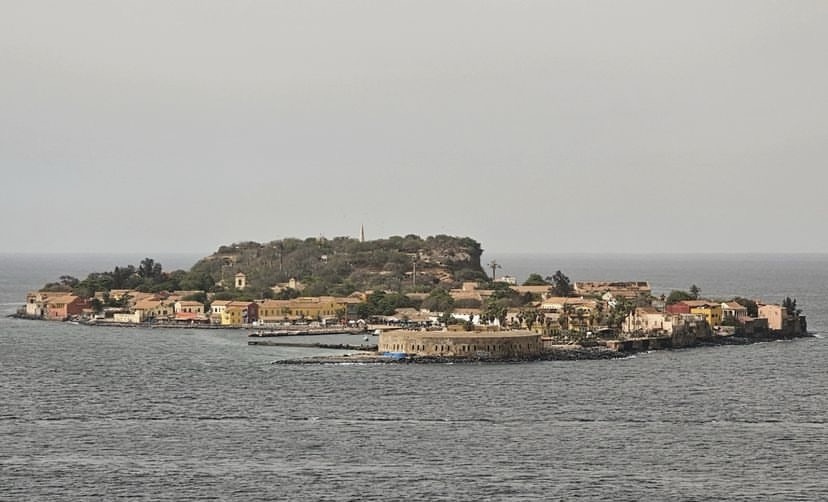
As we approached the island, it surprised me how colourful the buildings were. There were rustic shades of pinks, blues, greens, yellows and terracotta. Somehow I was expecting shades of grey.
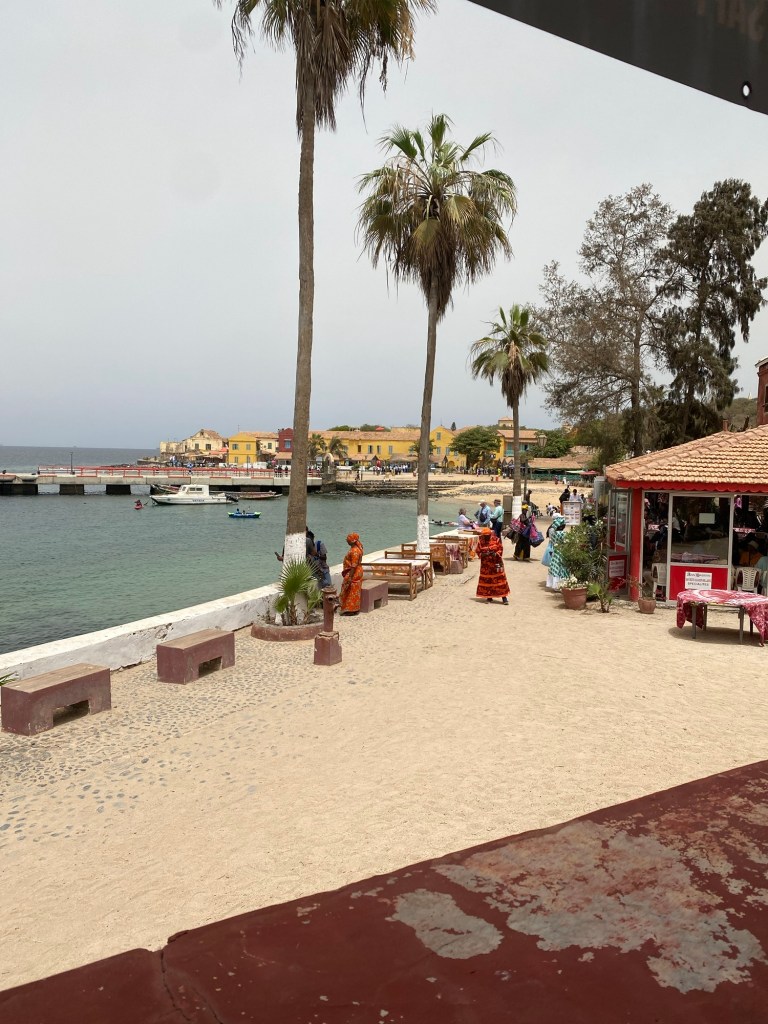
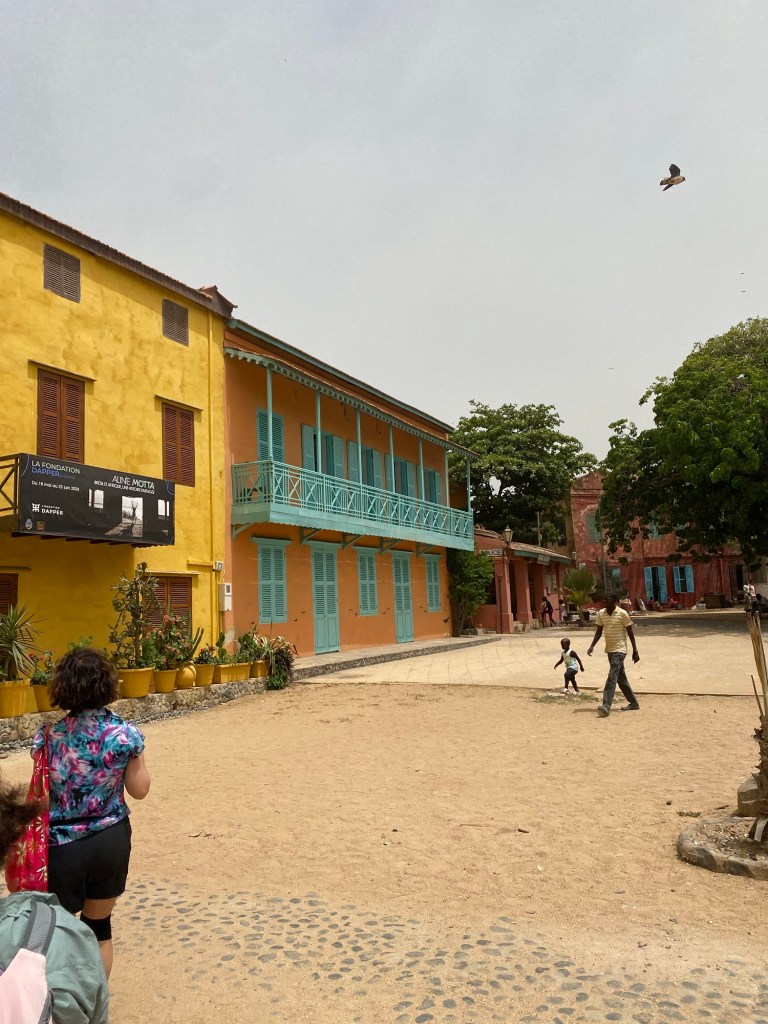
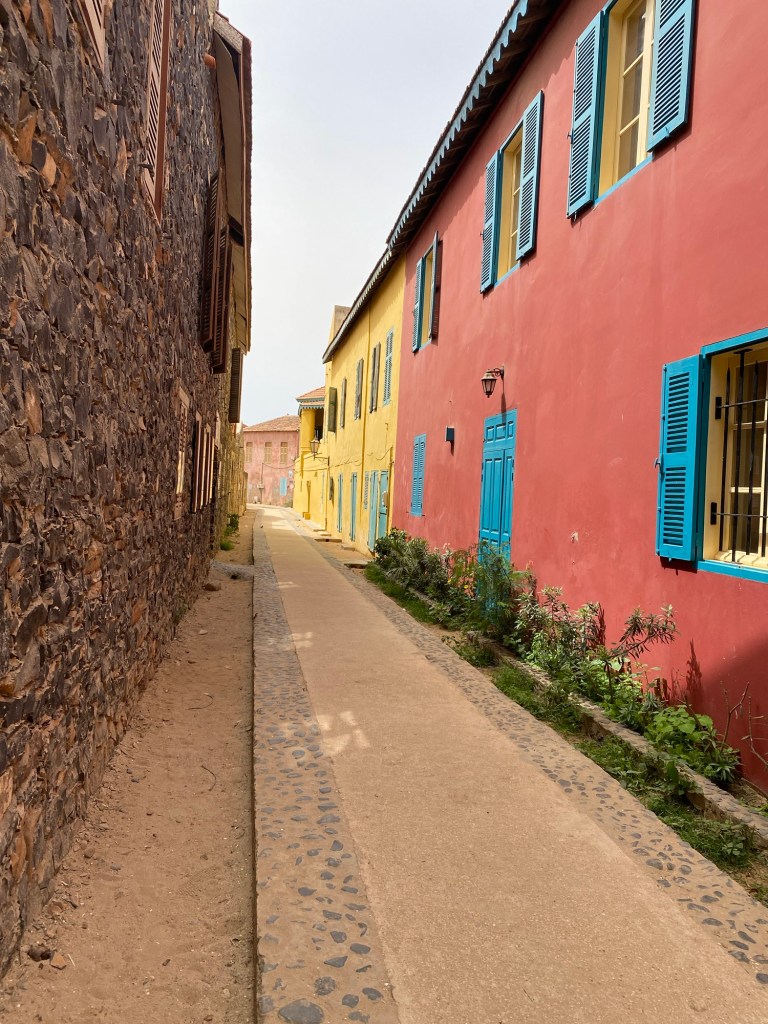
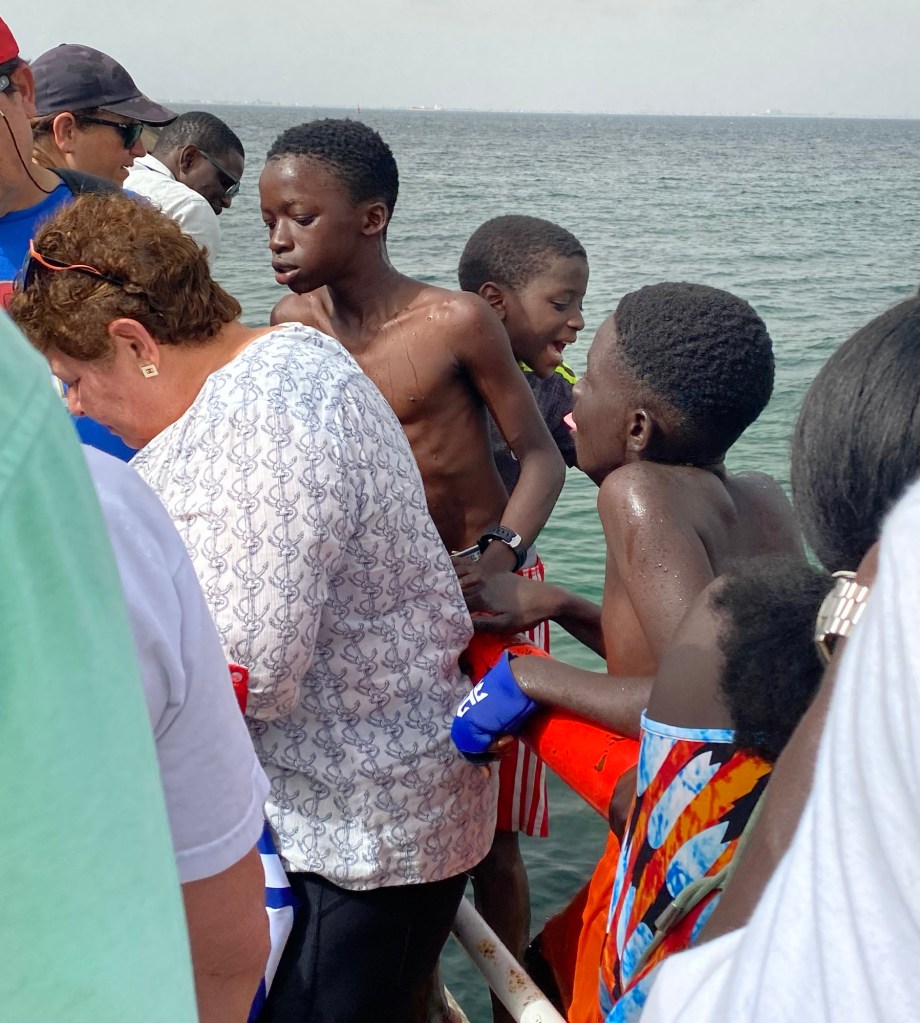
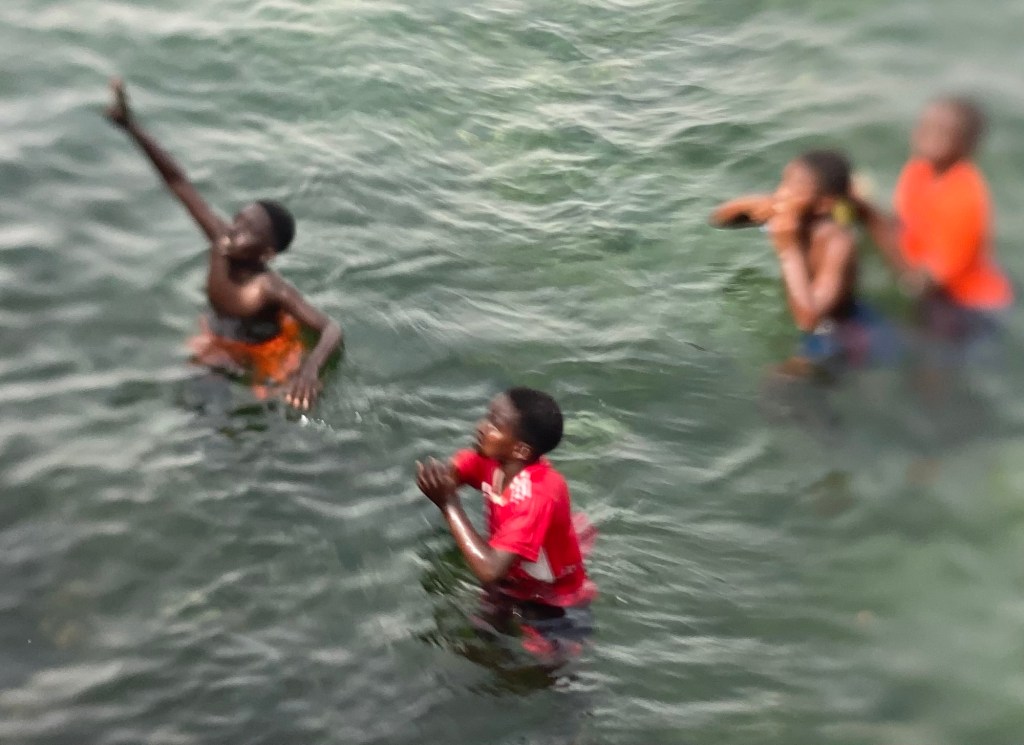
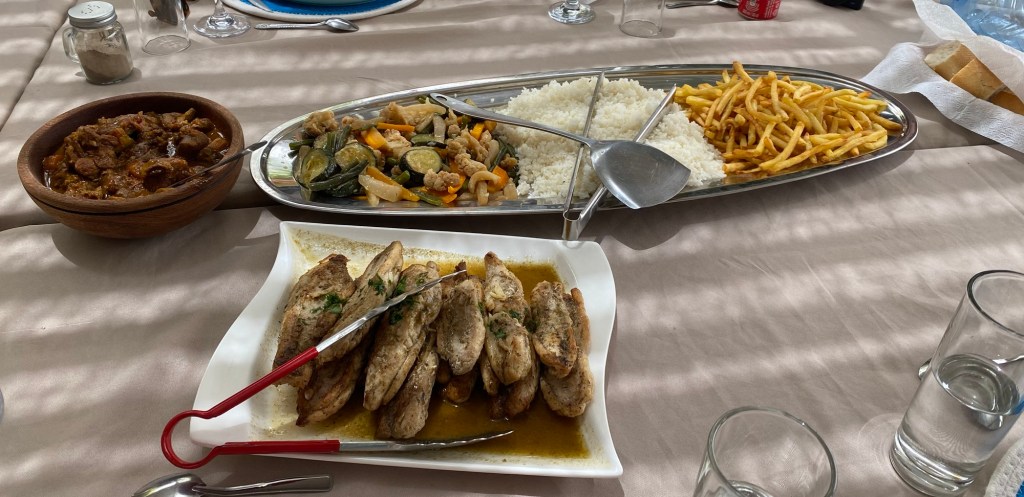
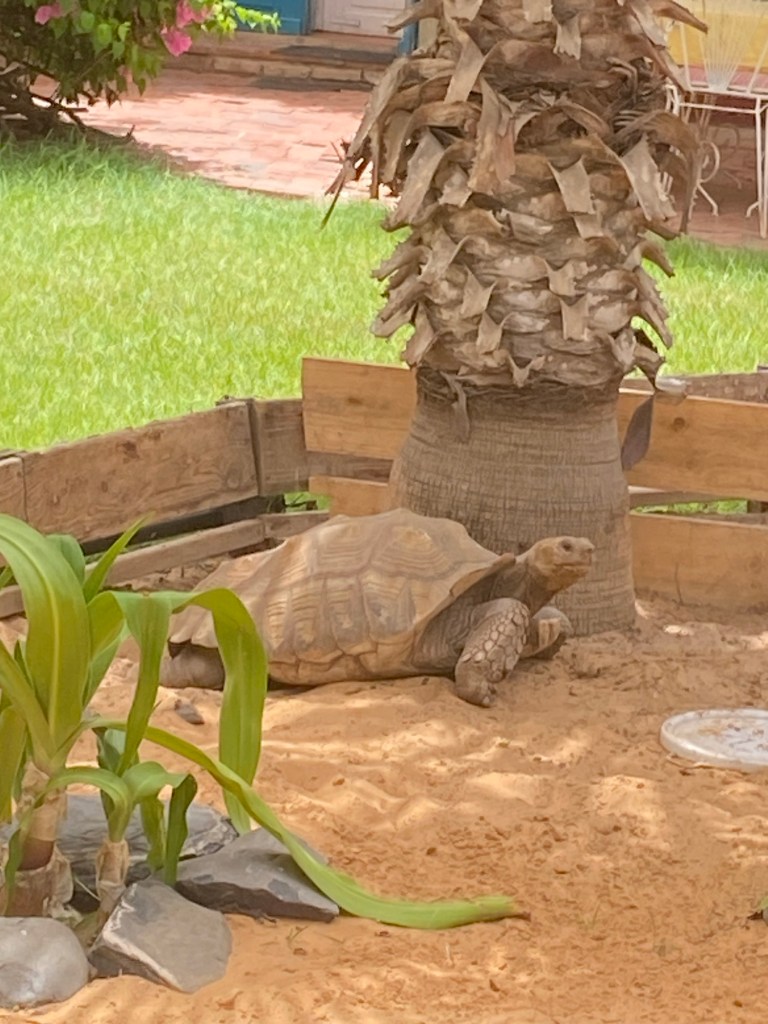
The architecture is characterised by the contrast between the grim slave quarters and the elegant houses of the slave traders. The mood lightened even more when some of the local children began jumping off the pier and diving for coins. There are no cars on the island with a population of 2,000. At a sumptuous lunch, we were entertained by 2 local tortoises whom seemed quite at ease with all the human fuss.
A tour through the house of slaves soon turned the mood somber. The men, women and children were kept in inhumane cramped conditions. The men were shackled and were only fed lightly to ensure low energy levels. Over 12 million slaves had left the island and 1 million had died.
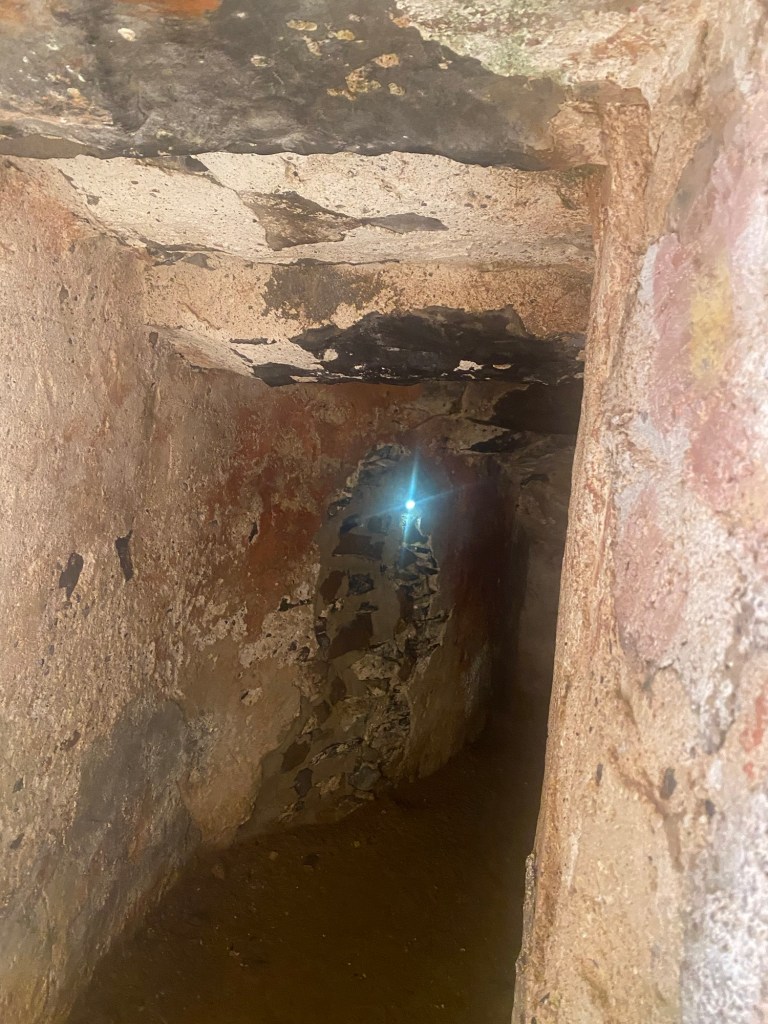
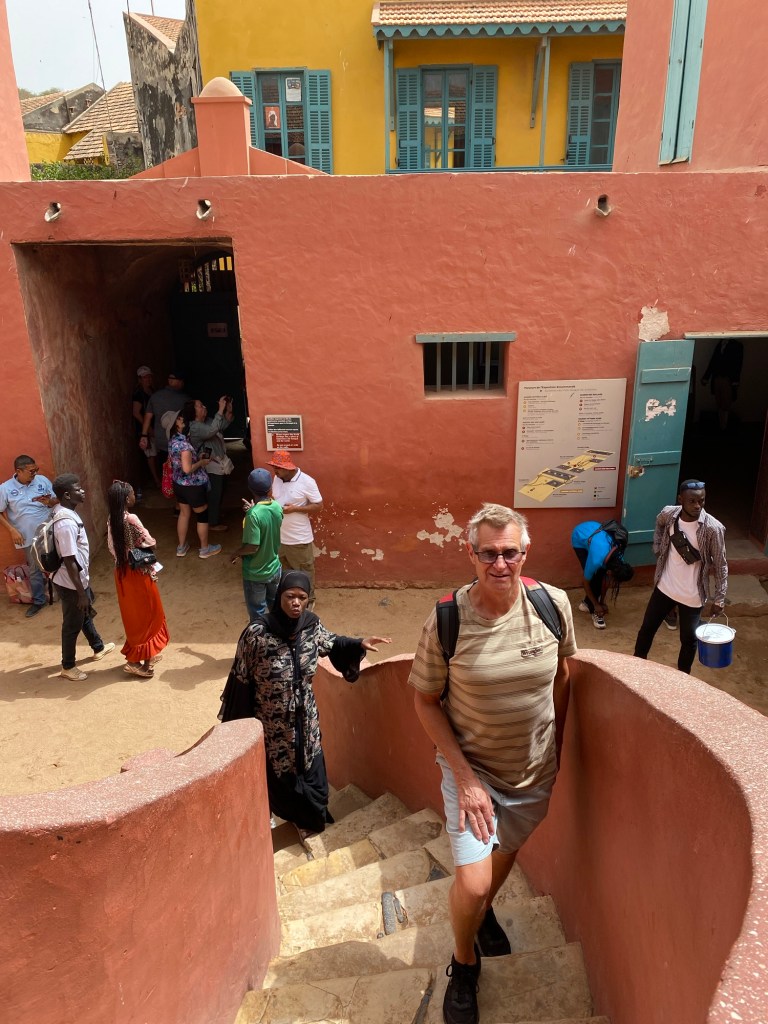
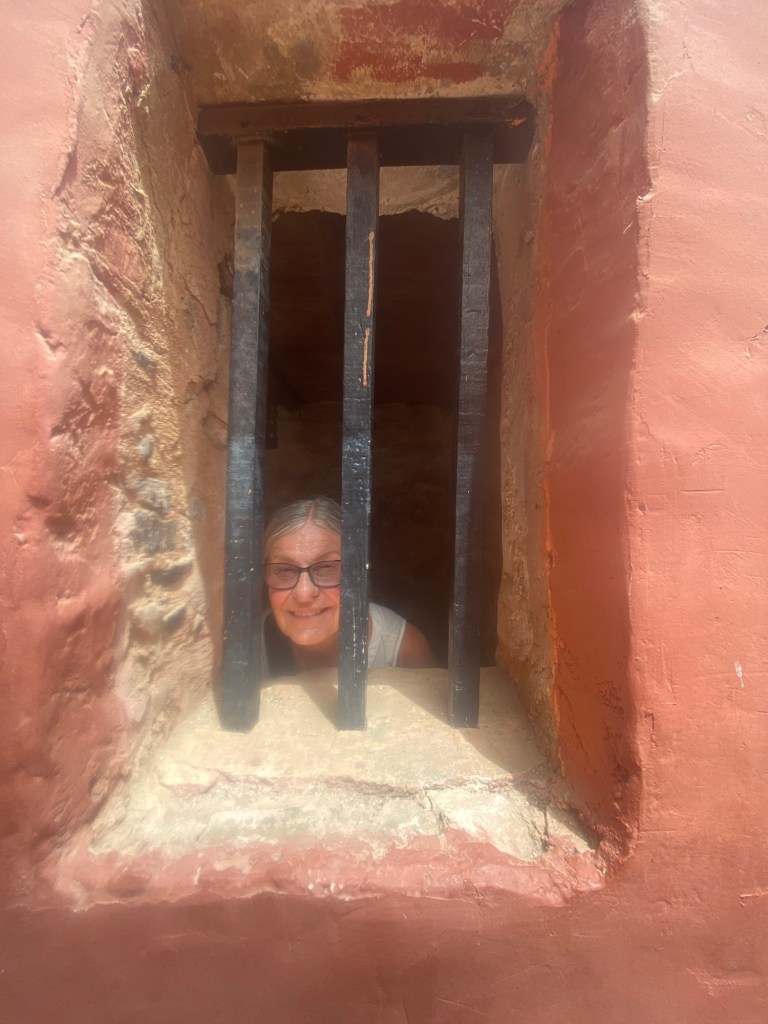
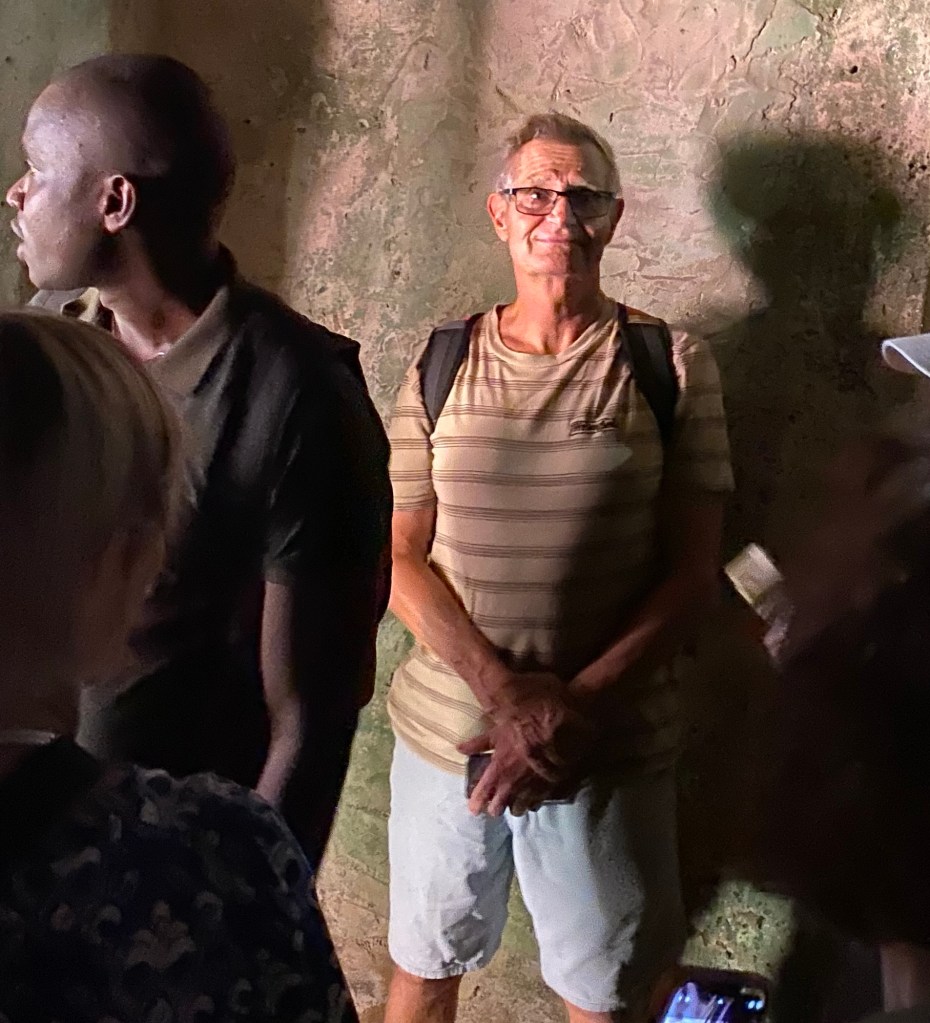
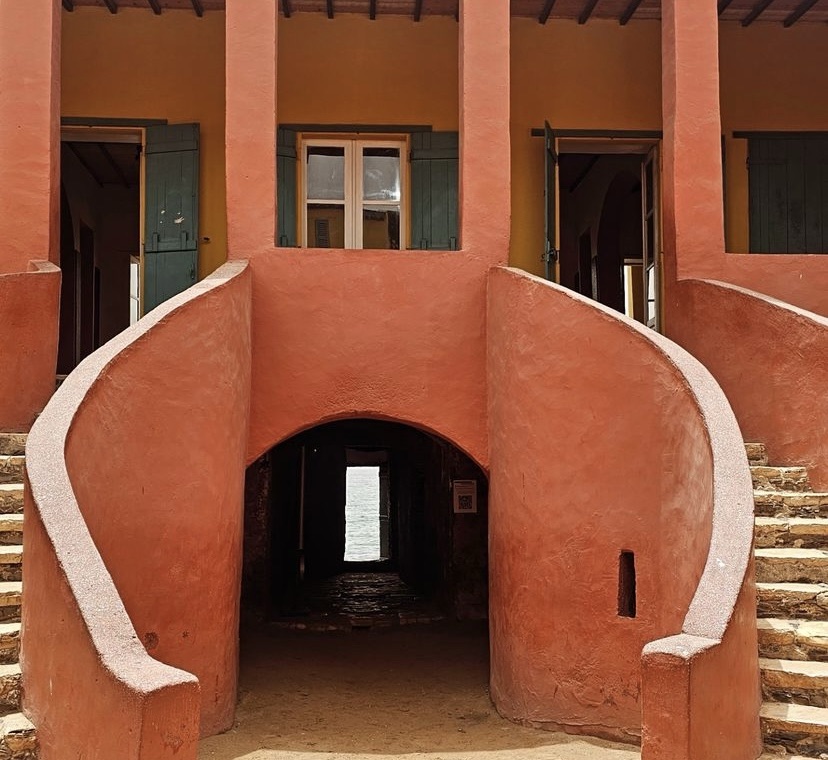
Dark and dingy rooms with a hint of daylight were inescapable. Then there was the “door of no return.” Once a slave went through this door they were loaded onto ships never to see this island again. Over the years many famous people have been photographed in this doorway. Nelson Mandela, Barack Obama, the Jackson 5, Pope John Paul II and in 2024, Ruthie.
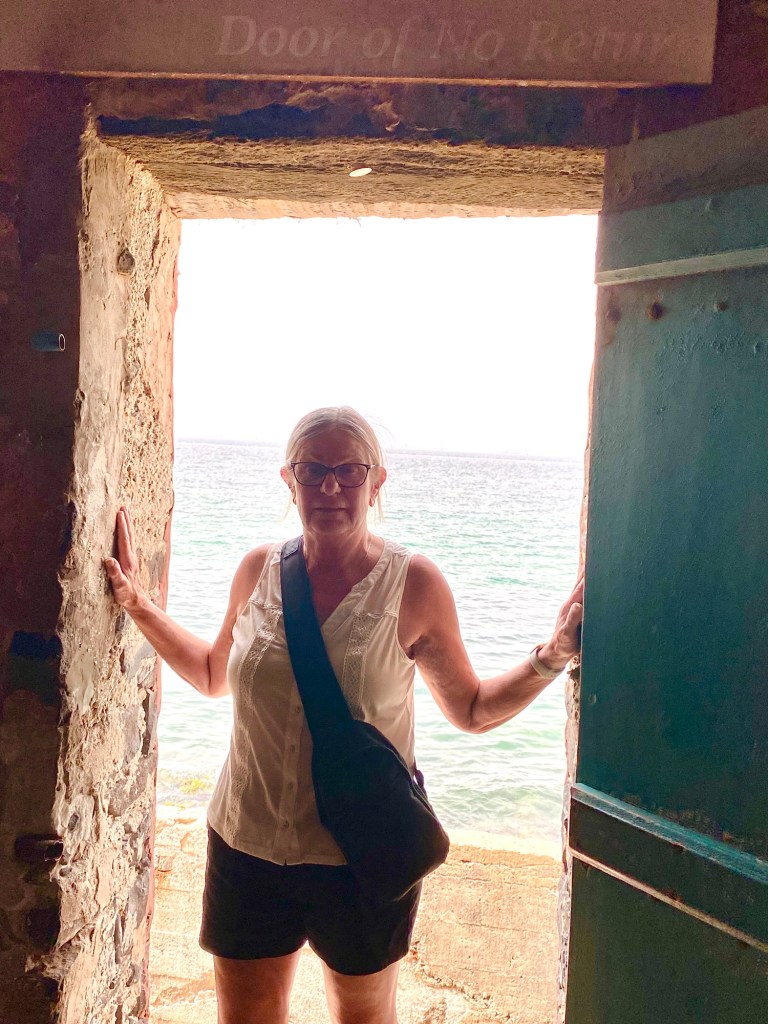
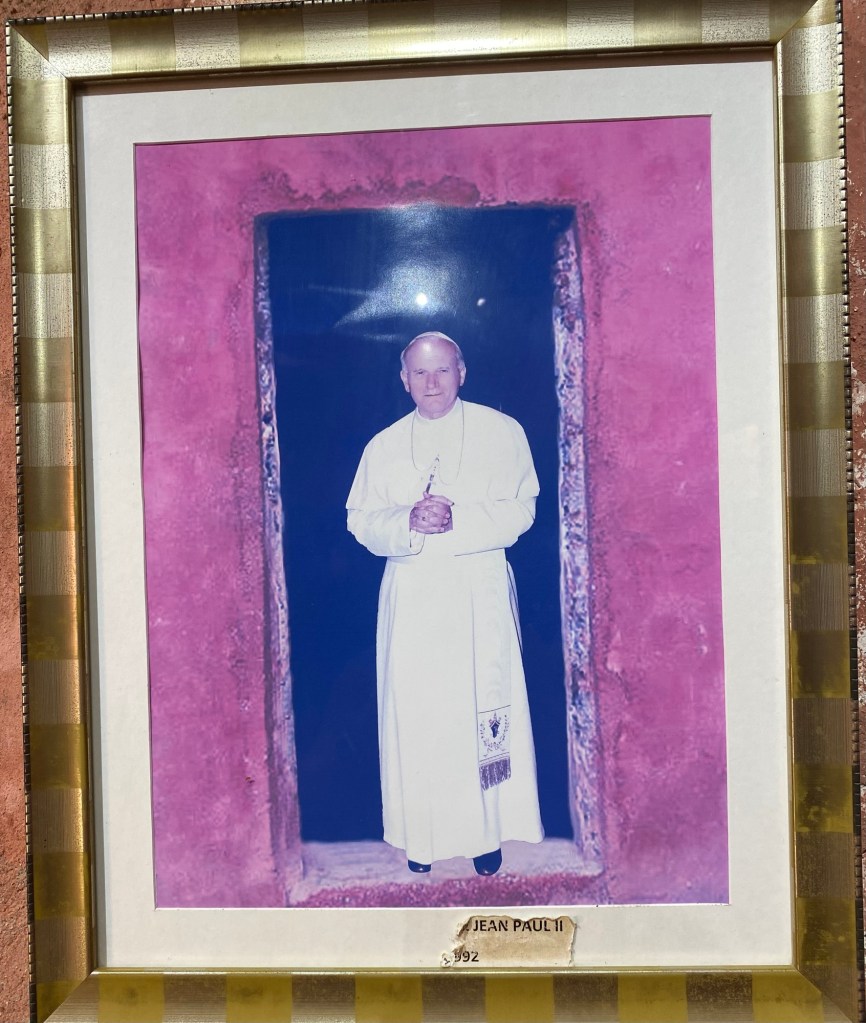
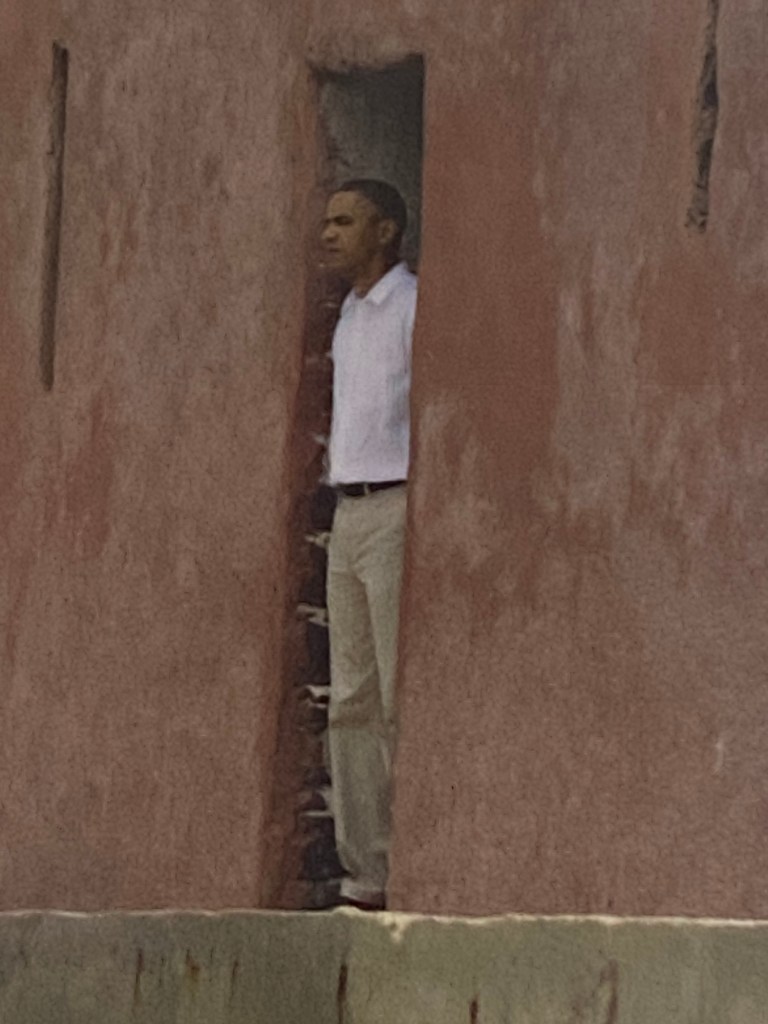
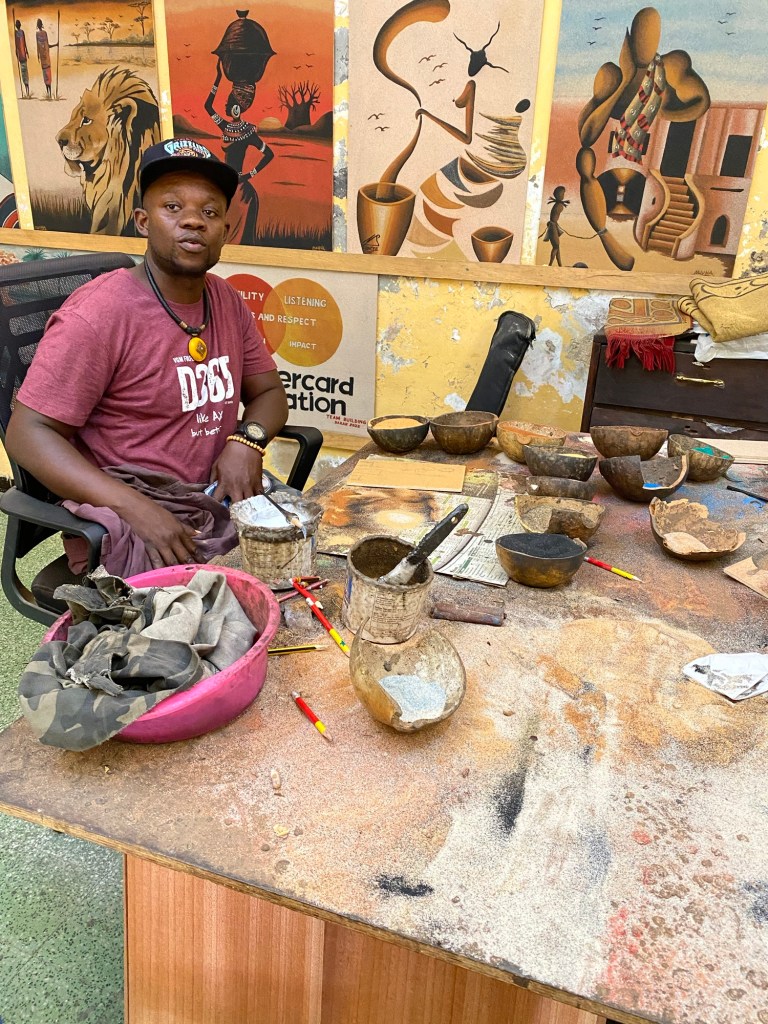
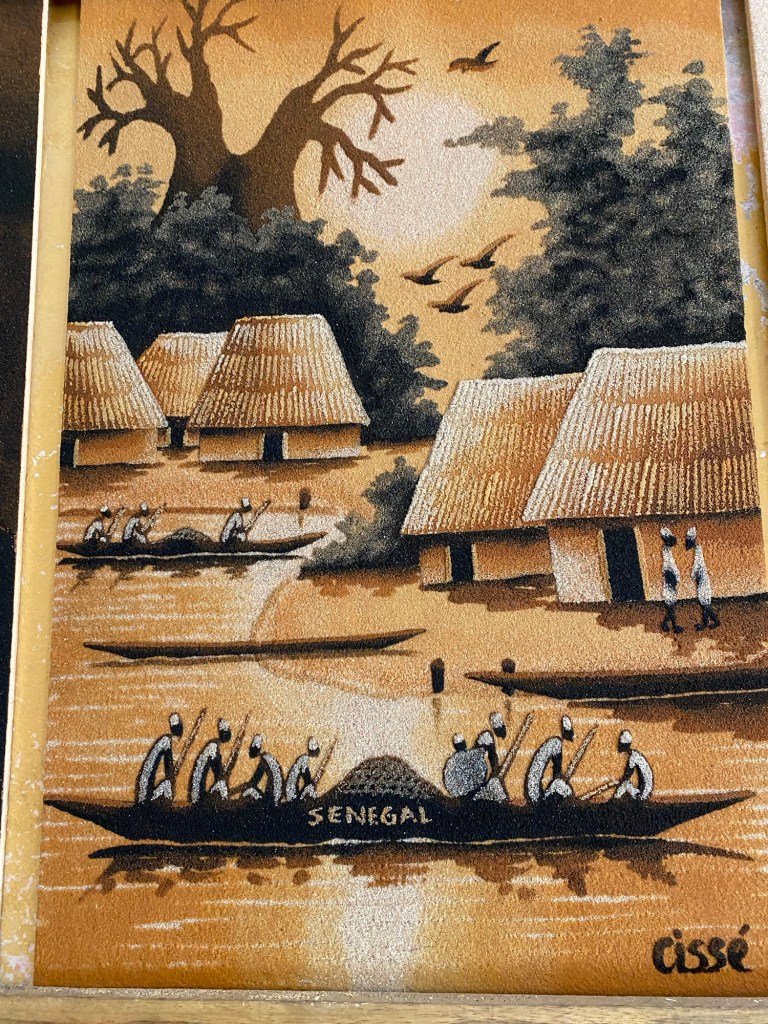
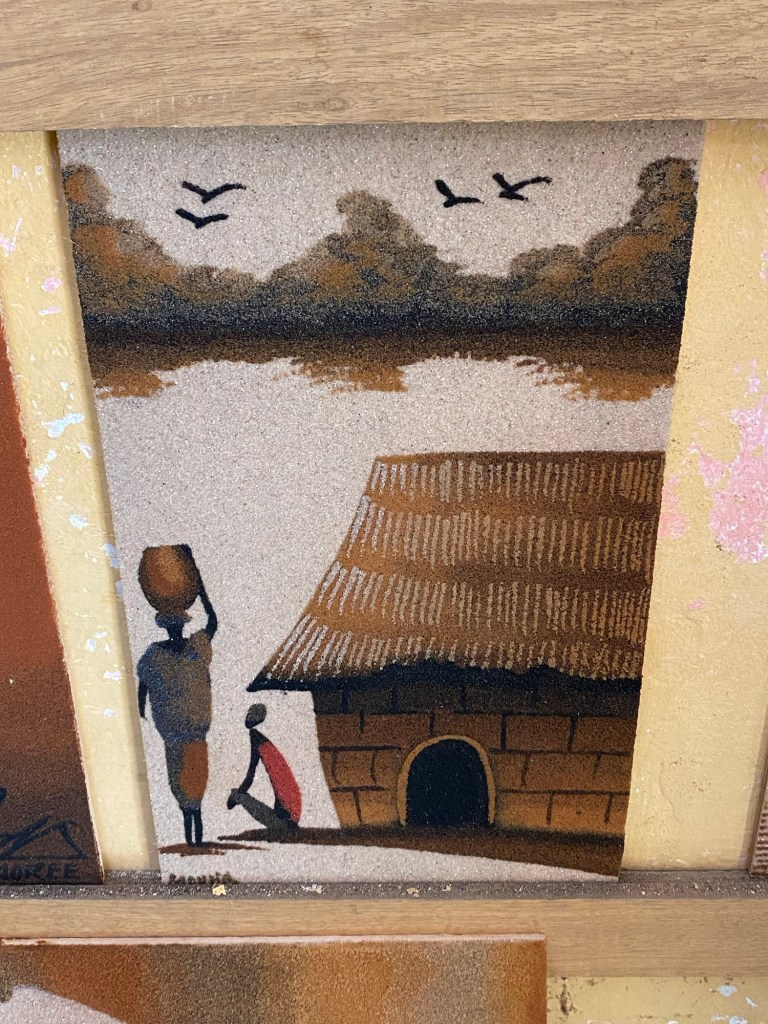
Of course, there was the usual market hassle of hawkers but one little store really interested us. The artist here was painting with glue and different coloured desert sands. He put on a demonstration for us and his finished product was amazing! Sold! One more souvenir.
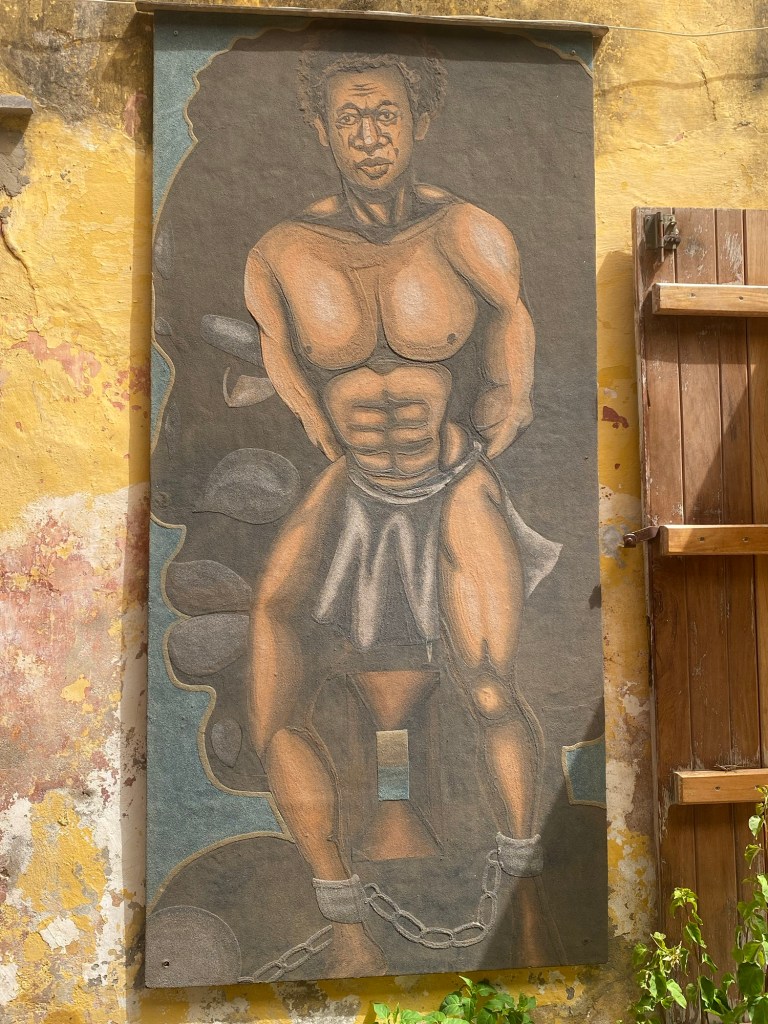
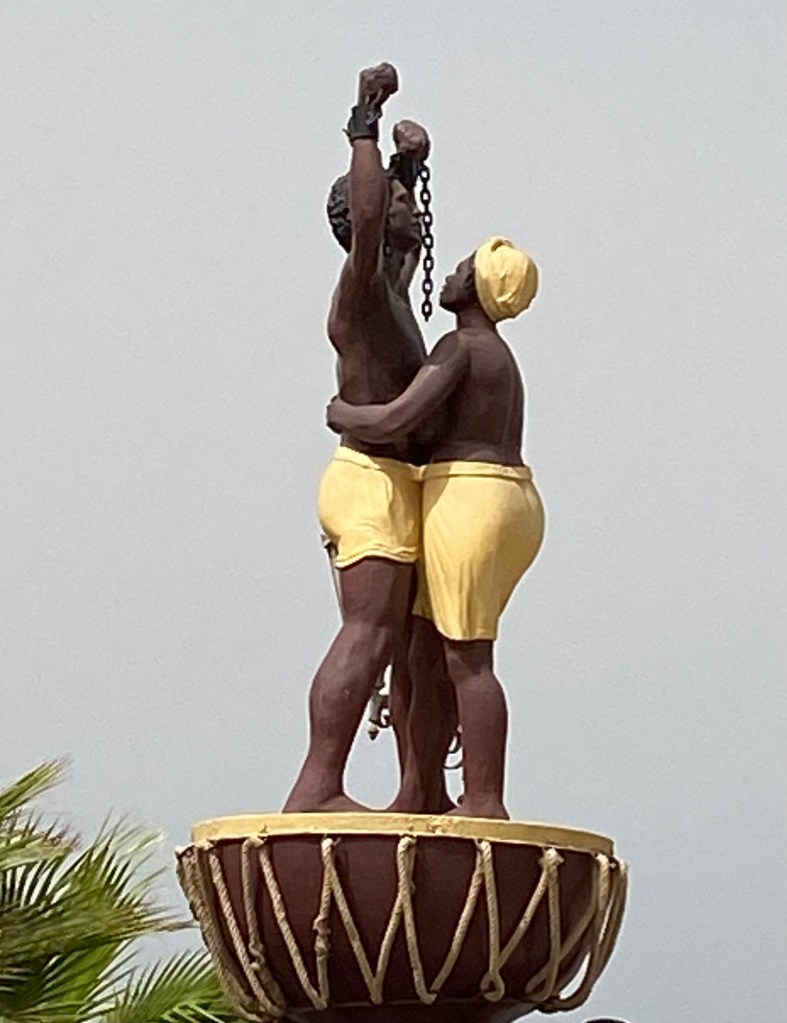
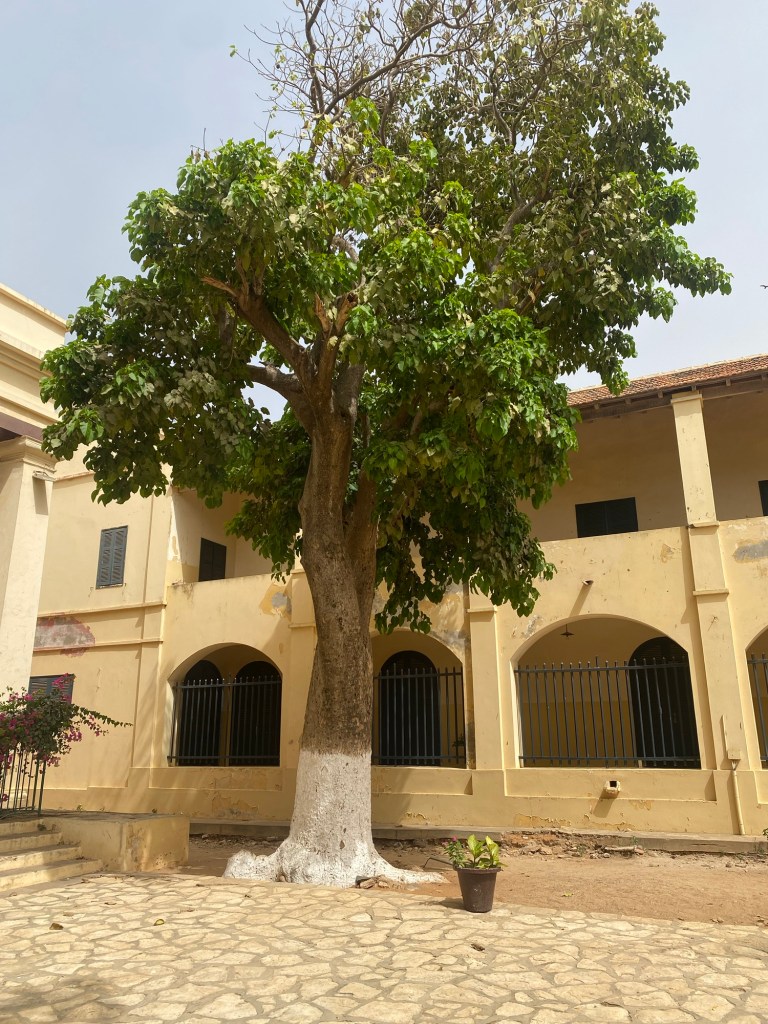
A quick visit to the museum gave us further insight into the history of this island. There was a monument to remember the health workers who died trying to save people from yellow fever. Also, a very proud guide showed us the baobab tree. These trees are revered in these parts. Often used as a meeting place in towns, they also have a nutritional, medicinal and spiritual role.
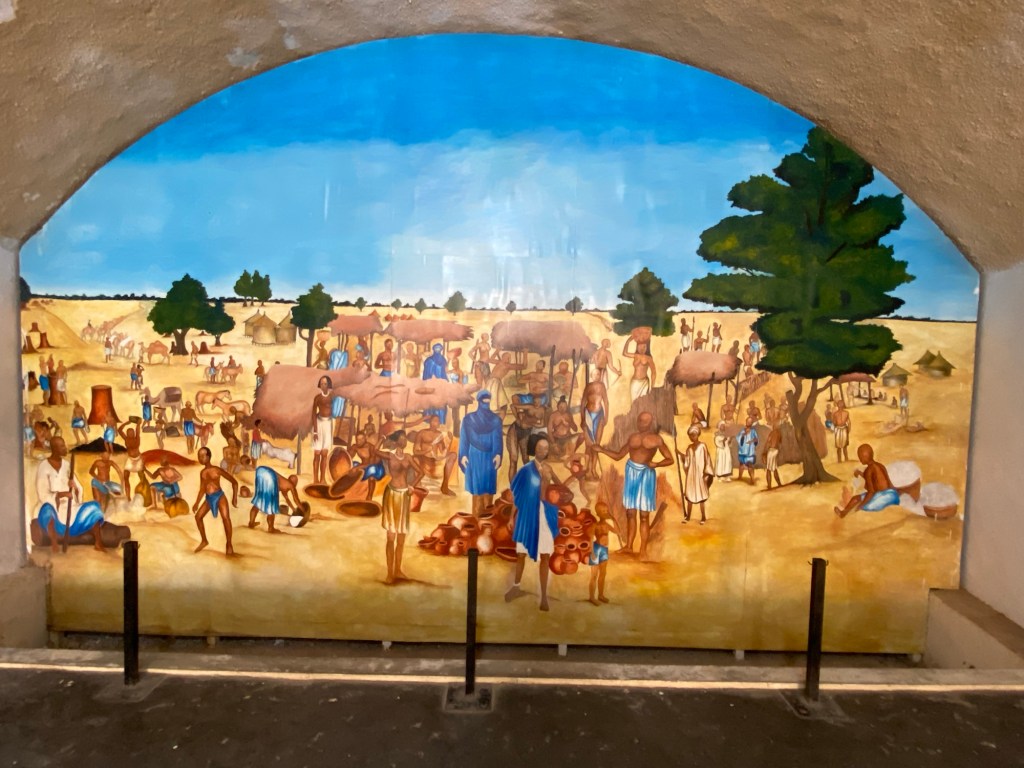
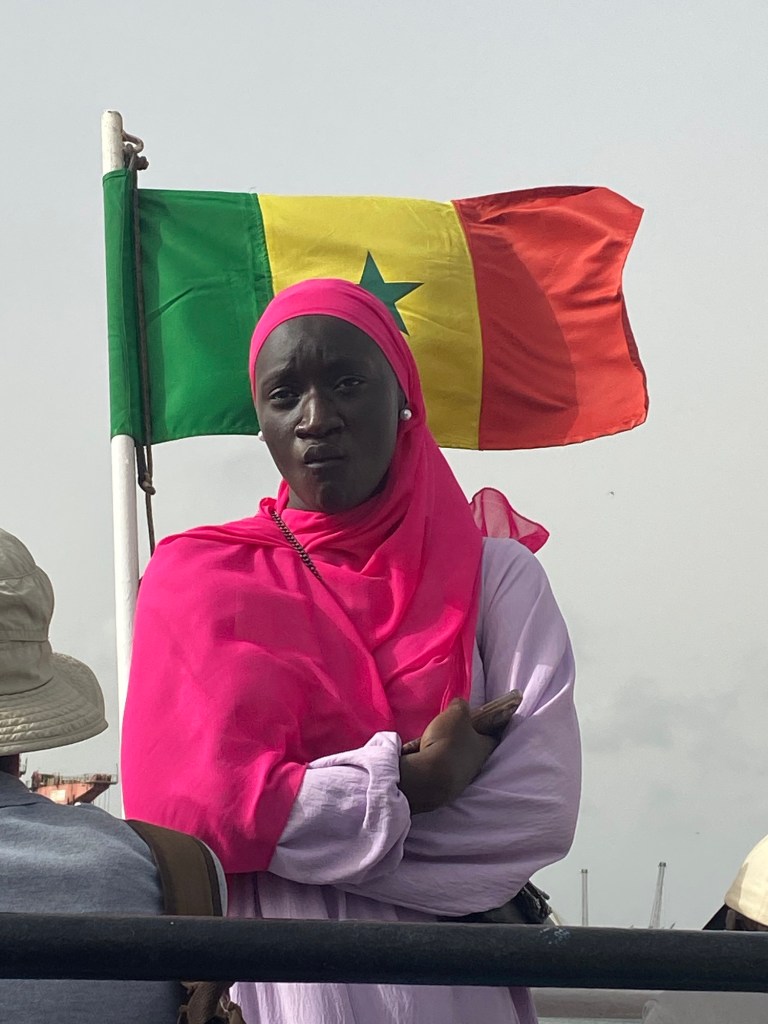
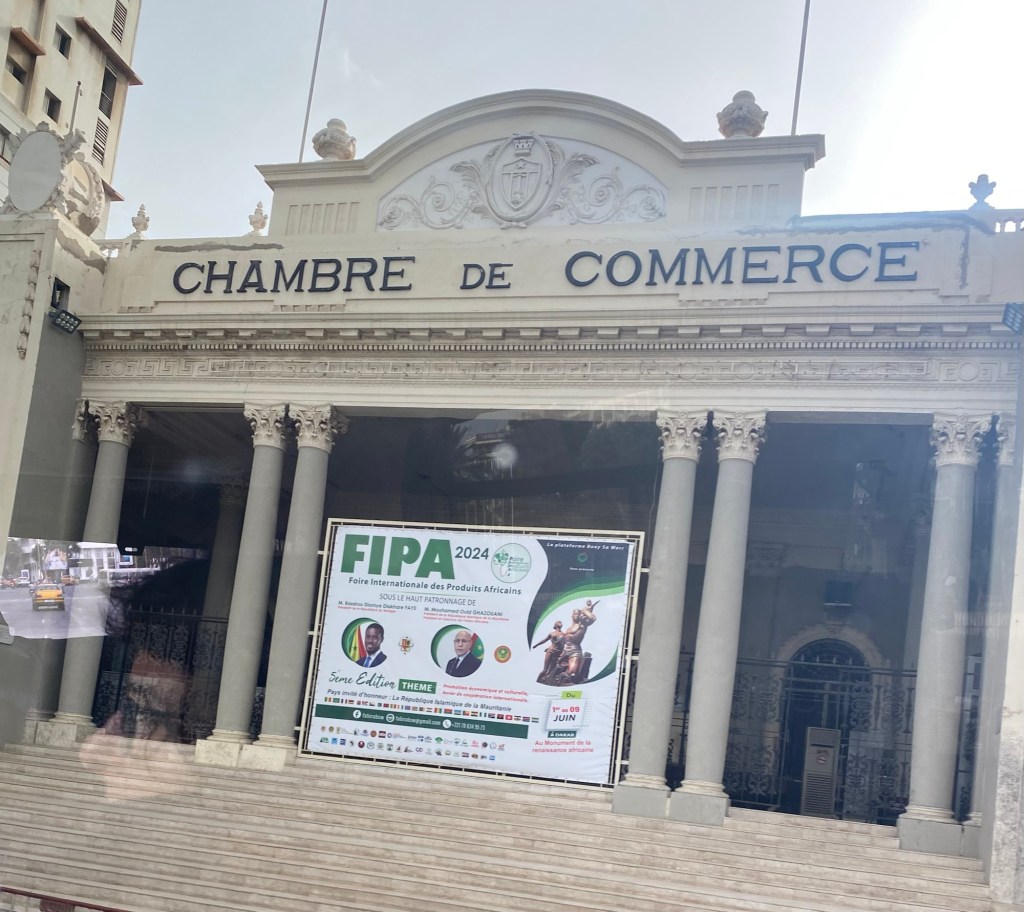
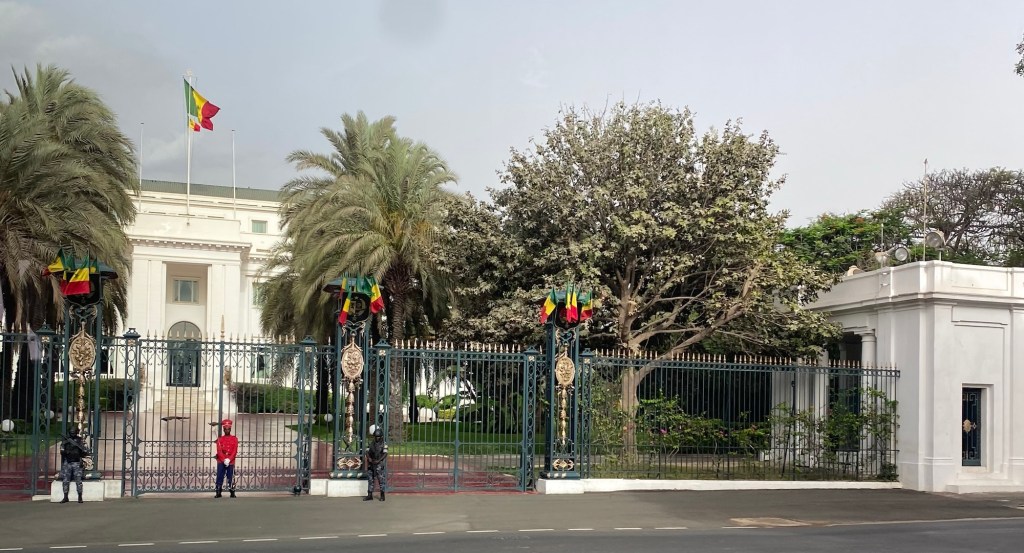
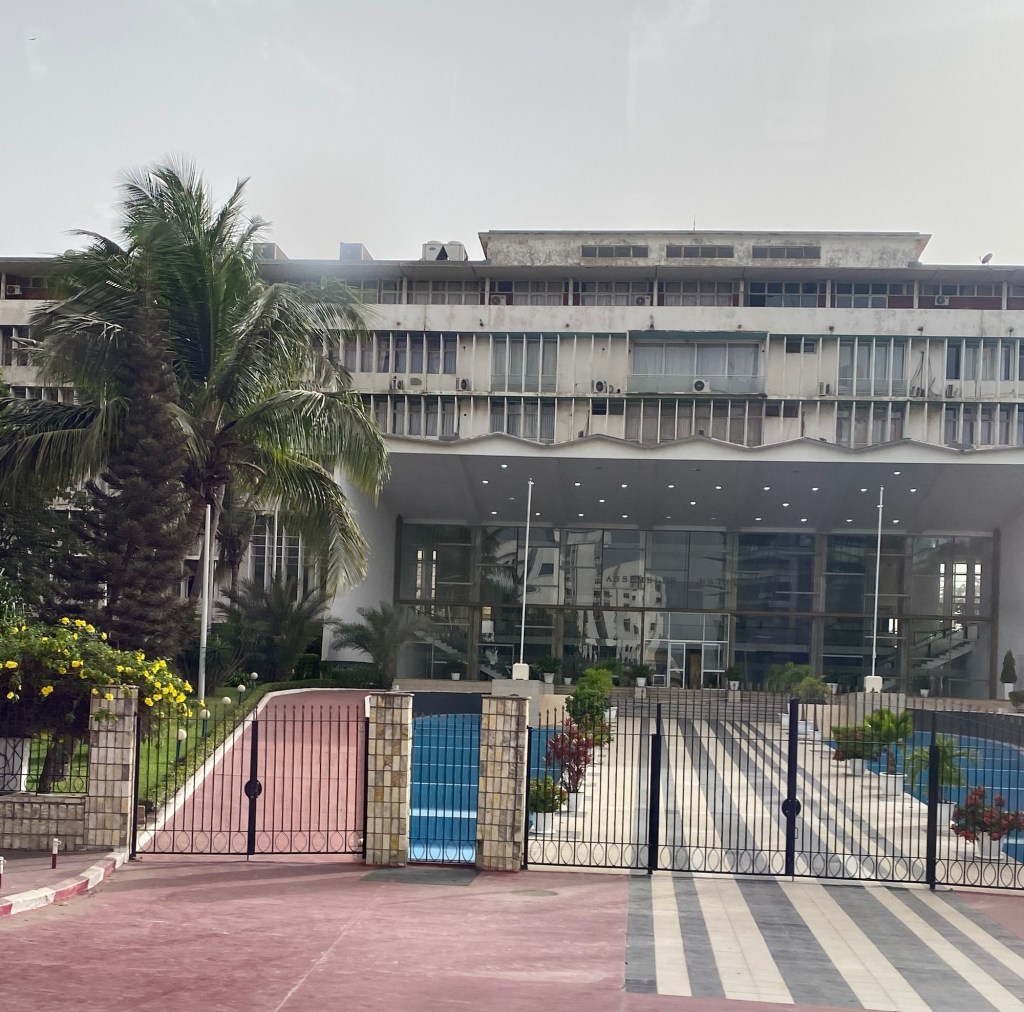
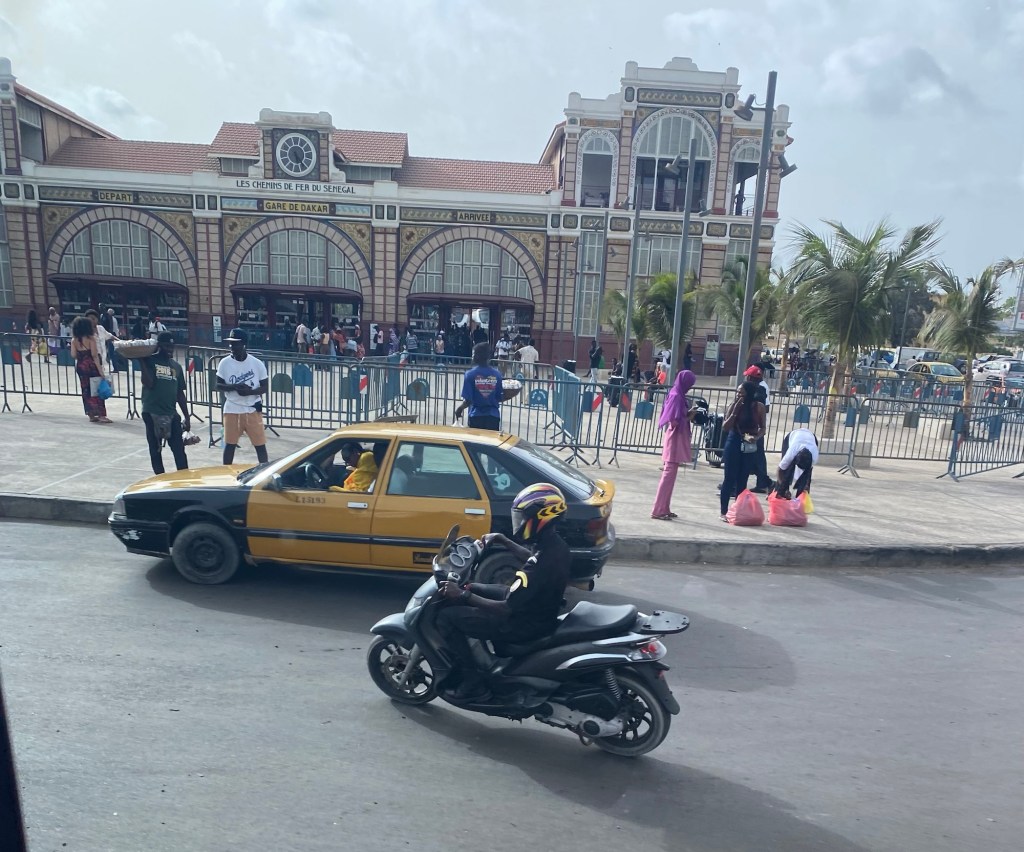
There had been a lot of ferry waiting time for this excursion so when we arrived back in Dakar, (the capital of Sénégal), there was only enough time for a quick city bus tour. Various European countries had ruled Sénégal over the centuries with the last being the French. The country had gained its independence in 1960. Much of the architecture reflected its colonial history. 75% of Dakar’s population is less than 35 years of age and men can have up to 4 wives.
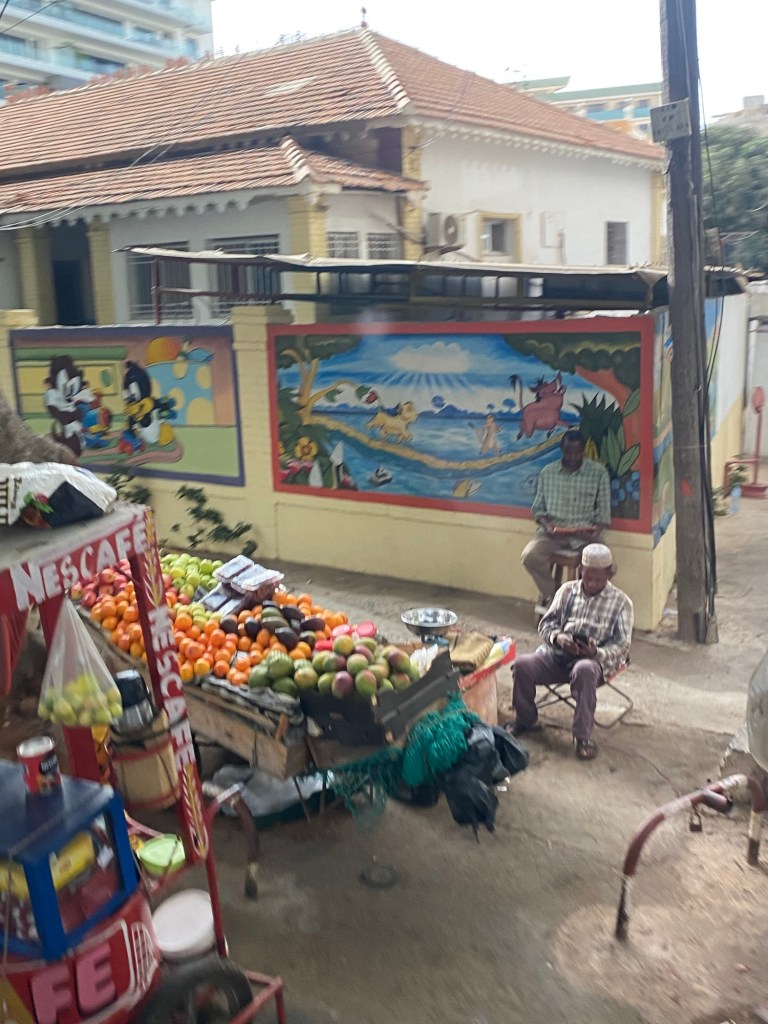
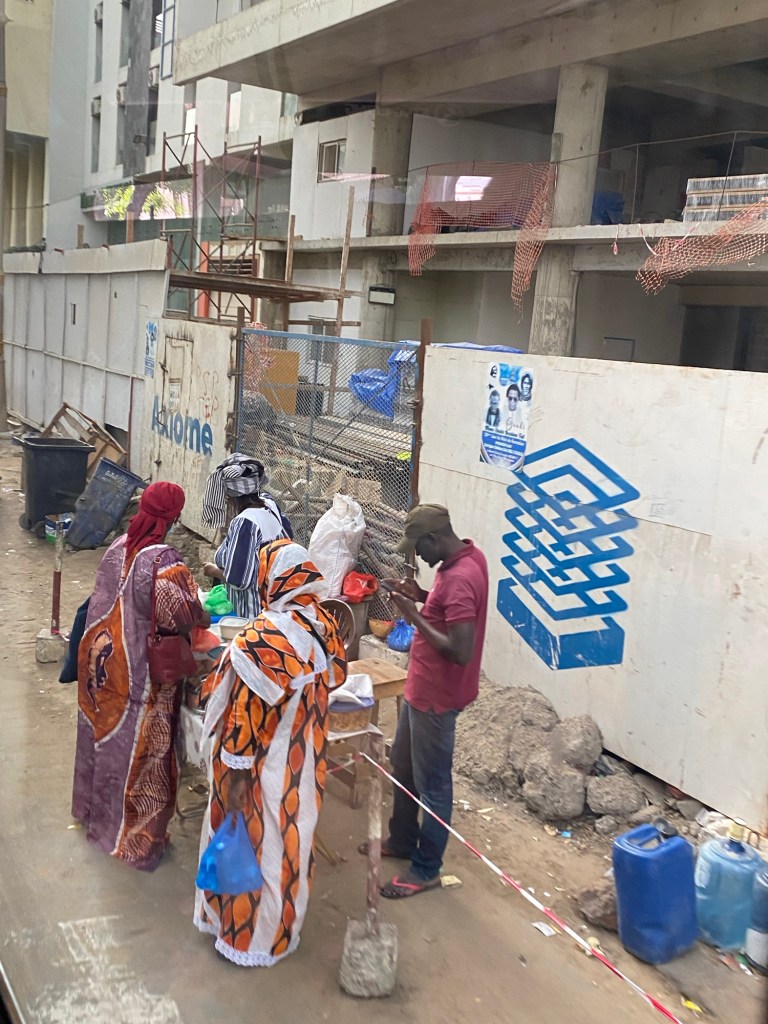
The streets were abuzz with market sellers without their usual setup but with their wares laid out on the footpaths. We saw shoes, carpets, books, kites, fruits, local delicacies and even a mechanic doing on the spot repairs. Even one proud stall owner dusting the things he was selling whilst they were displayed on the footpath.
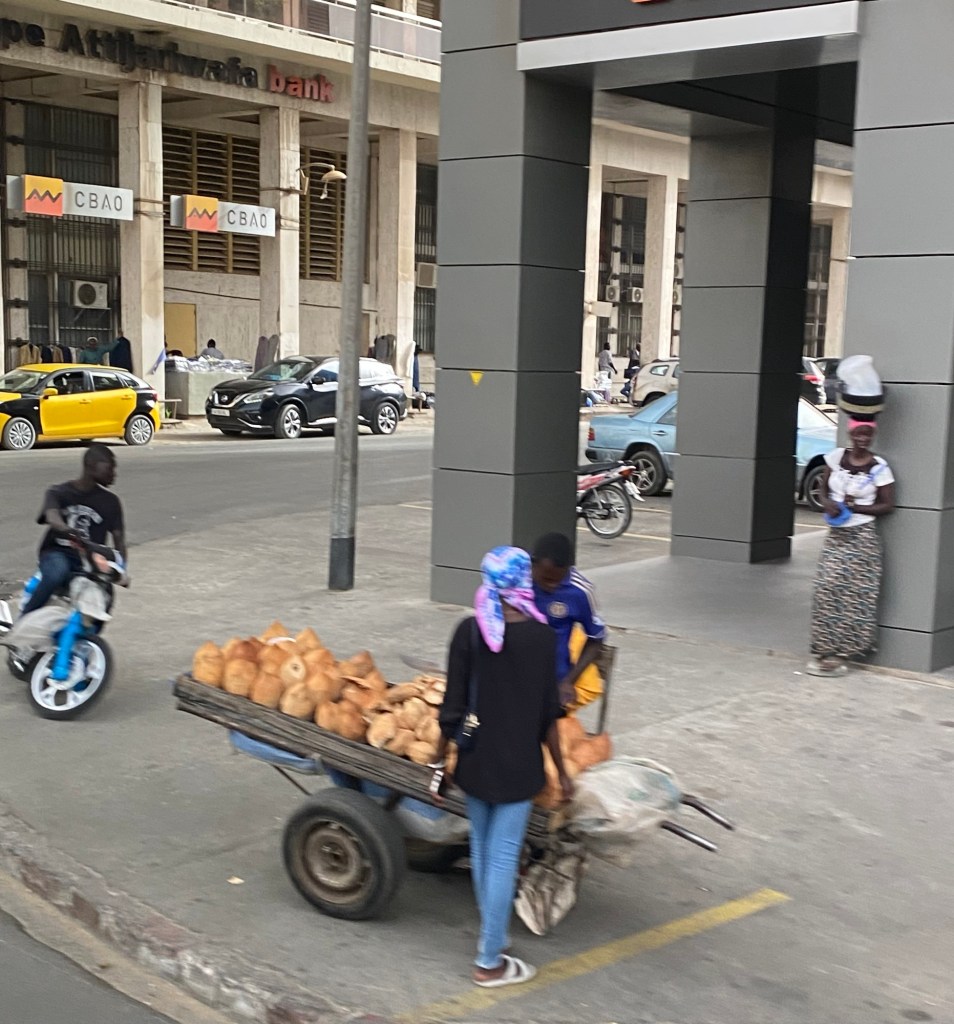
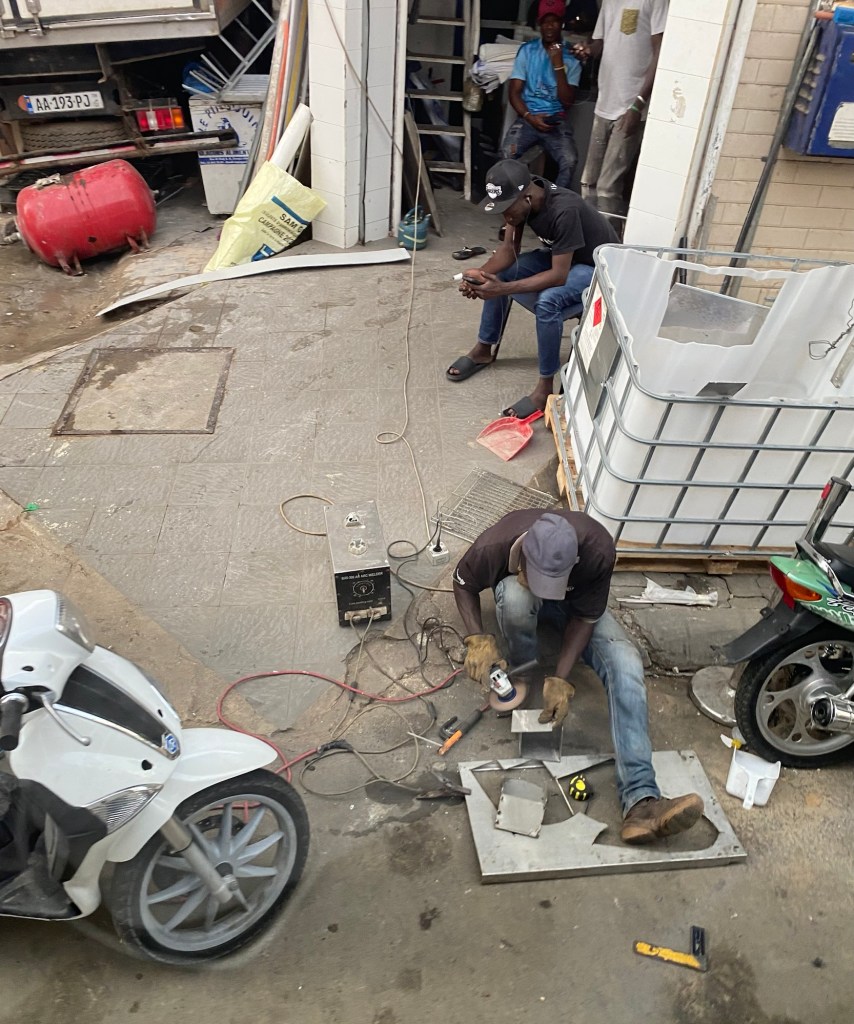
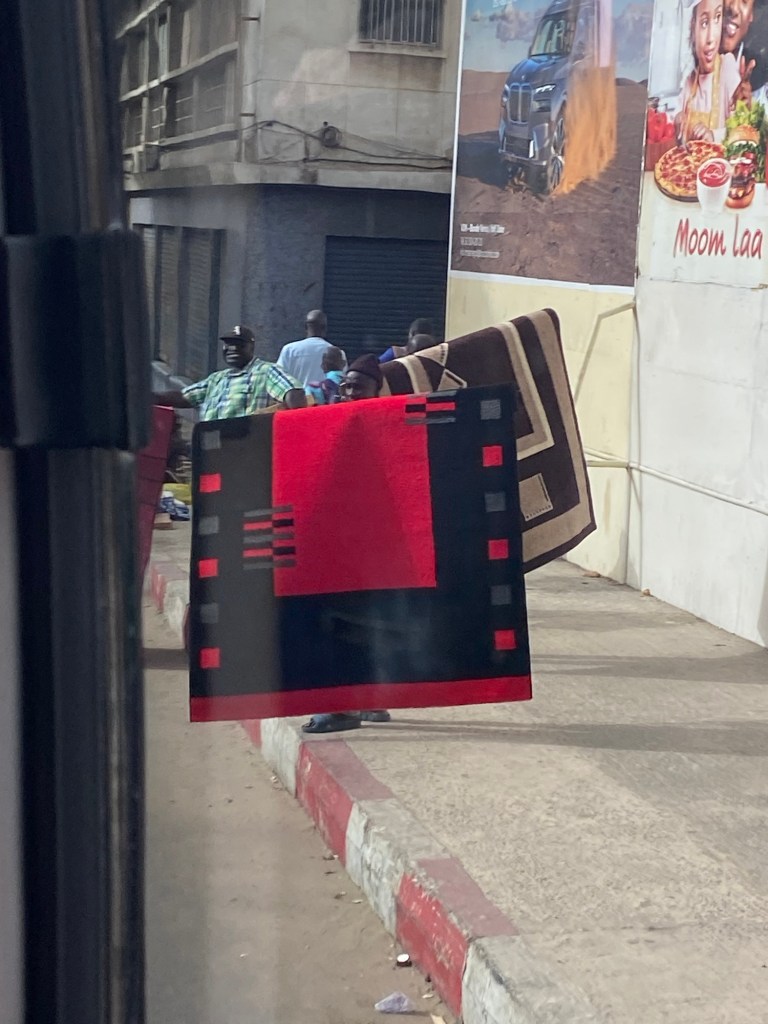
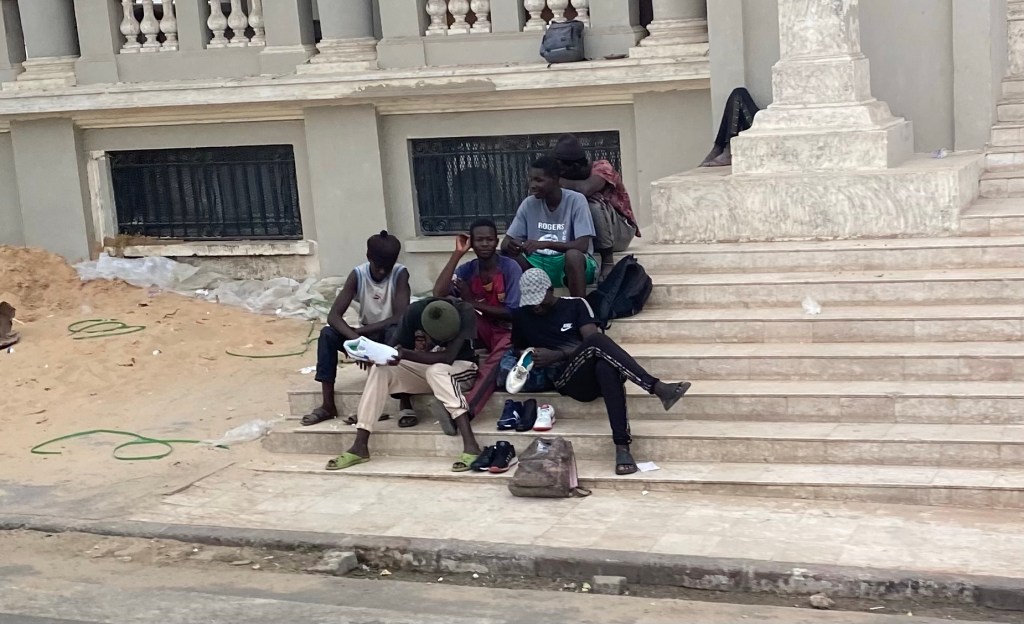
Our guide explained the homeless we saw were mainly from war torn Sudan or Malé. Hard to imagine they were safer here on the streets. The beaten up taxis looked like they were left over from Dakar rallies of the past.
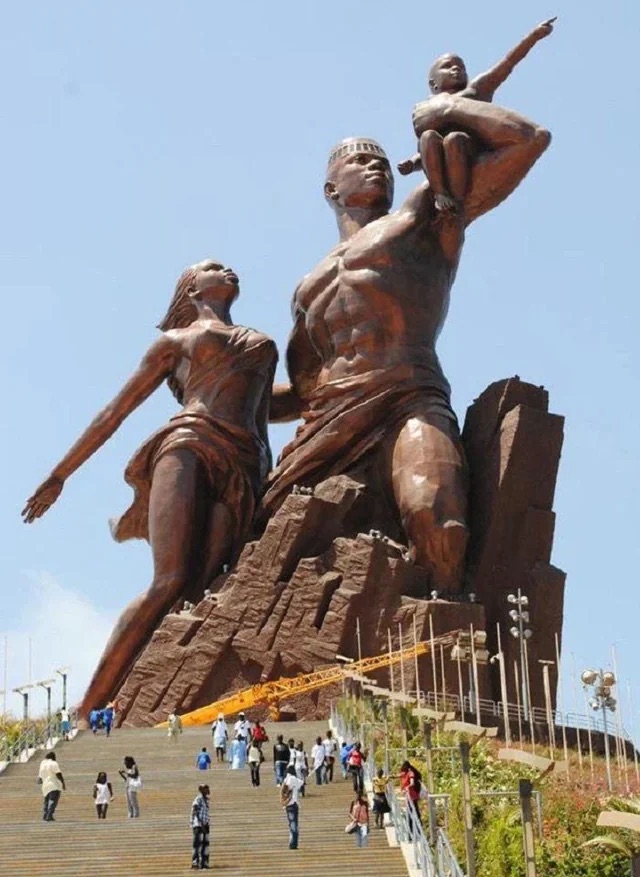
Unfortunately, we didn’t have enough time to visit the African Renaissance Monument but was told it was hugely impressive.


…😢sure is a reminder of cruelty .. gone on & still going on … … you are experiencing so much history & different cultures & the bad & good in us humans xx
Love Shas & Bill xx
Quite an interesting and colourful chapter in your journey. I wonder if the 1976 Roots series with Kunta Kinte, whilst fictional, was based on this island’s history. It certainly was a compelling series to watch. Yes, truly a dark part of history.
Thanks for the insight JK, probably not my kind of thing but very interesting
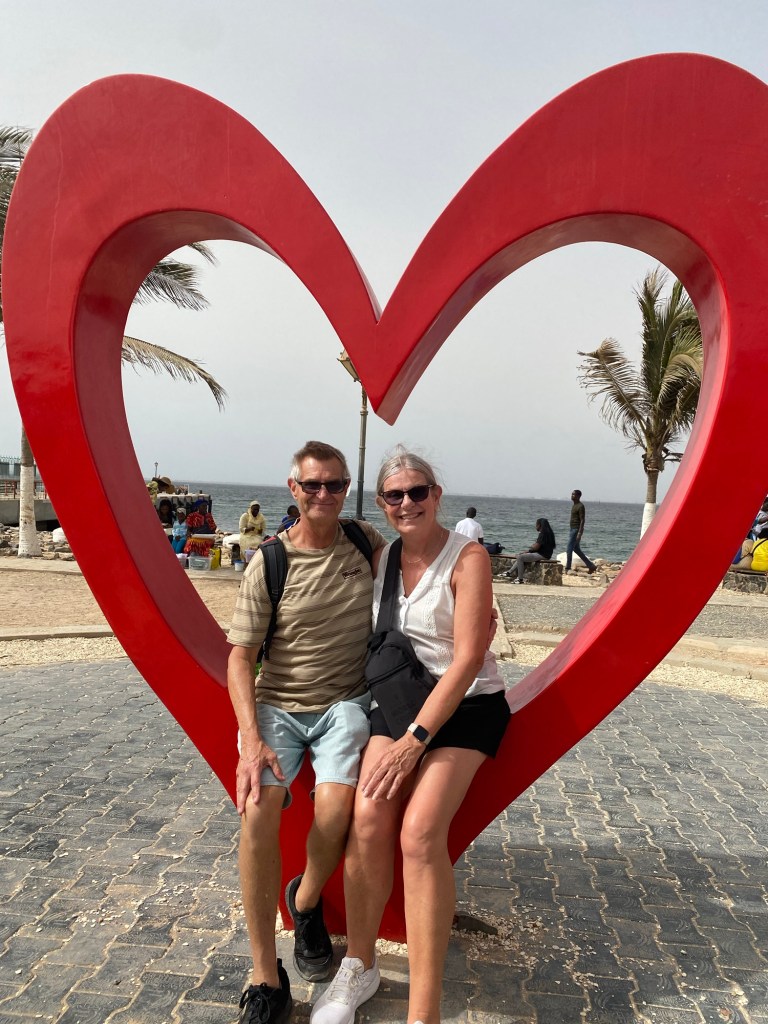
The last photo is very ‘sweet’. Nice legs there both of you!!!
Loved reading all these tales. The colour and brightness of the places are a stark contrast to the real situations aren’t they. But colours can make you feel better!!
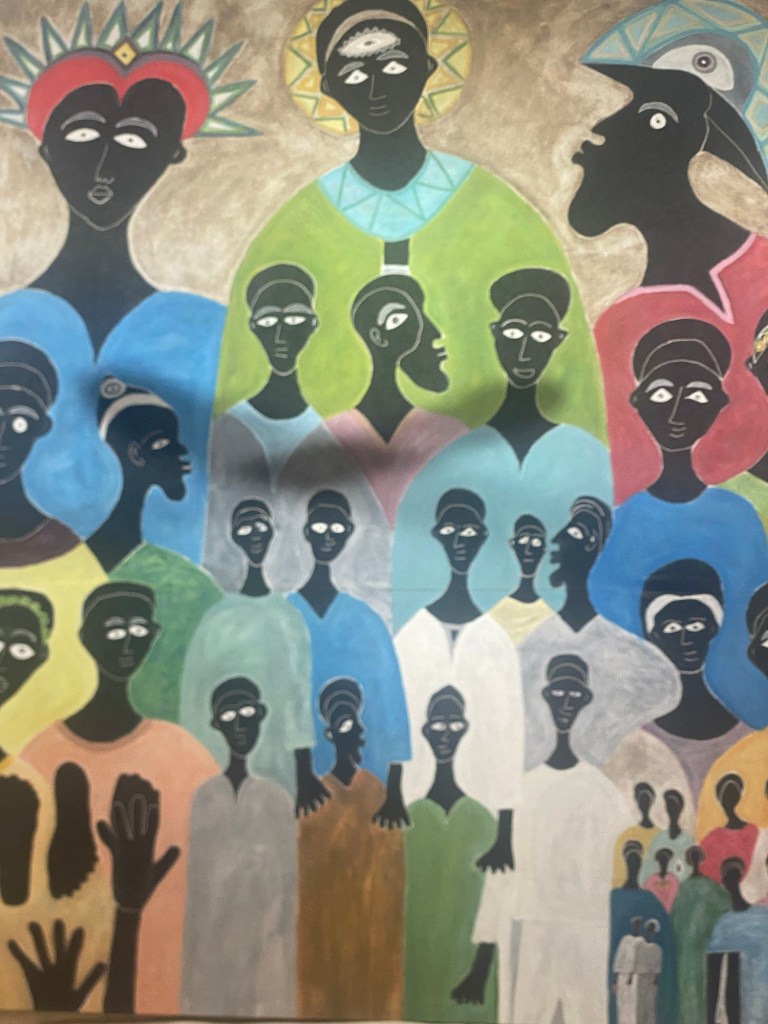
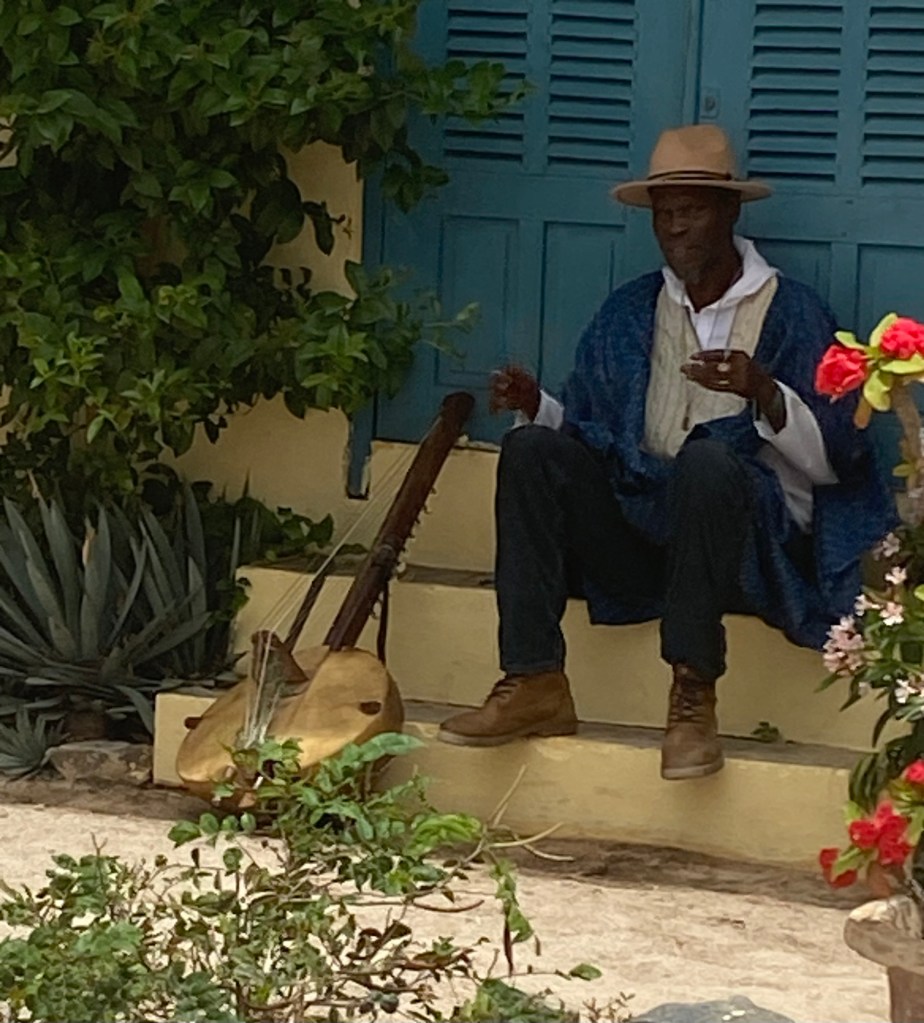
The stories of the slave times are quite astounding especially the numbers that were transported. I really like some of those paintings and the photo of the guy on the step with his mandolin(?) is a favourite.