San Sebastián
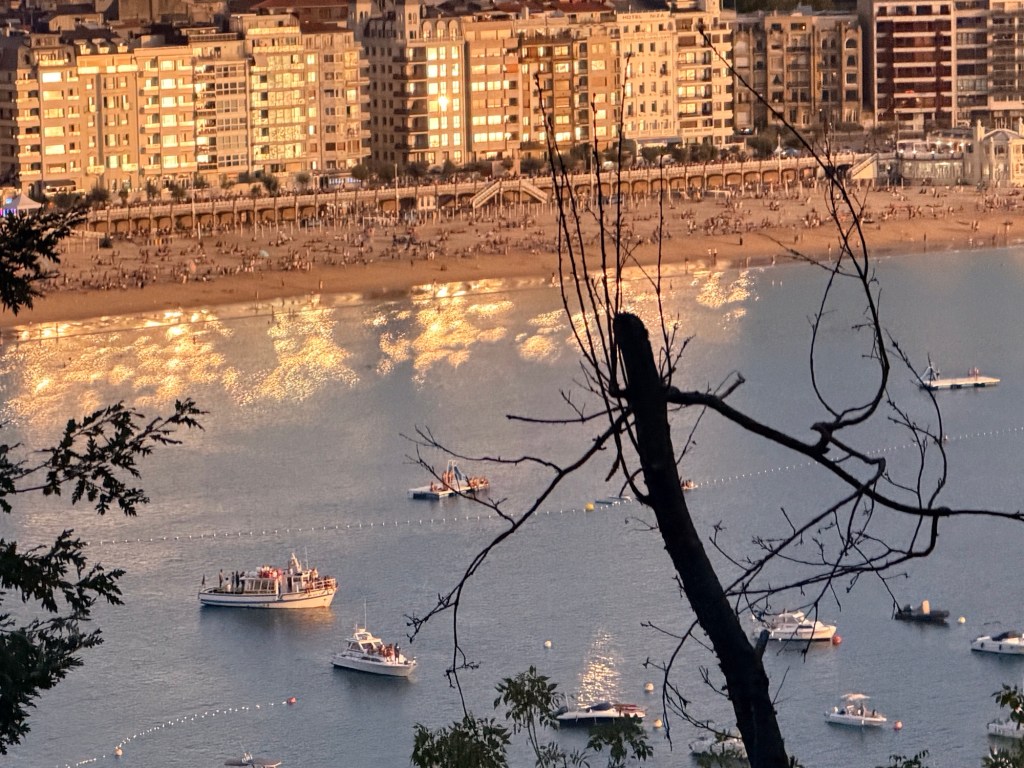
When we left Pamplona the bus started winding through the hills to San Sebastián, the terrain changed. From the burnt grass treeless plains we were suddenly in green forested areas with road signs telling the driver to be aware of deer. We are now in the Basque region of Spain and on arriving in San Sebastián it was notably cooler (mid 20’s) to what we had been enduring by at least 10 degrees which was instantly invigorating. It took a while to work out why my translate to Spanish app wasn’t working but that’s because Basque is a different language. This city was largely destroyed by fire during the Peninsular war in 1813 and was rebuilt in the decades following.
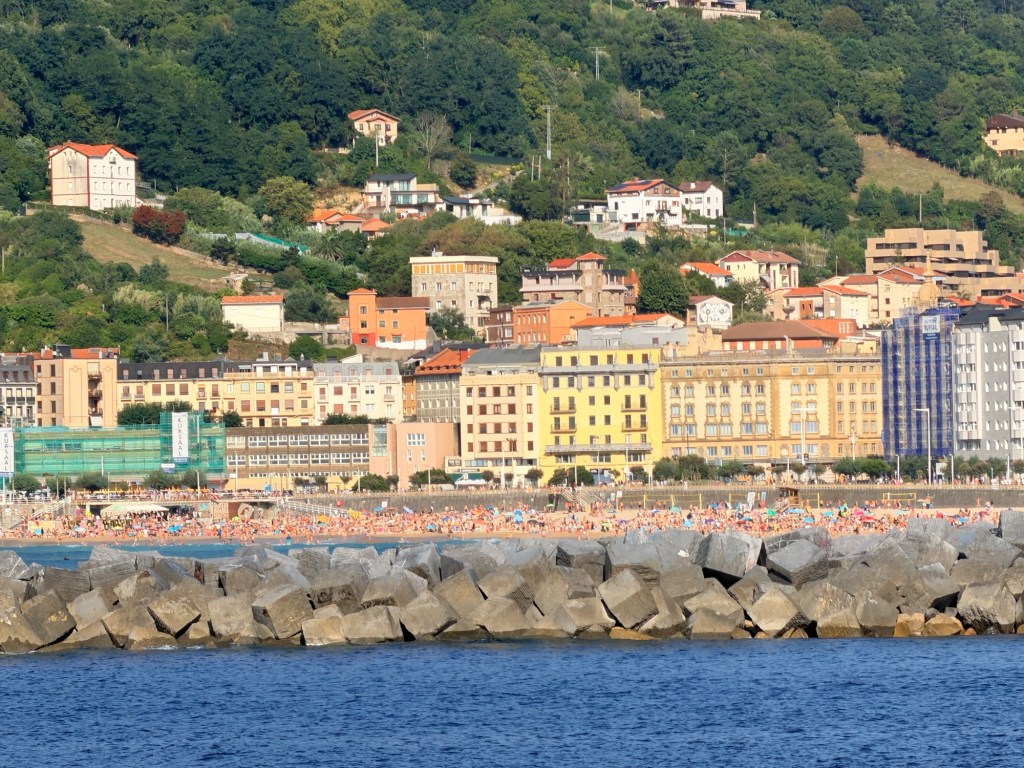
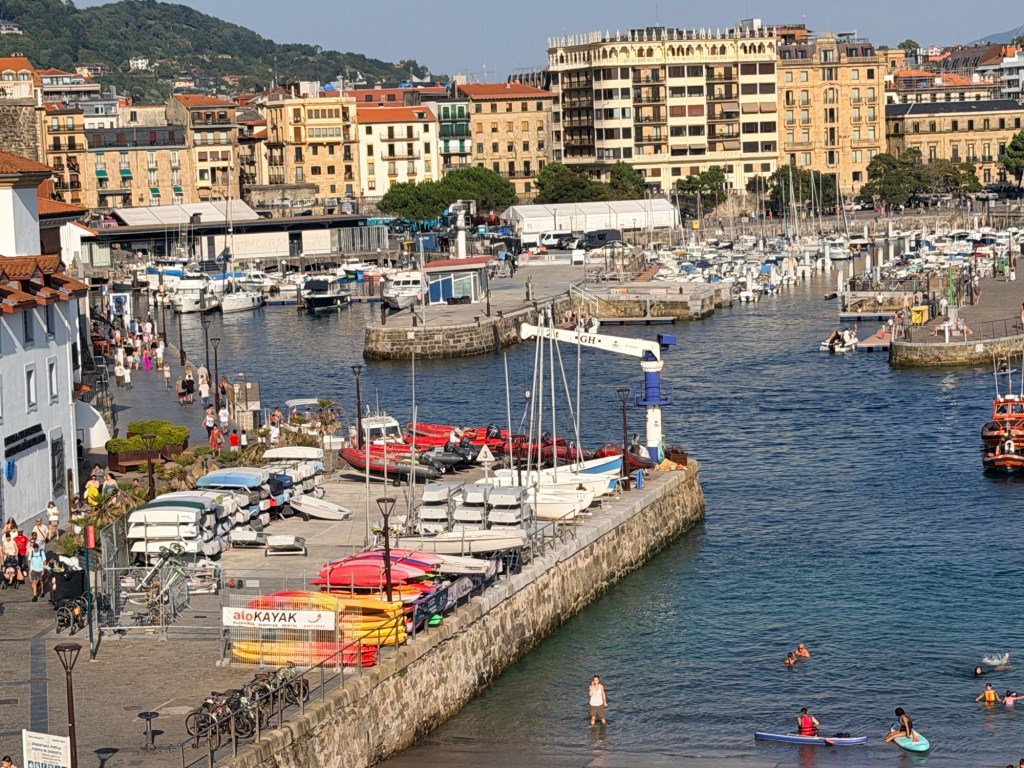
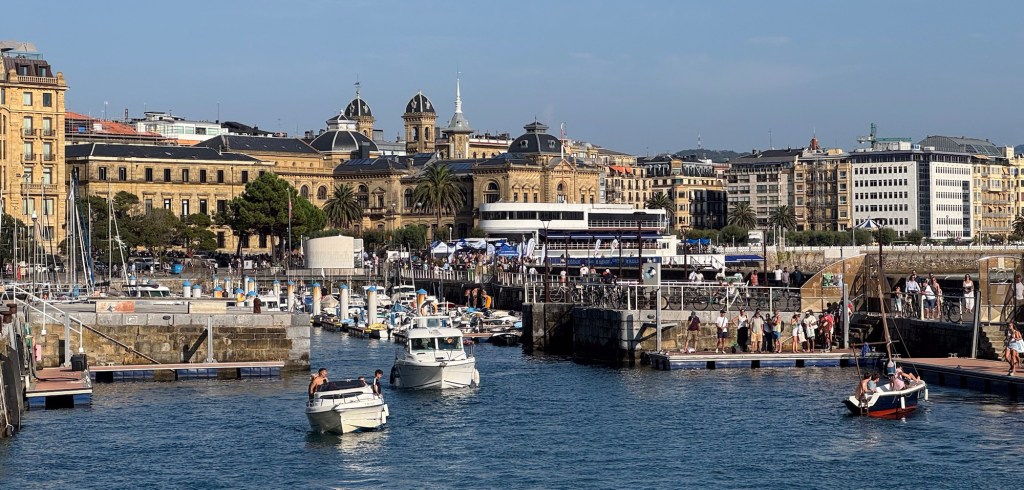
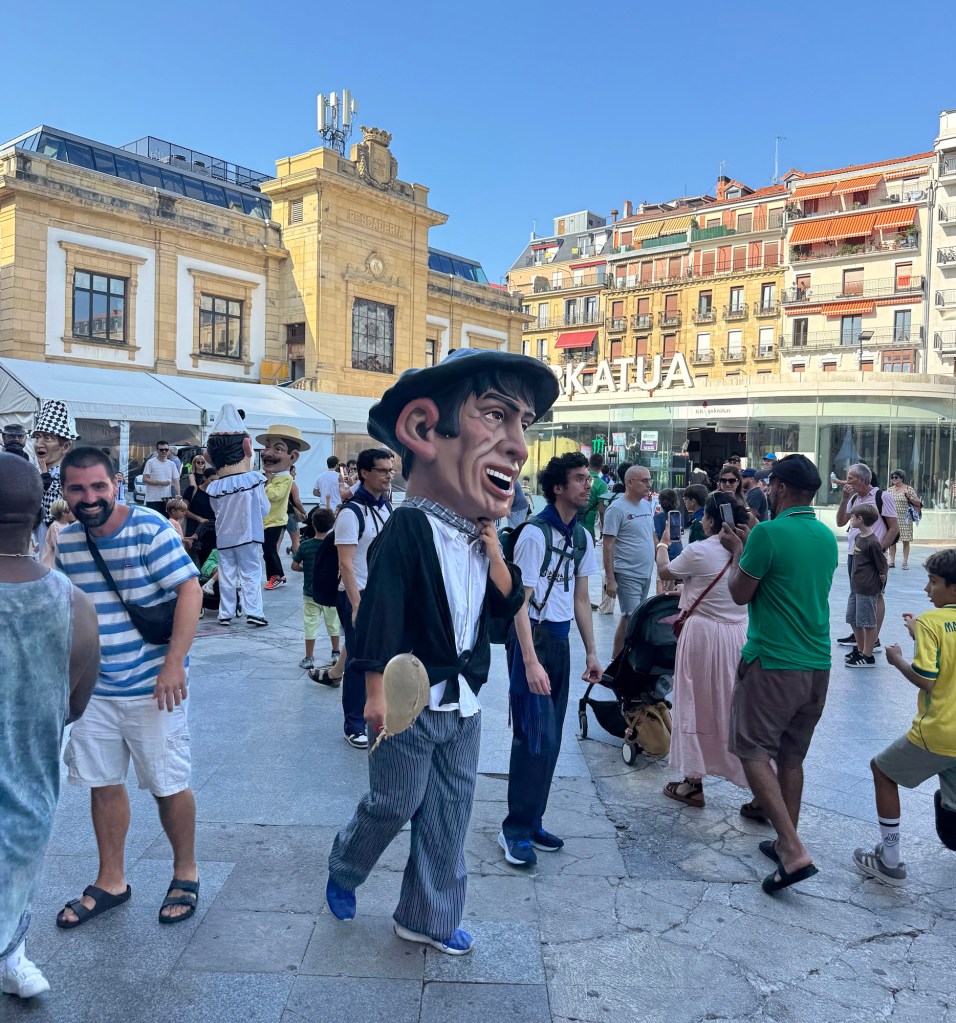
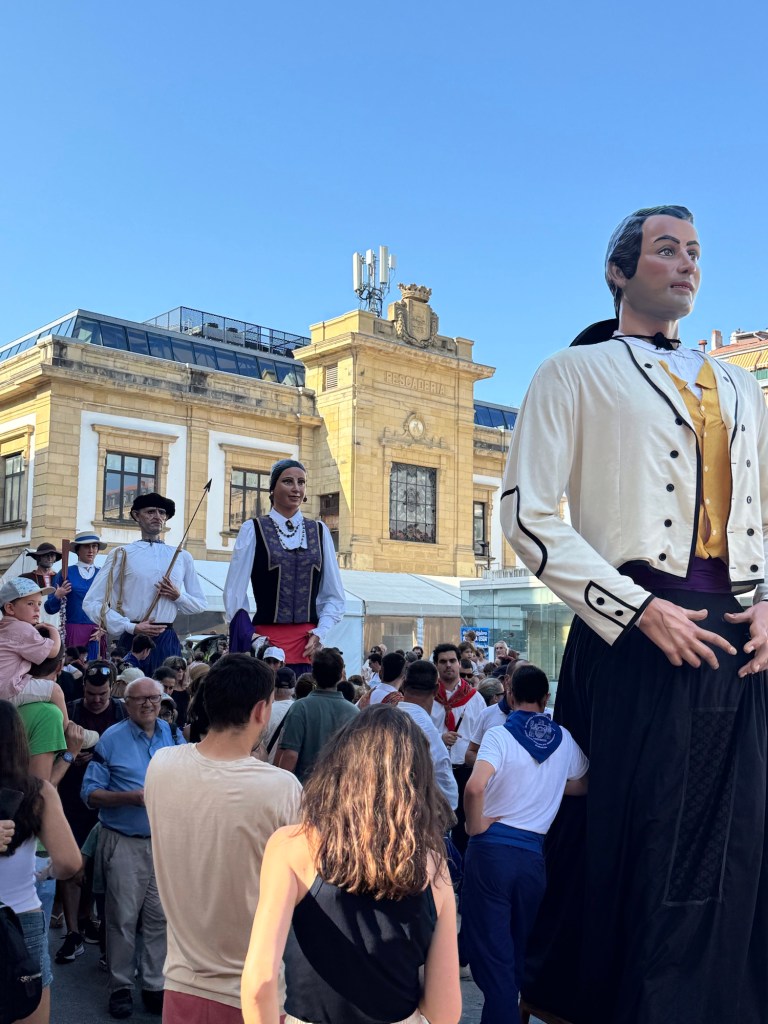
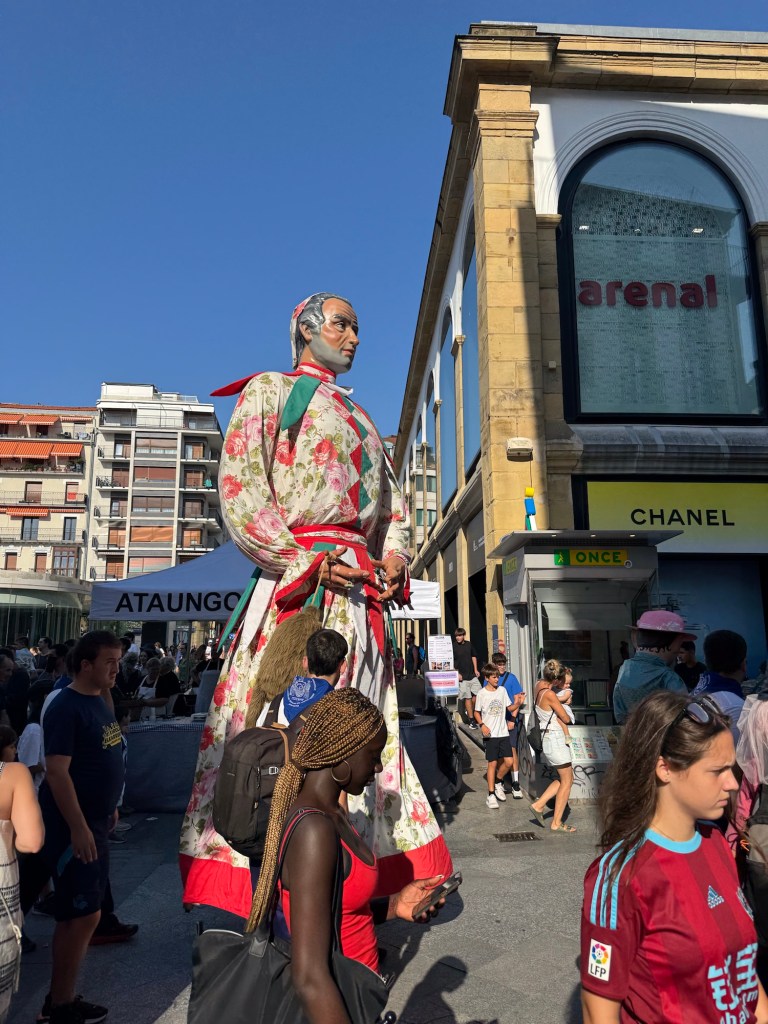
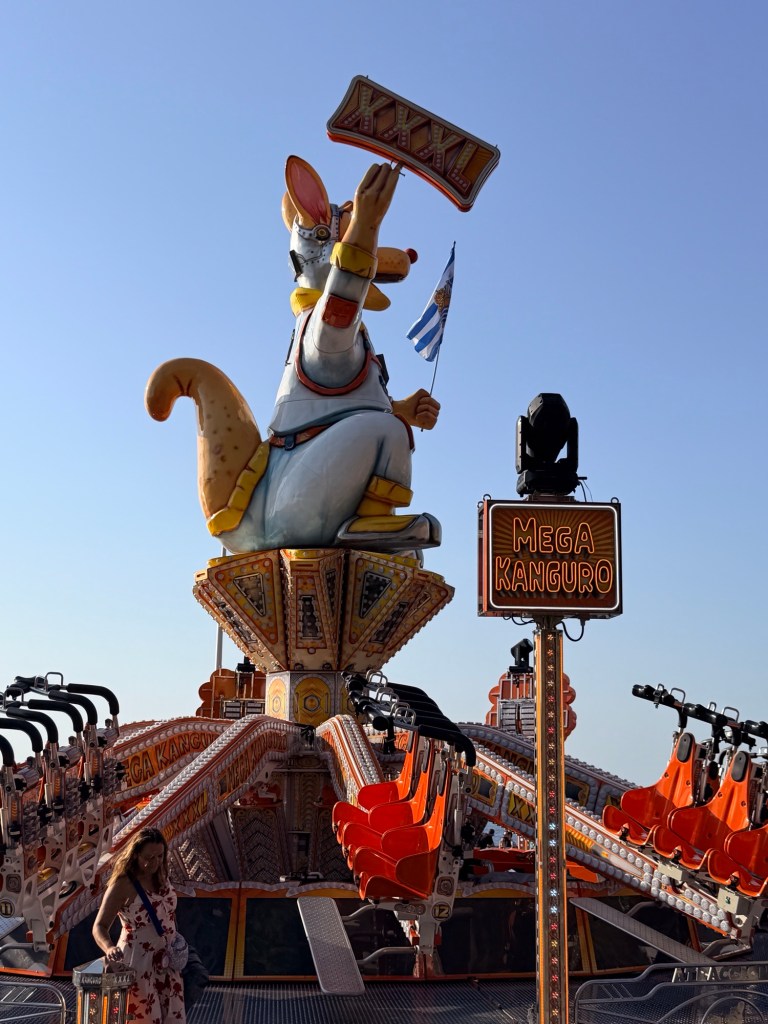
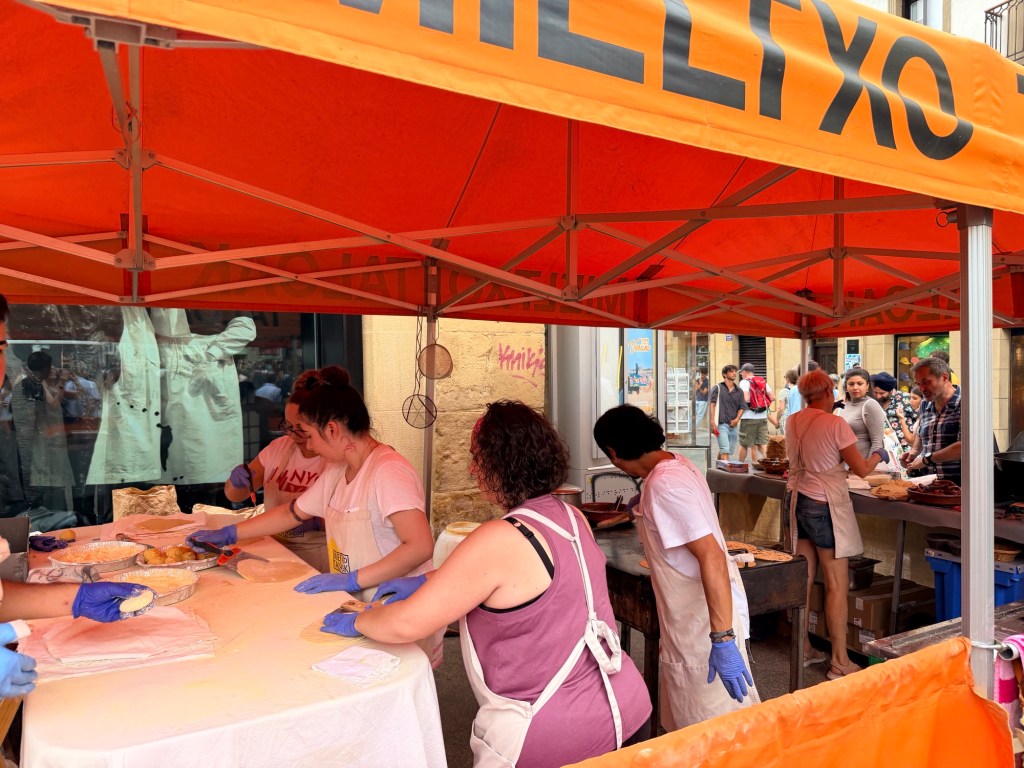
Again, Ruthie had booked well with our hotel being in the old town and close to the beach and river. We knew we were going to be here for the solar eclipse but what we didn’t know was that we landed smack bang in the middle of a big festival named Semana Granda. And I do mean right in the middle. We stepped out of our accommodation to music and people dancing in the streets. There were street parades, popular Spanish bands playing songs everyone knew, (except us) fairground rides, food and gastronomic events throughout the city which ended with fireworks over the bay. It felt like we were in Rio for Carnivale without the high rise buildings.
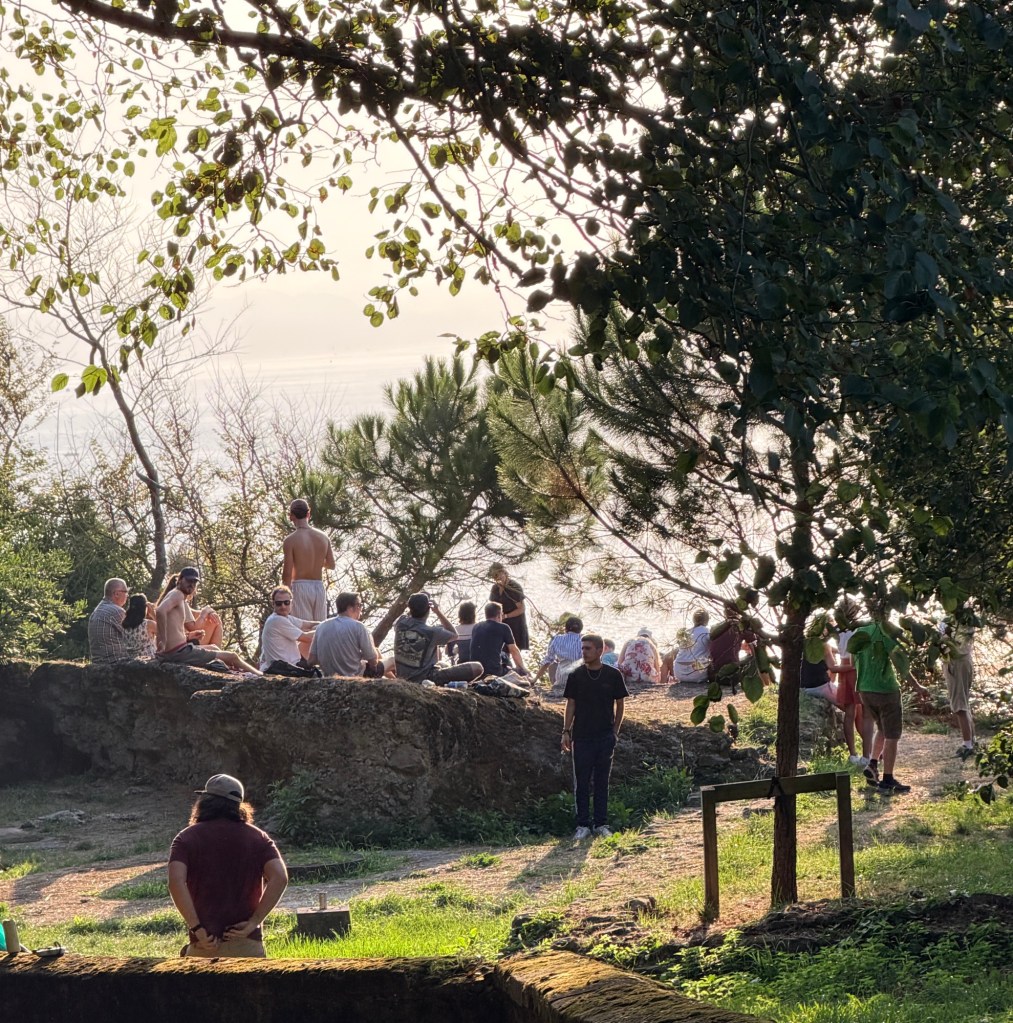
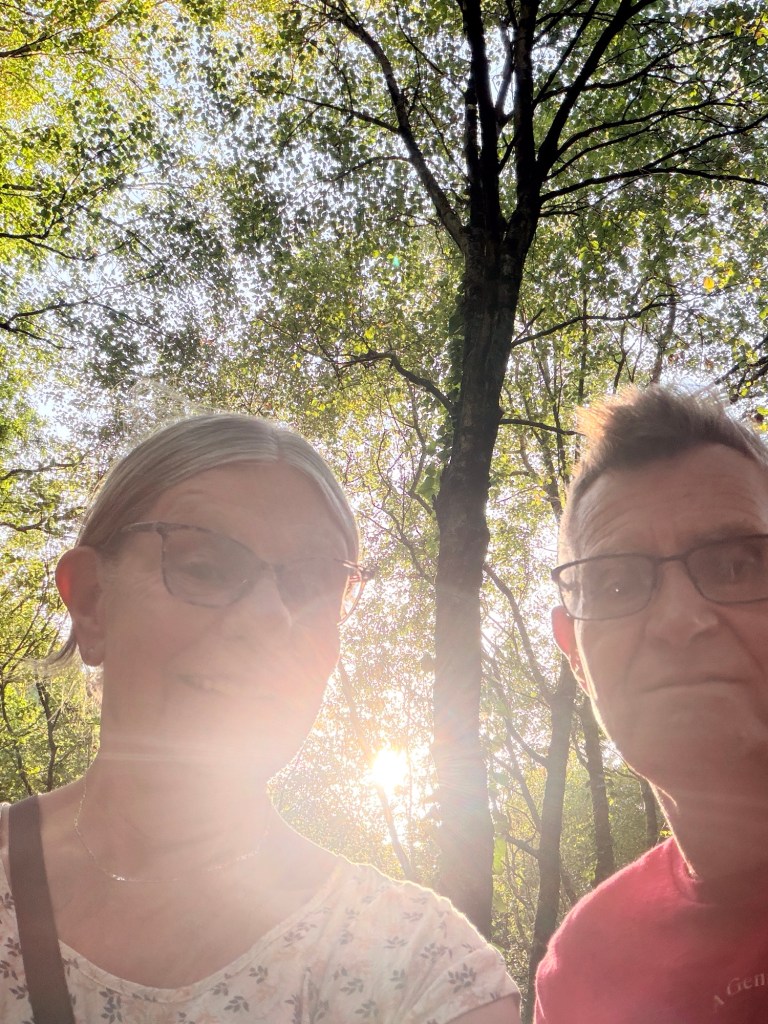
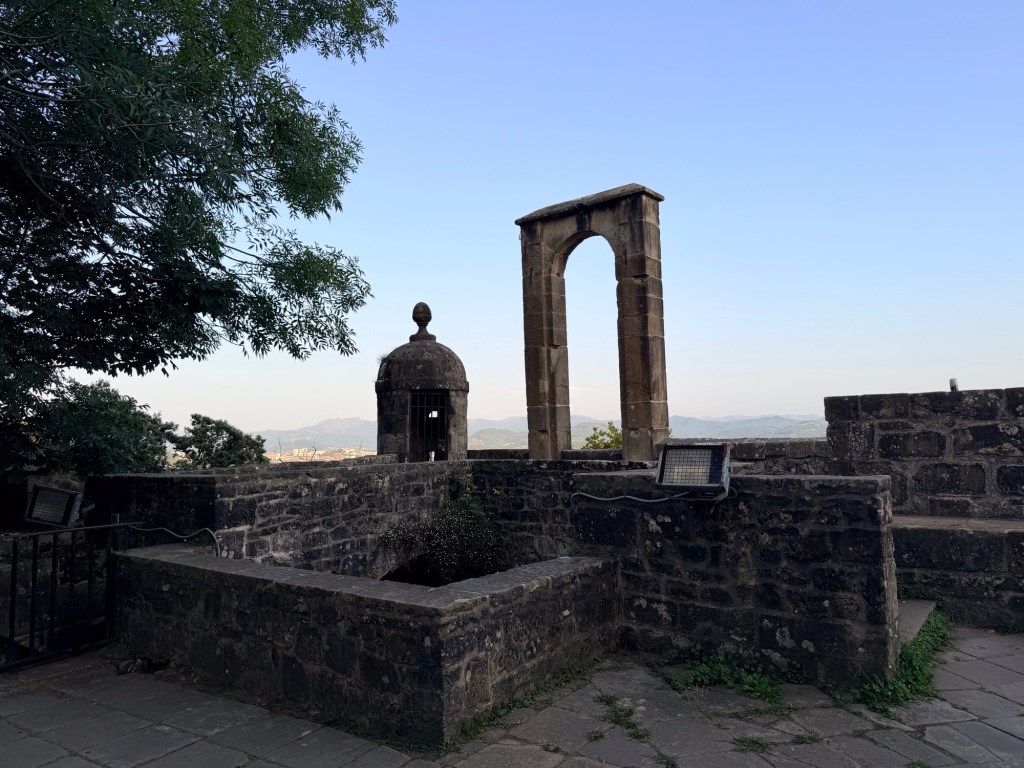
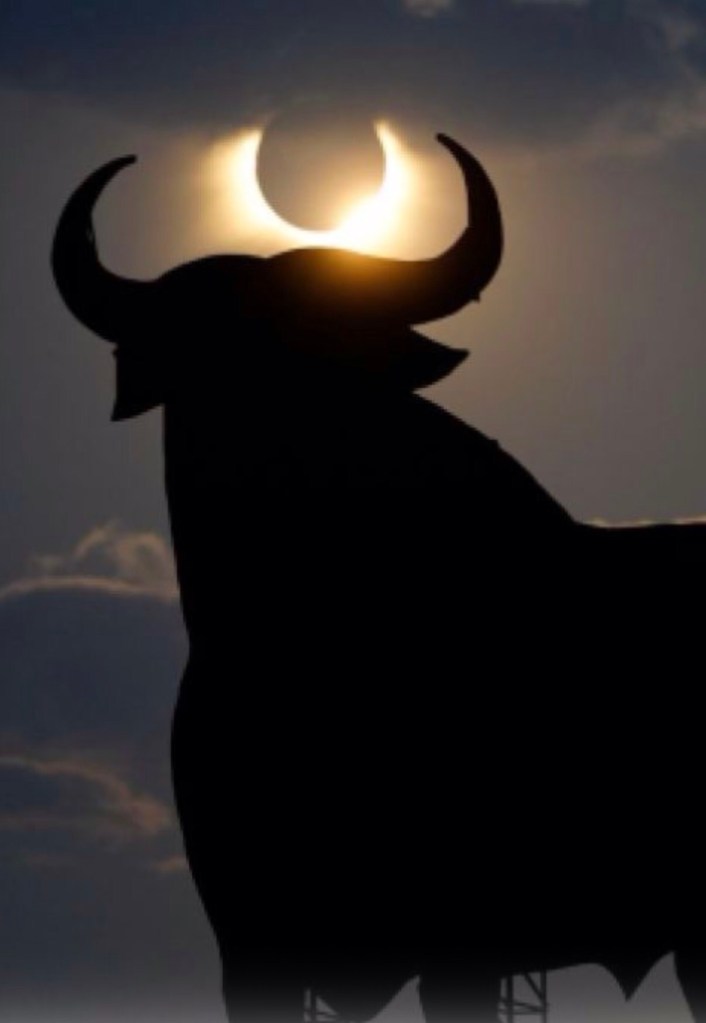
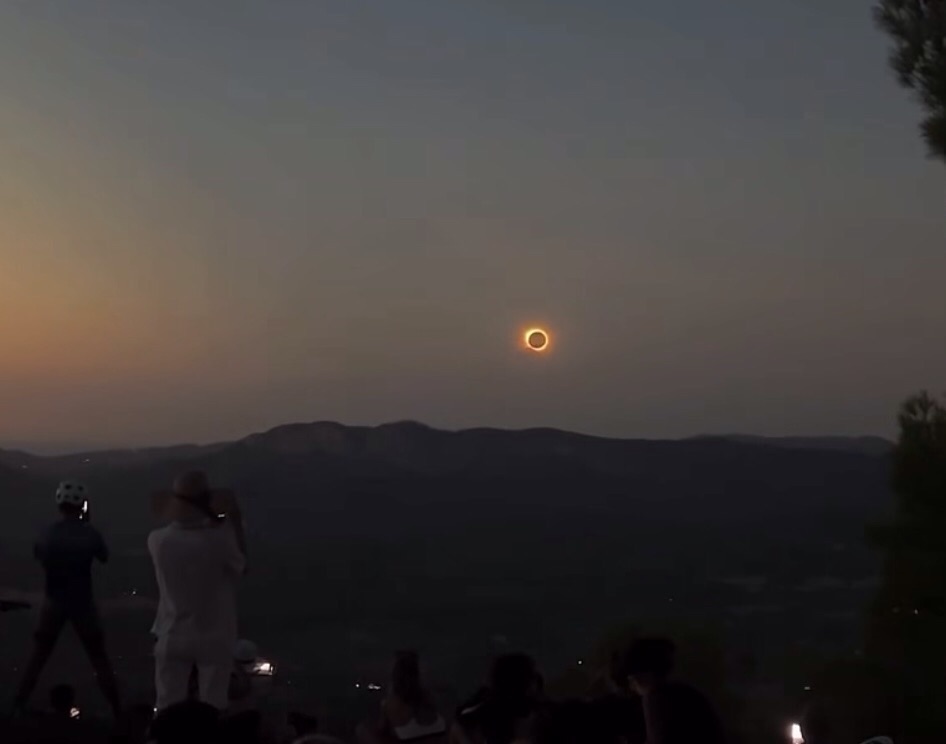
The eclipse was eerie. Birds started their nightime roosting as it began to turn dark. A kettle drum maintained a slow beat and the sound of the crowd when it turned dark made me realise how huge the crowd was that spread along the beach, the promenade and the hill behind us. We weren’t equipped with special glasses (they were sold out everywhere) so walked up Mt Urgull which was a very steep treed area overlooking the sunset. There were warnings not to use your phone camera for photos or to look directly at the eclipse so we used the trees as a filter! Once we’d descended from our hilltop hideway Ruthie thought it would be safe to capture a photo and we thought she had an award winner until we saw others online. Quite a phenominal event to be a part of.
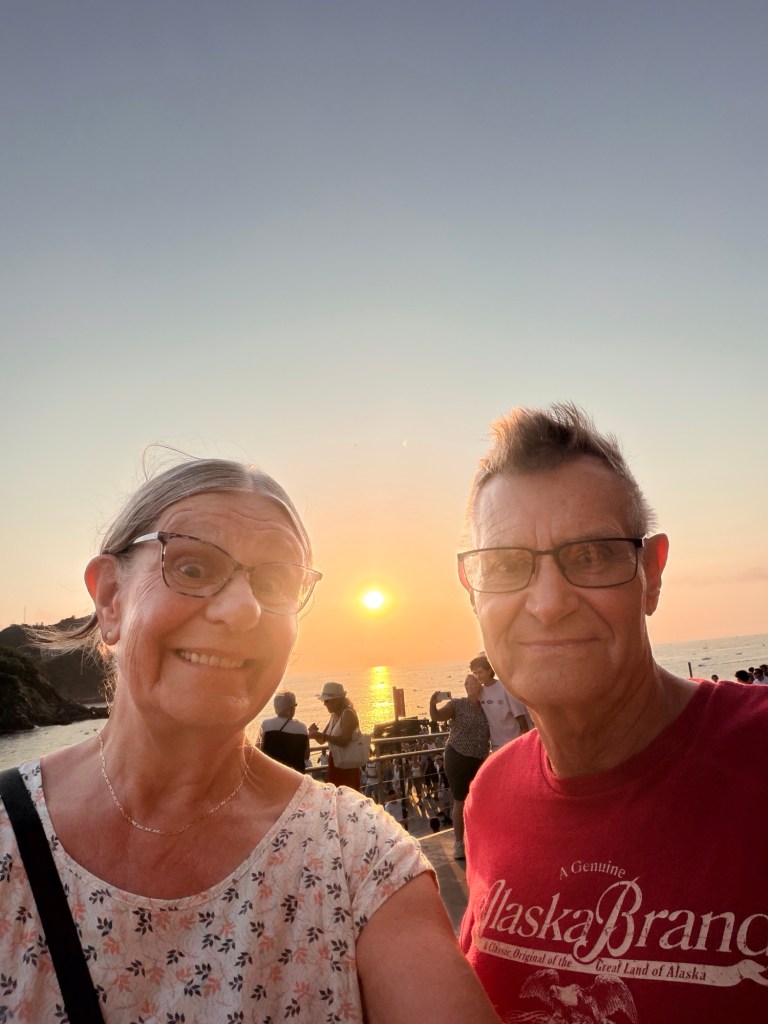
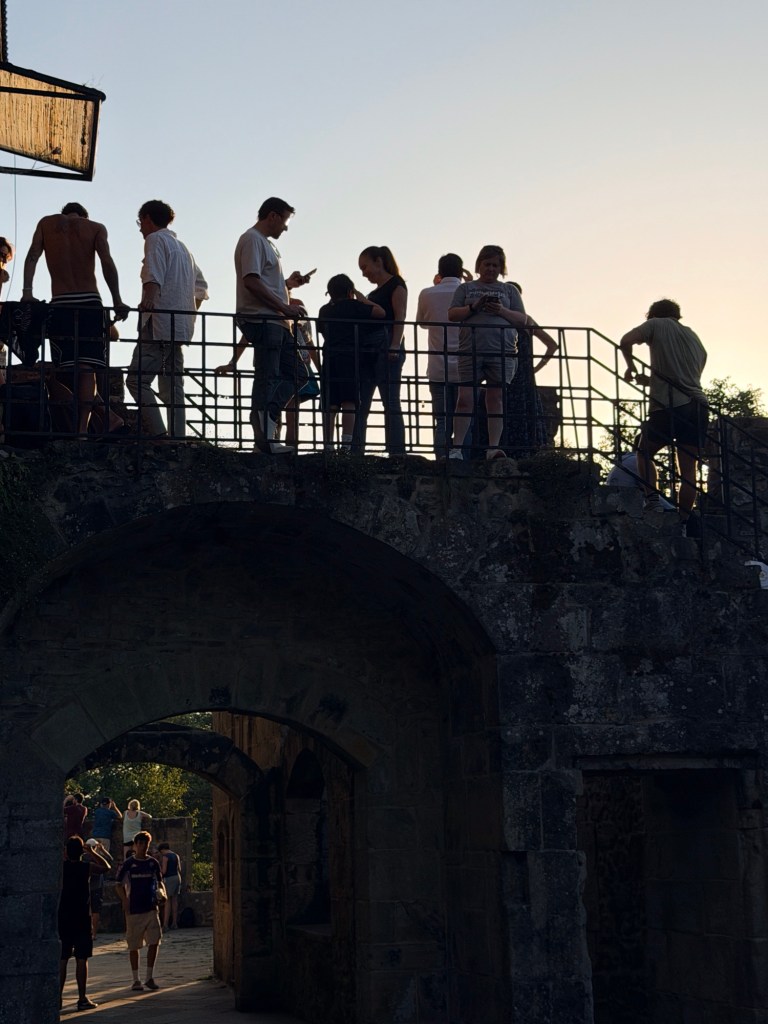
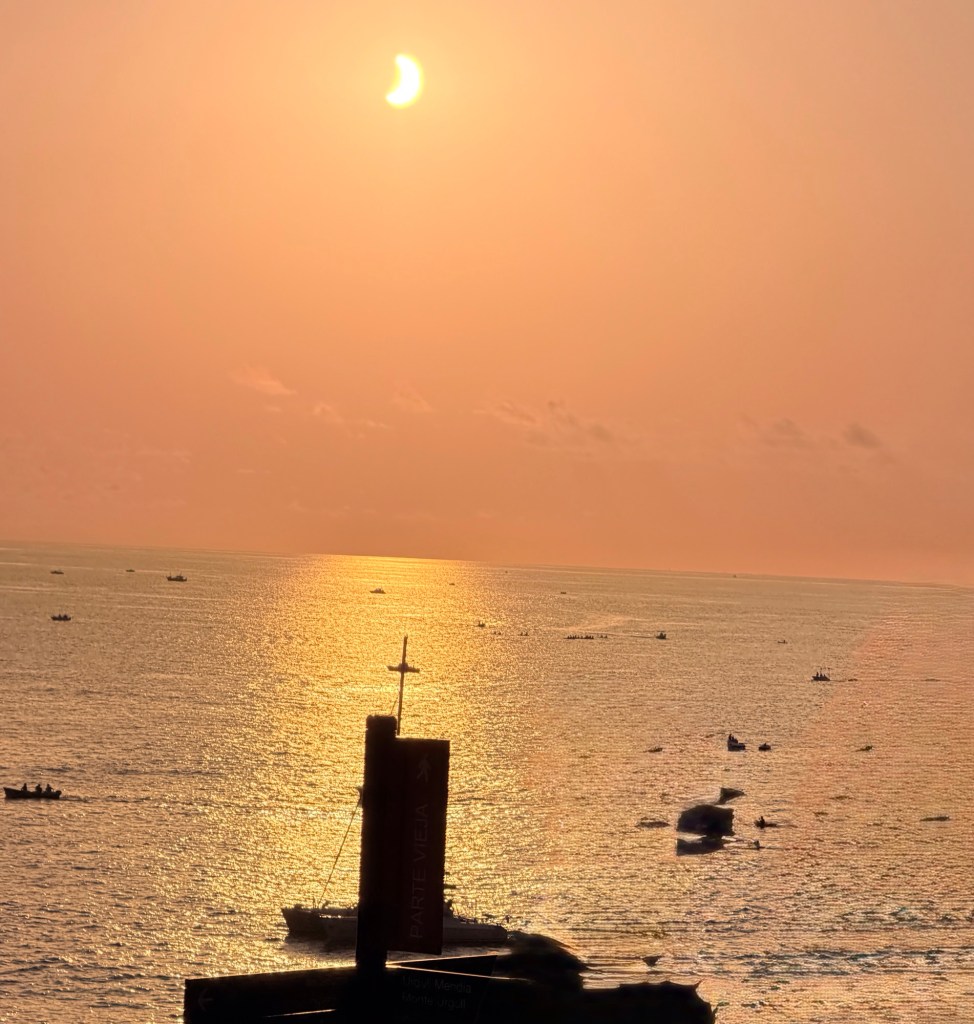
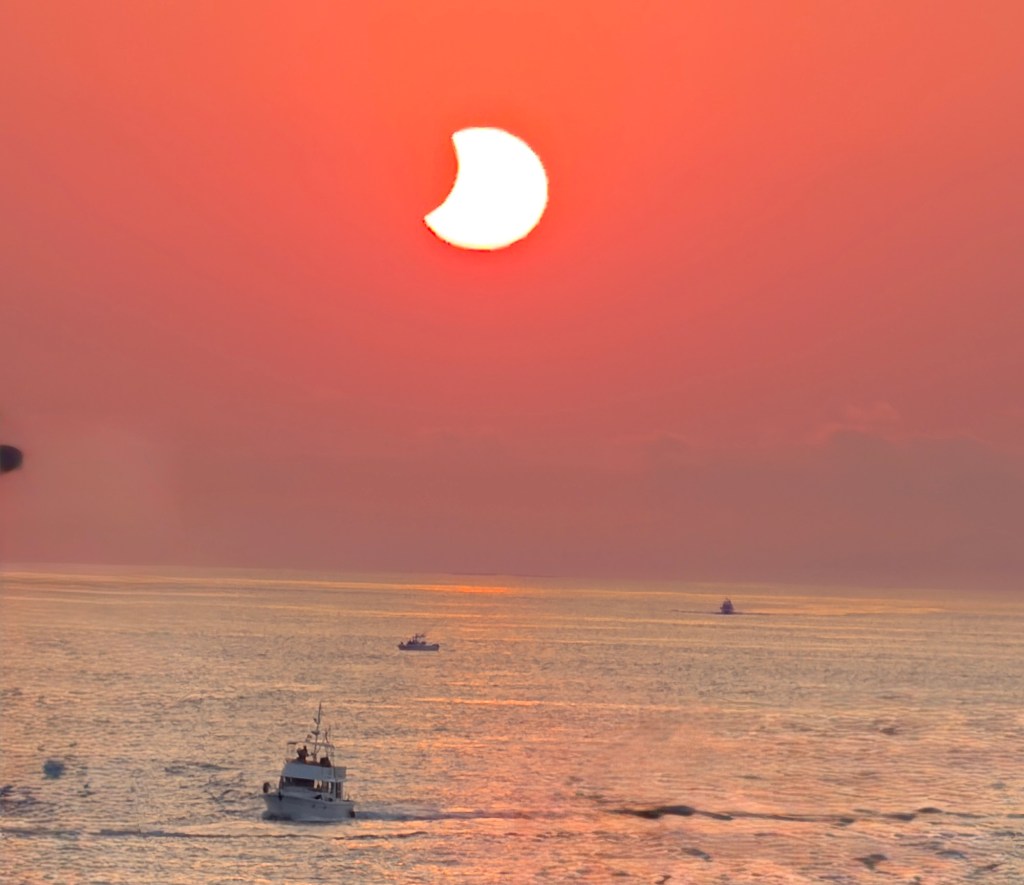
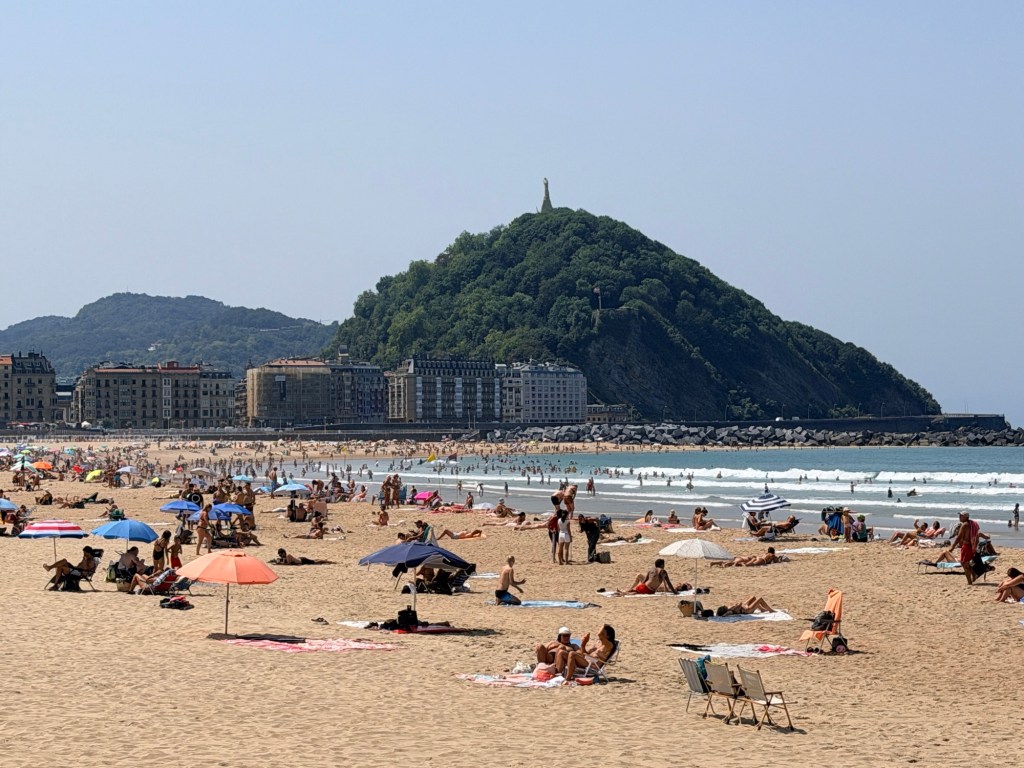
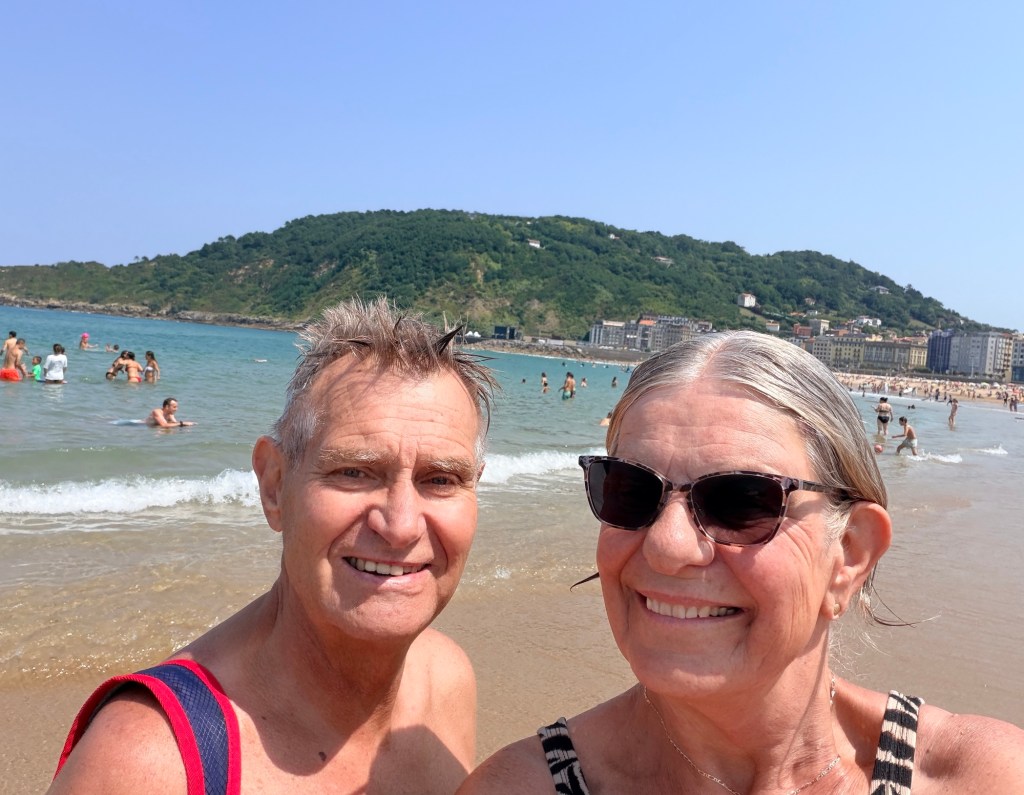
Today was an easy beach morning. The world famous La Concha beach is the first sandy beach we’ve come across in these travels and possibly why its rated as one of the best beaches in Europe. The water temperature was great and swimwear was optional. In fact no one cared what you wore or what size you were. We loved it.
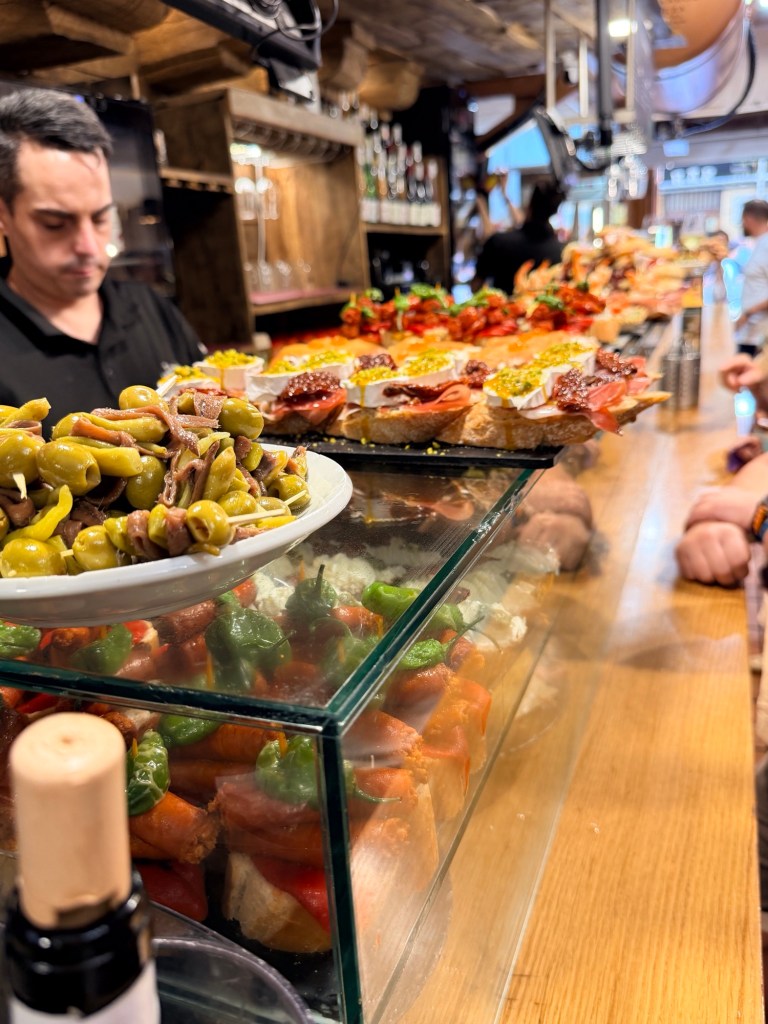
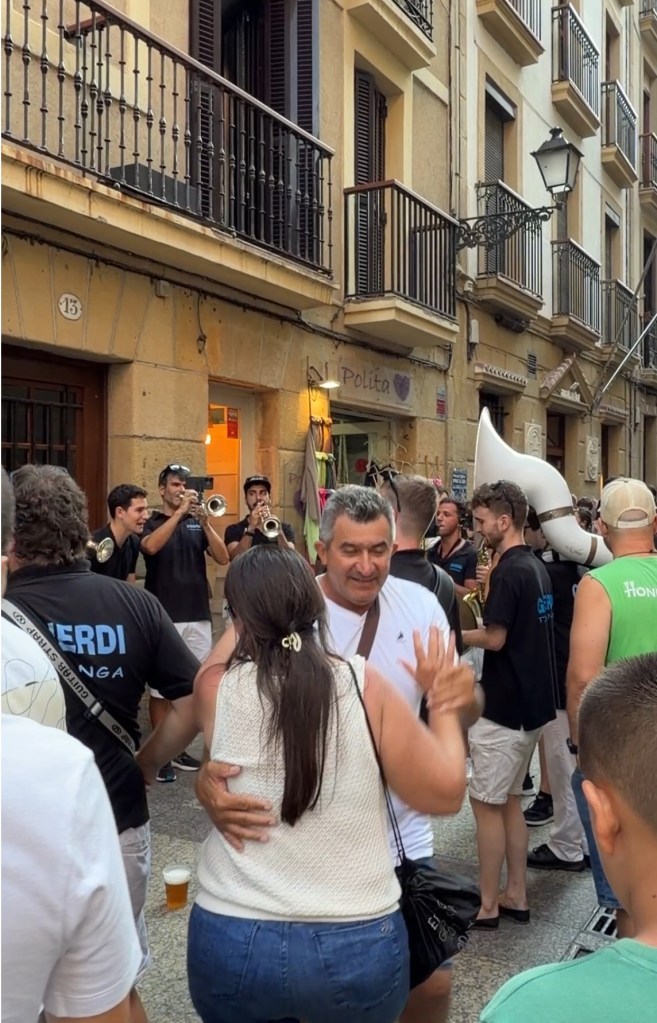
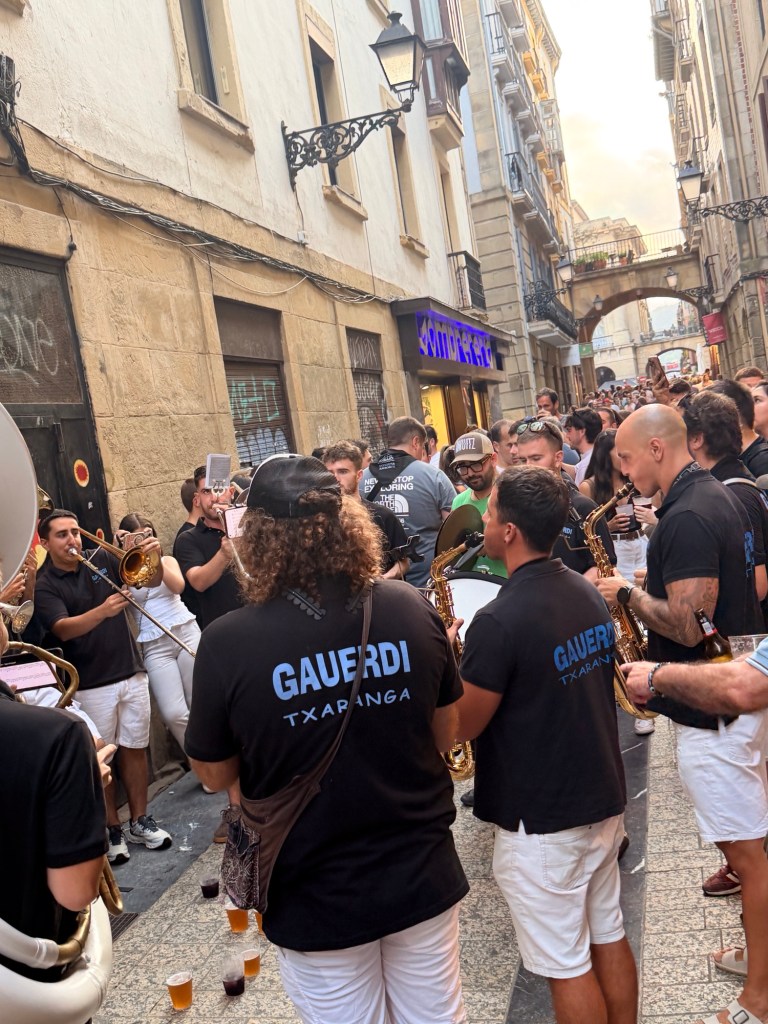
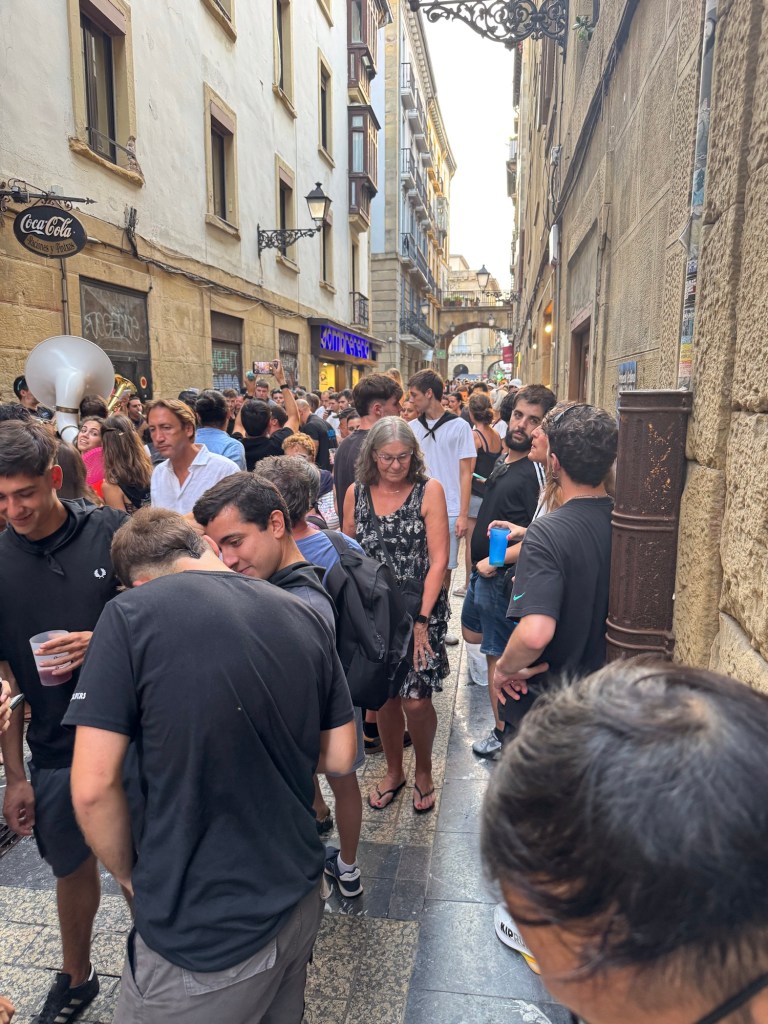
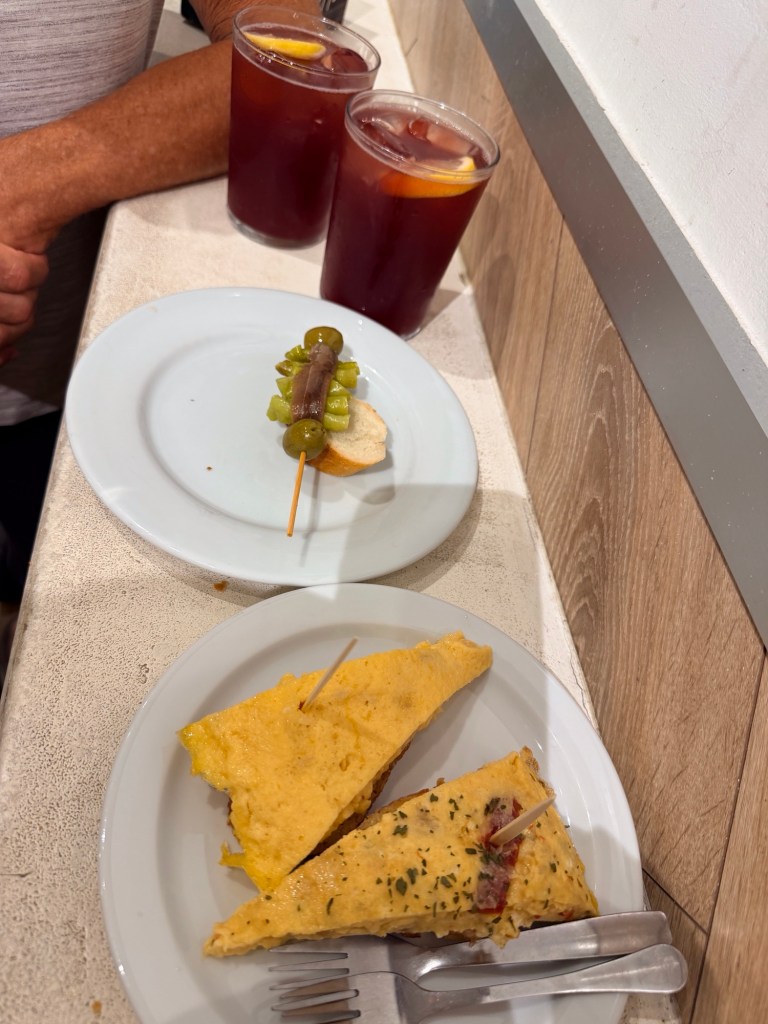
The festival theme kicked in again in the late afternoon. Music venues spread around the town and we even followed an oom-pah-pah band around the streets. Ruthie has become a groupie! It’s great people watching as the locals sing and dance to the brass band. Food eateries and bars are always very busy and you find they don’t have a lot of seating. It’s more long benches where you stand and eat your Pintxos and enjoy your Sangria. There are generally some small bench tables spilling into the streets. Maybe you turn over more customers that way? It’s a tremendous festive feel.
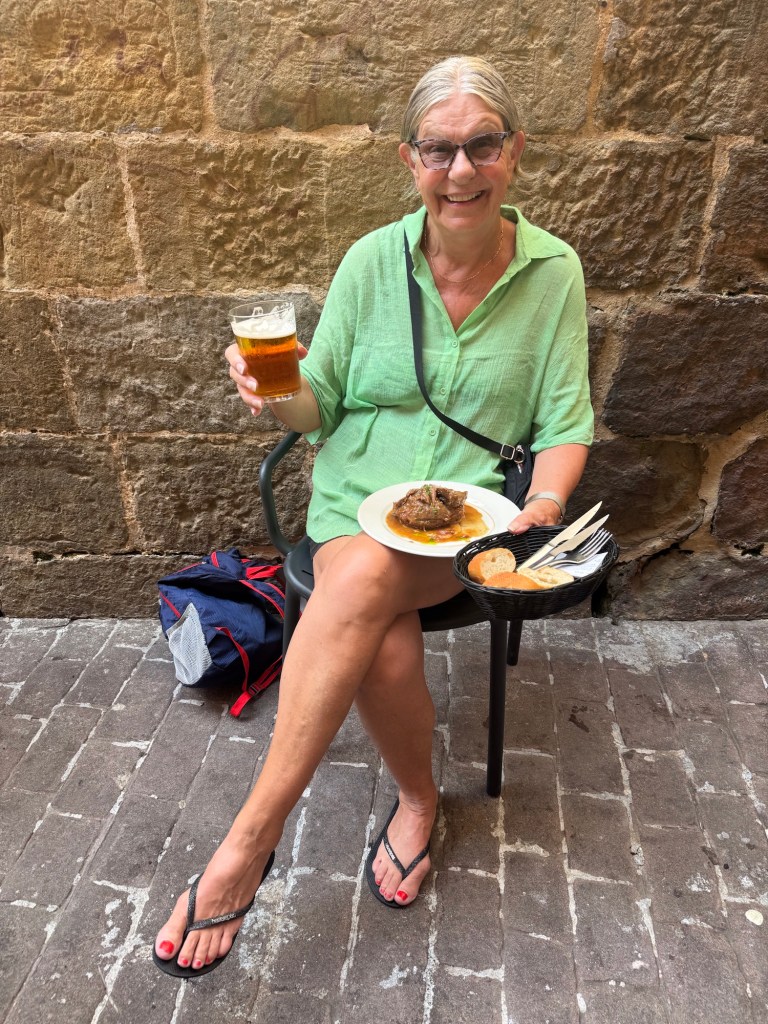
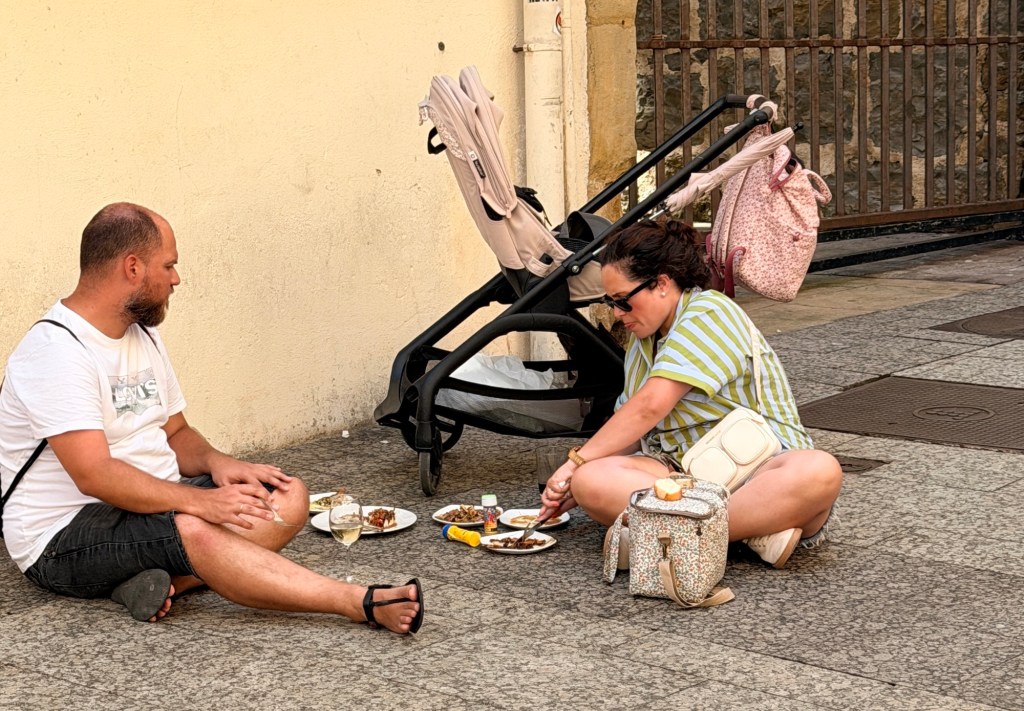
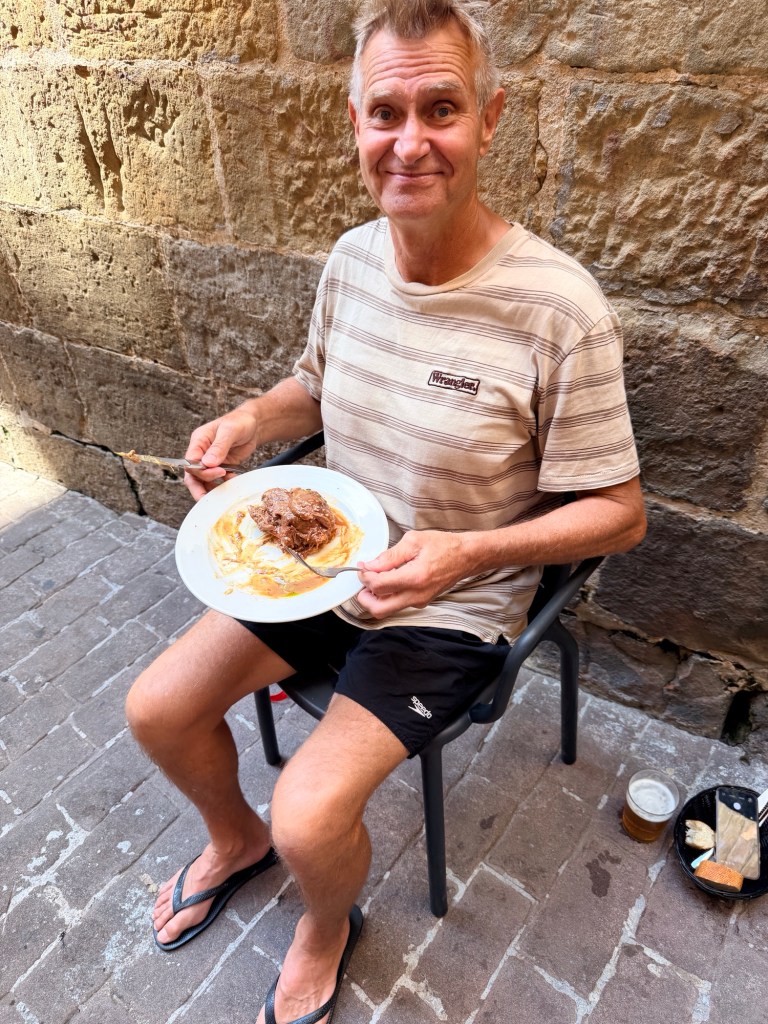
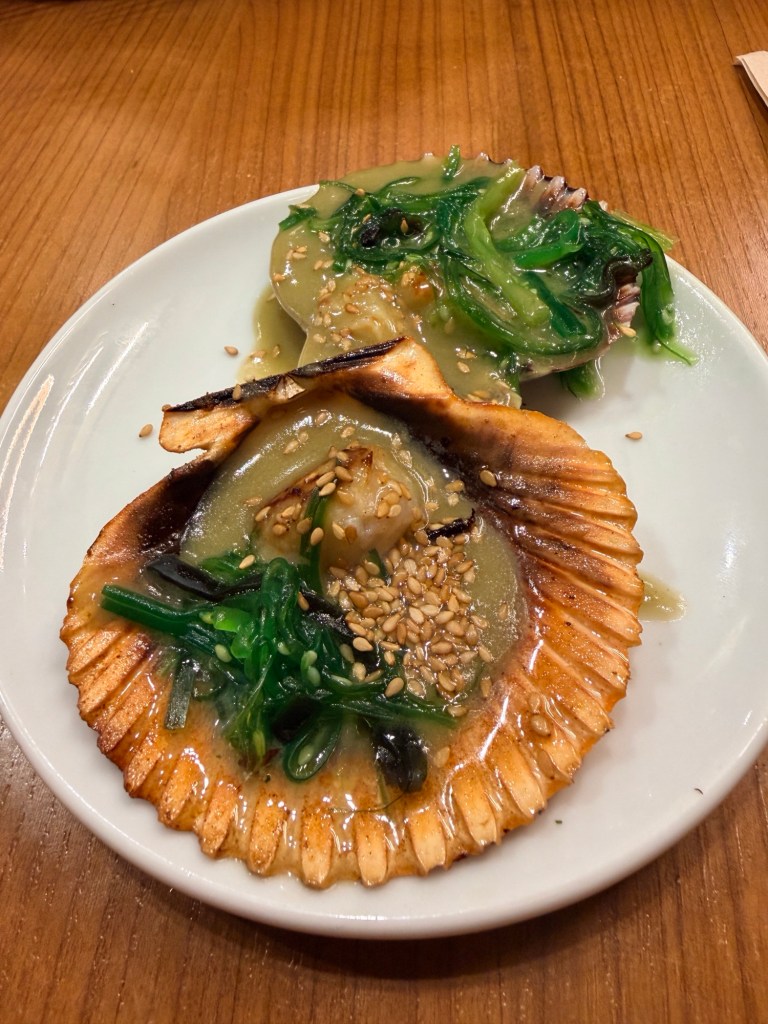
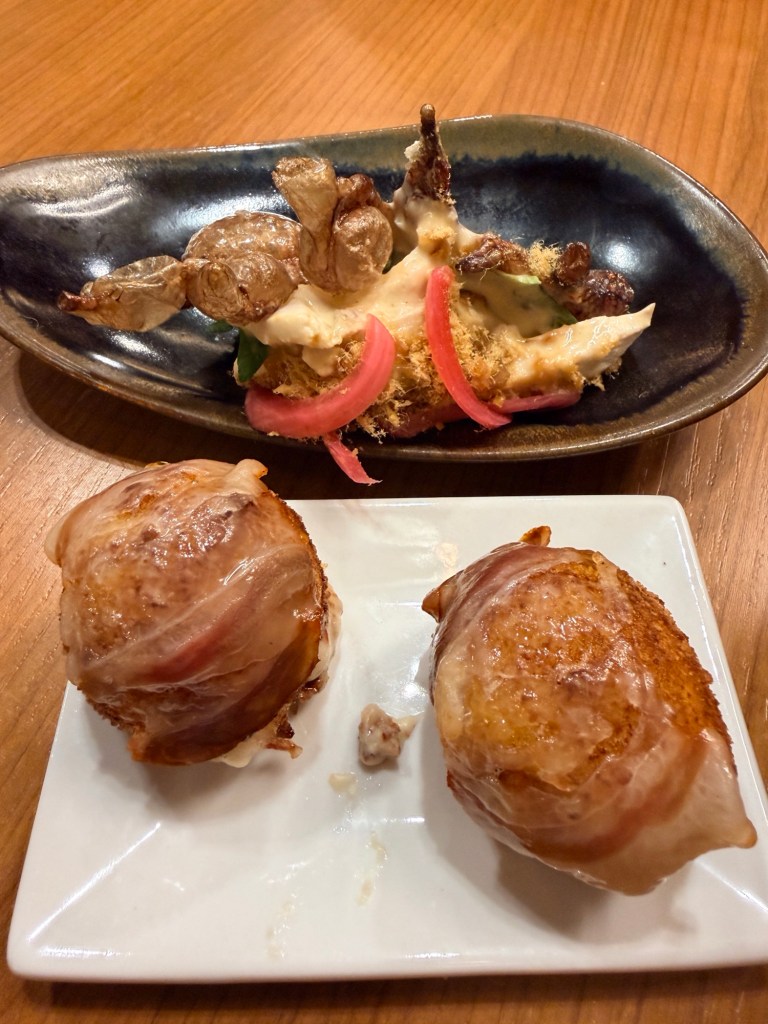
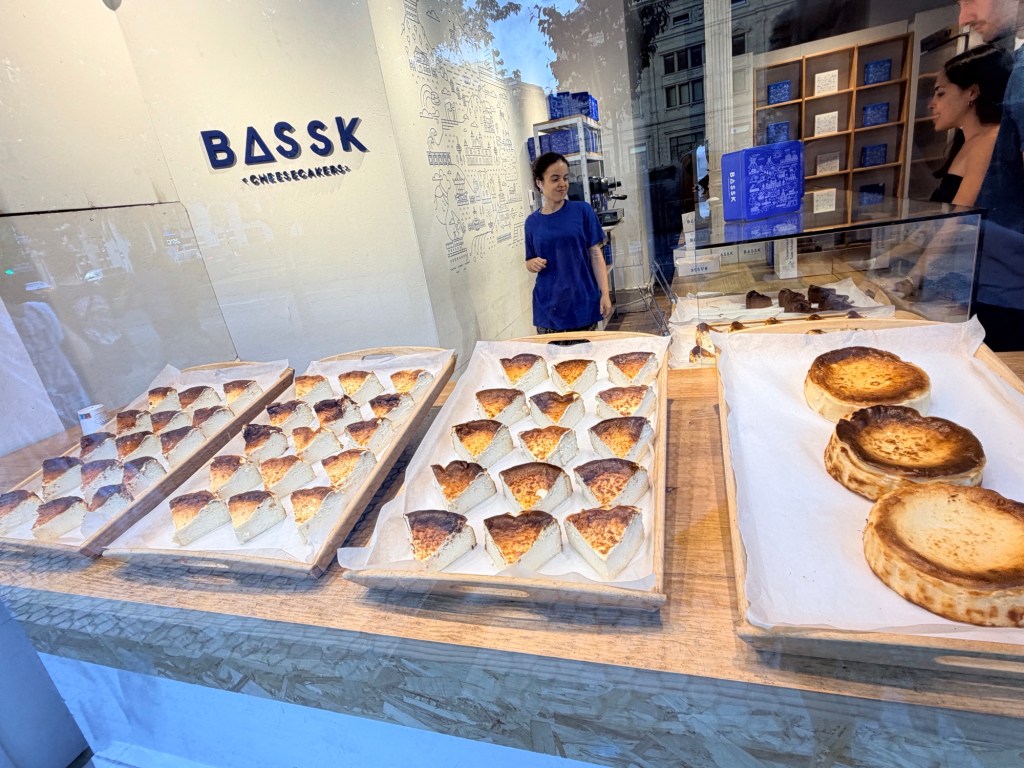
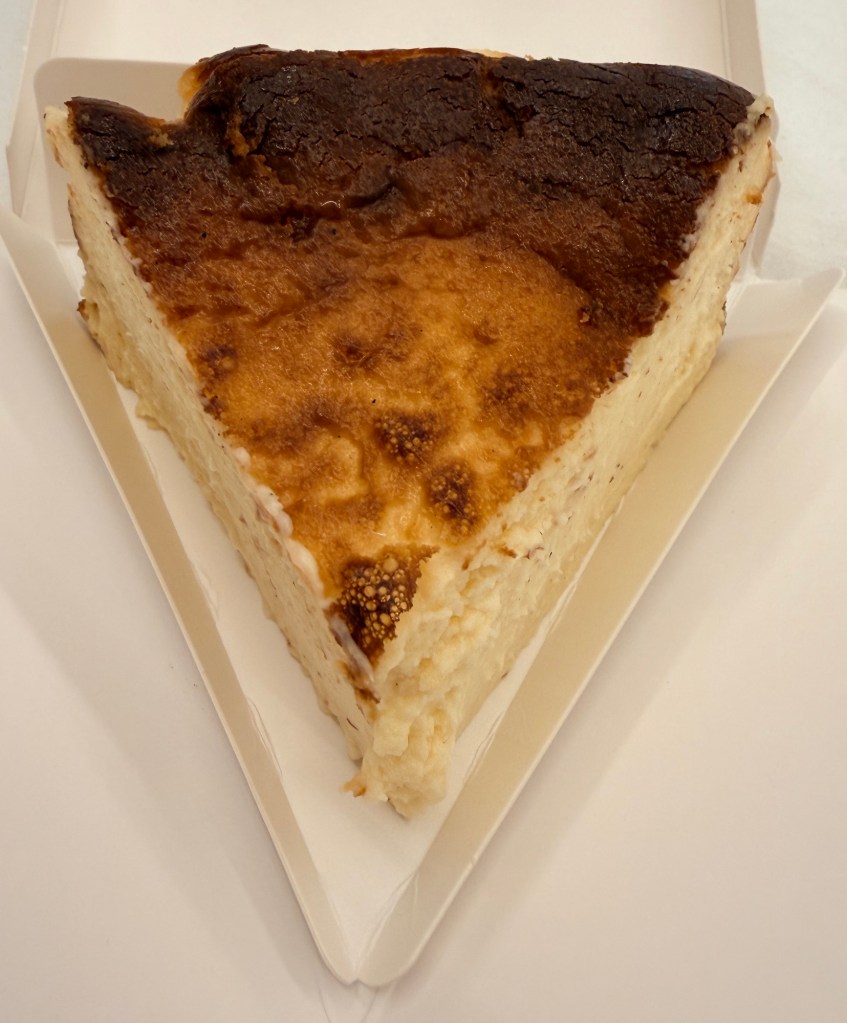
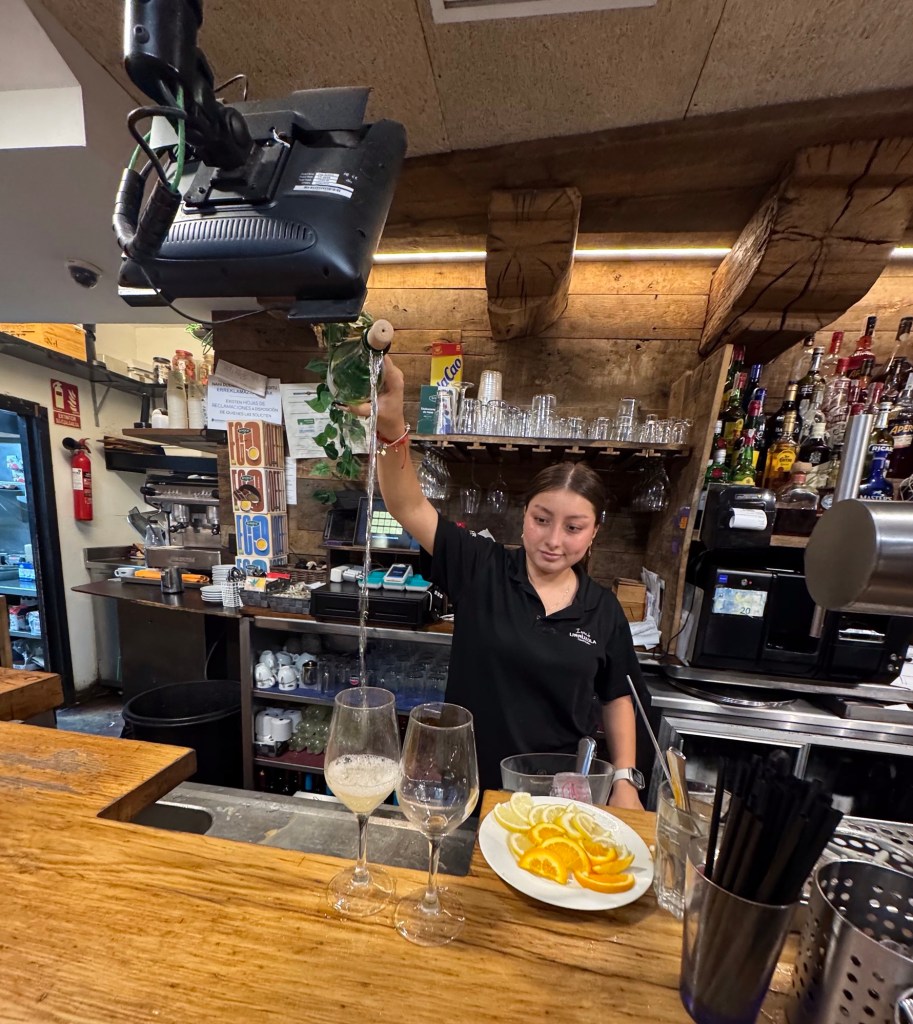
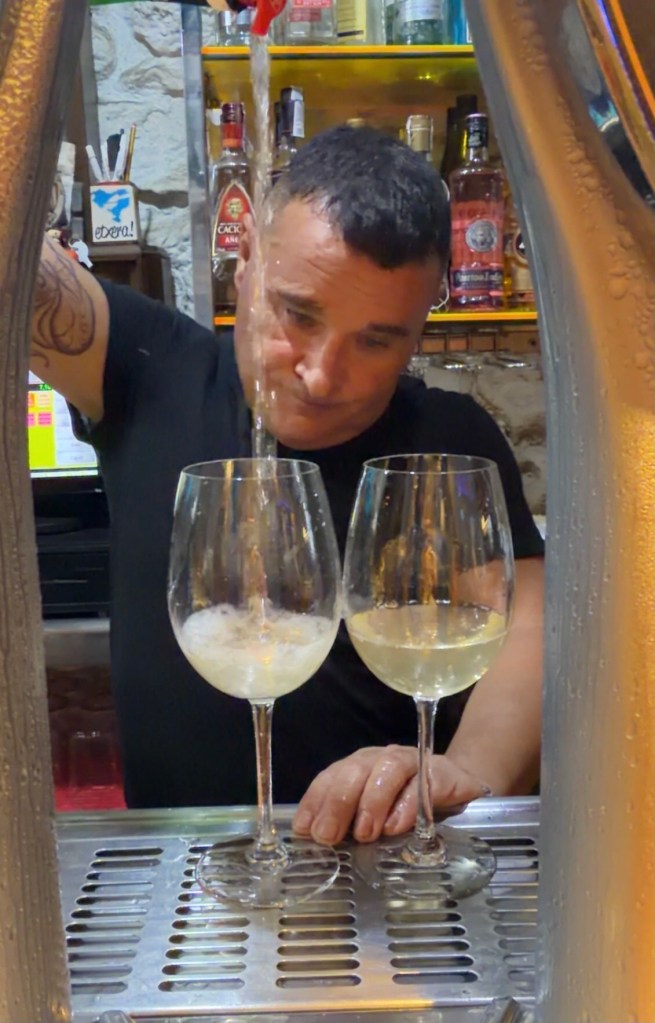
We’re really enjoying the food, Pintxos, Beef Cheeks, Croquettes, Churros, Spanish version of Tortilla with potatoes and a Gilda which is olives with Pickled Peppers and Anchovies and is widely considered the very first Pintxo. We even tried a pickled chicken crest. There are more Michelin star restaurants here than anywhere else in the world. For the 2nd time in our lives we have sat on the ground outside one eating delicious Michelin star rated food. (We did this in Hong Kong in 2012.) Although we didn’t have to queue for long (unlike other places in town, including McDonalds) there were no seats. Cheesecake is also a specialty and they describe it as a slice of San Sebastián. There’s a lighter Sangria version too made with lemon soda thats very refreshing. We also experienced Txakoli which is the dramatic high pour of wine into a glass.
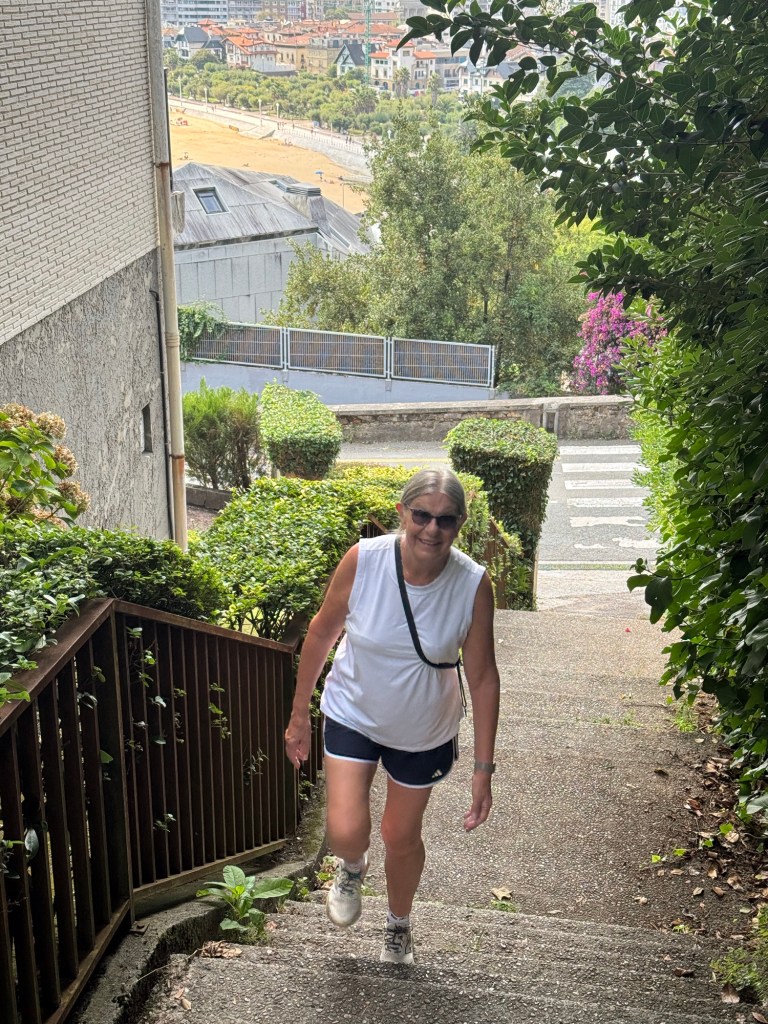
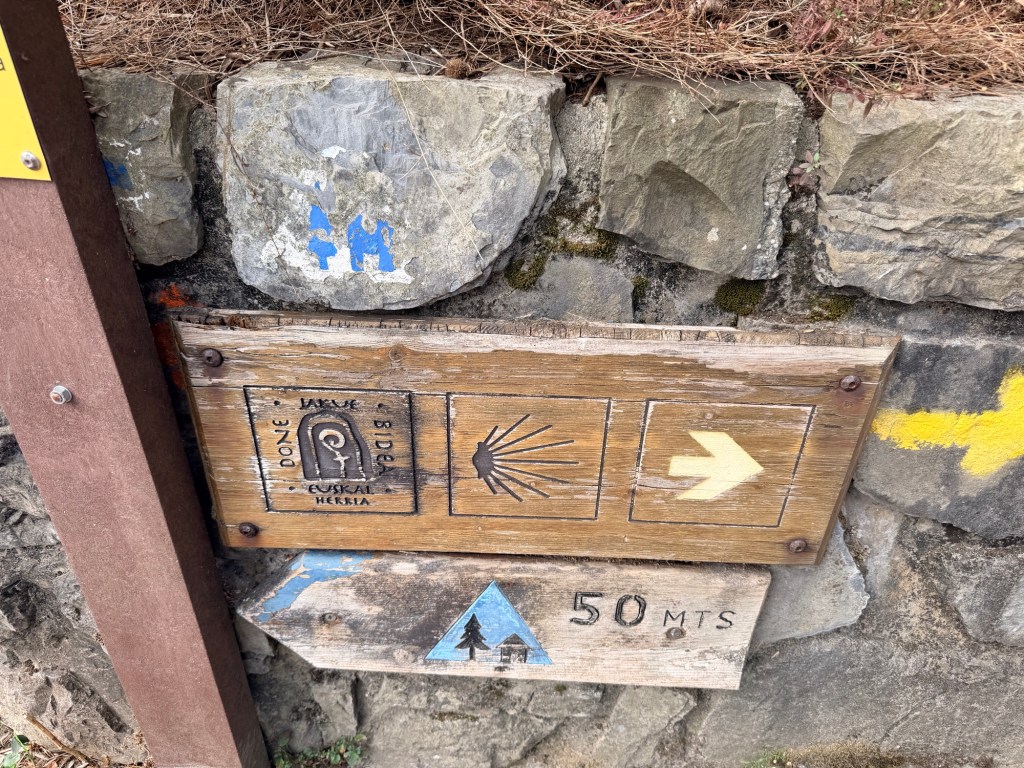
Today we did a 10km return walk up Mt Igeldo. Partly for training for our upcoming Camino walk but also because Ruthie wanted to spot one of the famous Camino clam shell symbols. Although this won’t be our starting point, one of the Camino walks go through San Sebastián. The funny thing was that we didn’t find the Camino symbol until we returned to the bottom of our mountain walk. Hopefully, they’re easier to spot when we’re relying on them.
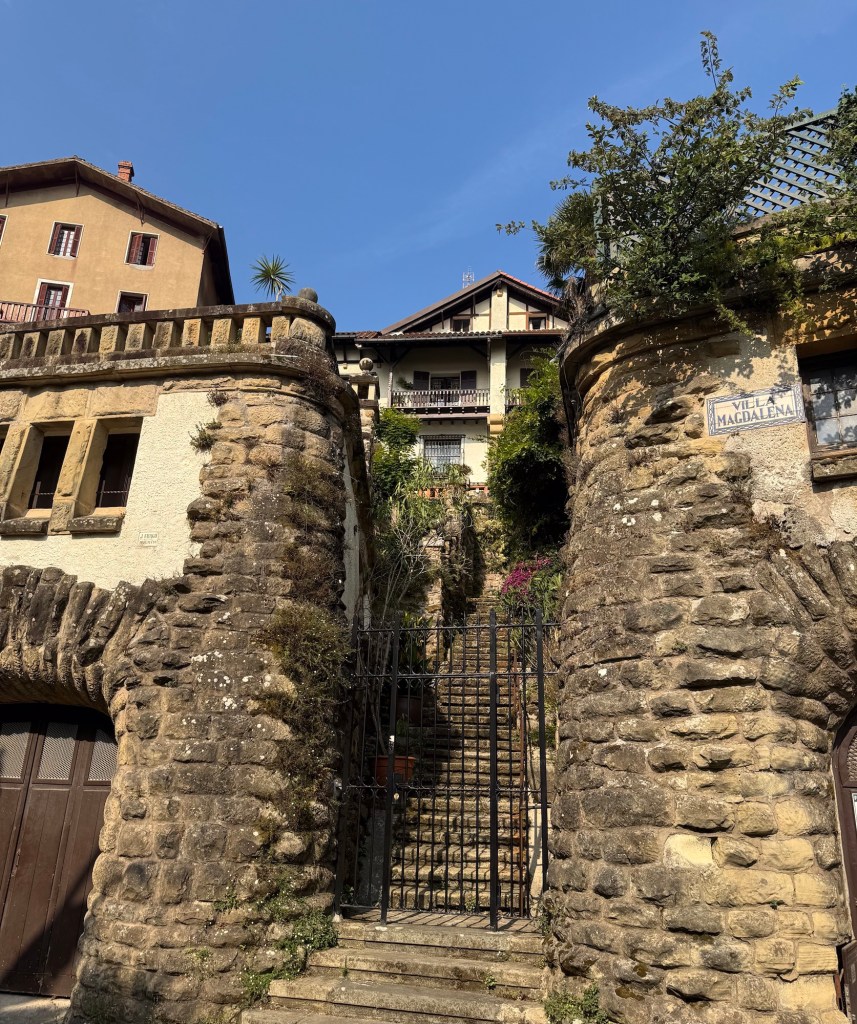
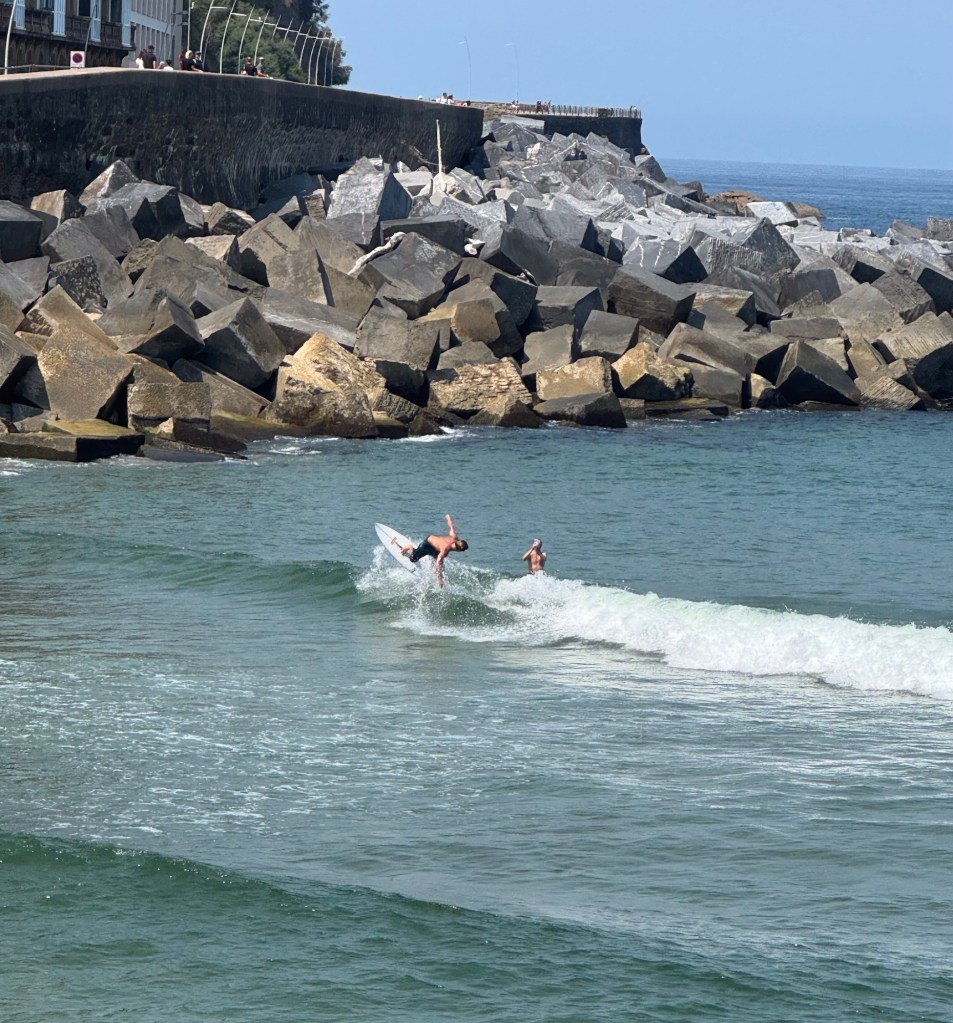
Another recovery swim, this time at Zurriola beach helped our aching muscles. Zurri as the locals call it attracts surfers and is a hub of beach activity like volleyball and beach tennis. We finished with delicious street food.
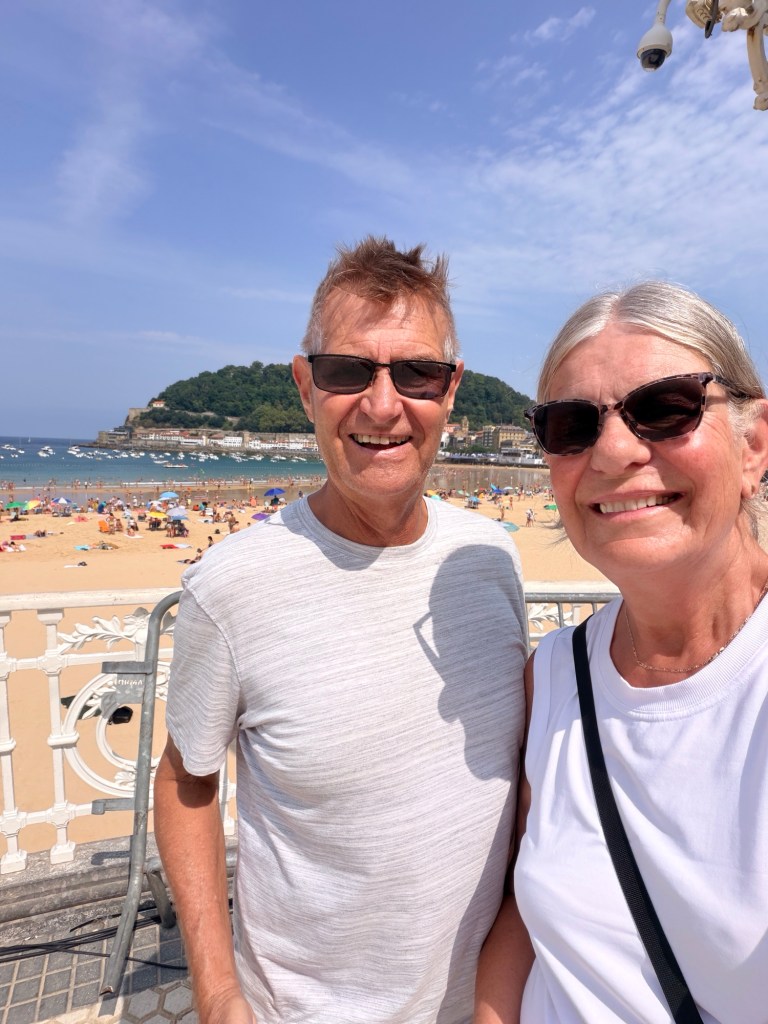
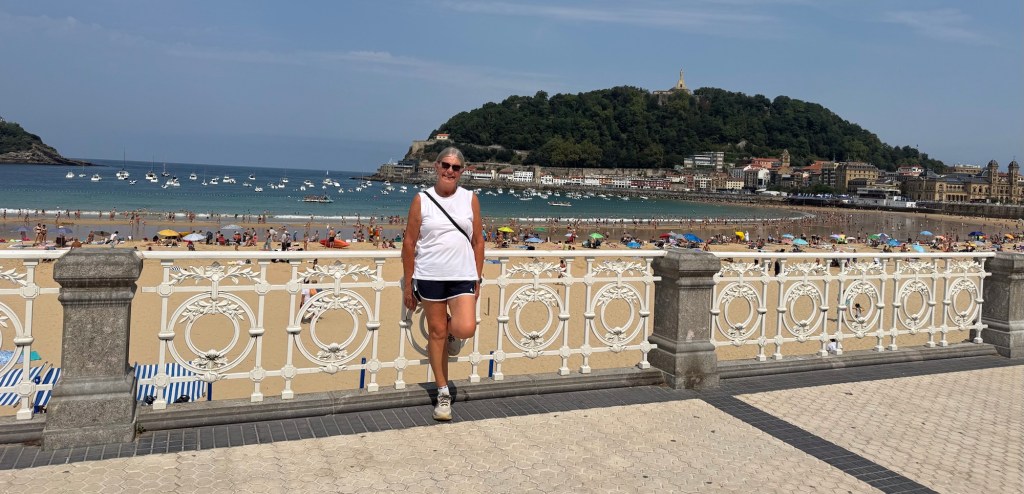
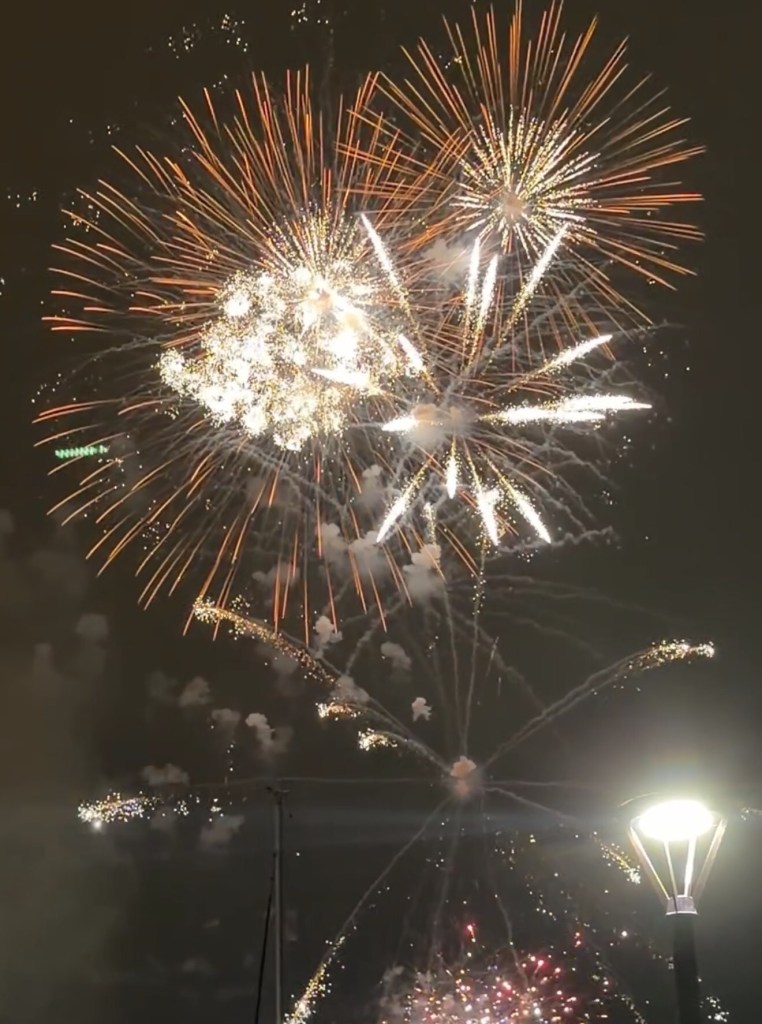
The fireworks are a competition between countries with a different country having a turn each night during the festival. They happen in La Concha bay over the water for 20 minutes. We watched them the first night here and they didn’t sound too loud but maybe we were a distance away. They hold them each night at 10:45pm. So the second night we didn’t bother but suddenly the sound from our hotel room sounded like world war three had commenced. It really did sound like bombs being dropped, with walls and windows shaking amid the loud bangs and explosions. The third night we decided we may as well stay up and go and watch them. This time we must have had a closer vantage point. Again spectacular but the sound ricocheting off the buildings was enormous! I’m not sure how the permanent residents cope with this every night for a week.
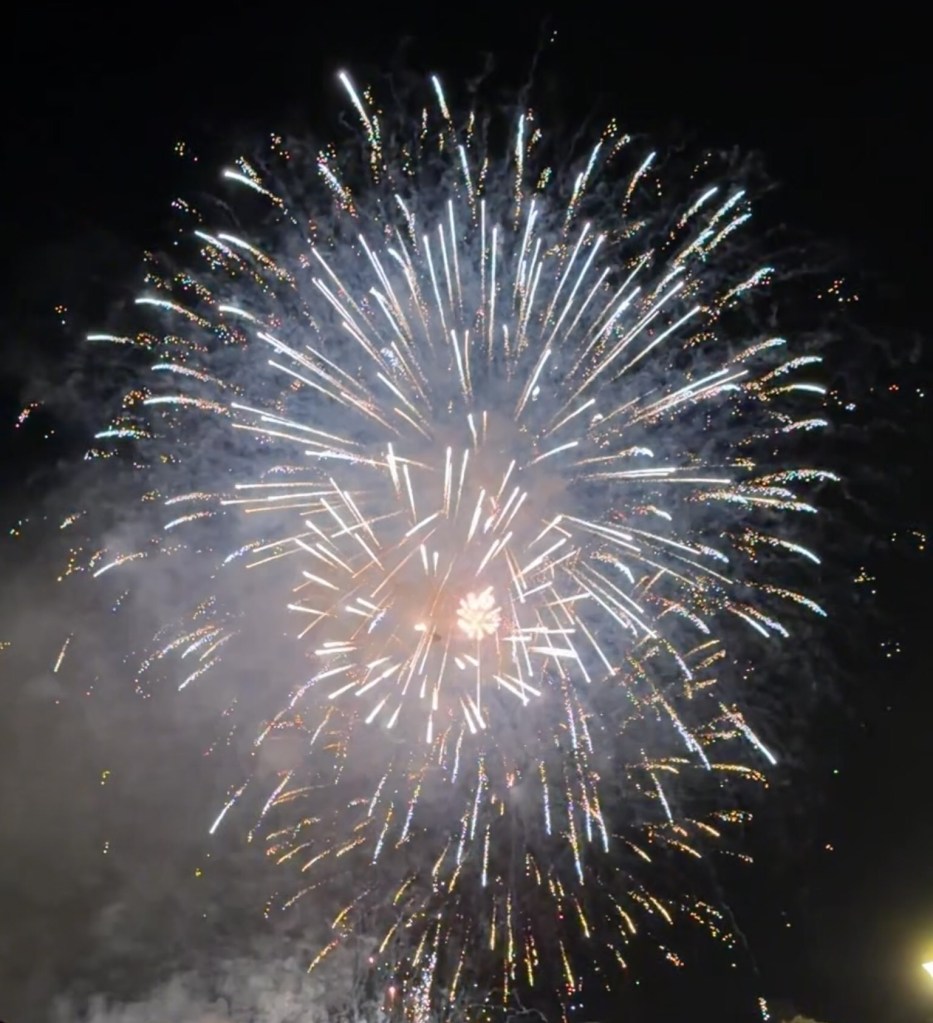
San Sebastián has been one of our favourite places but sadly it’s time to move on.
Bilbao
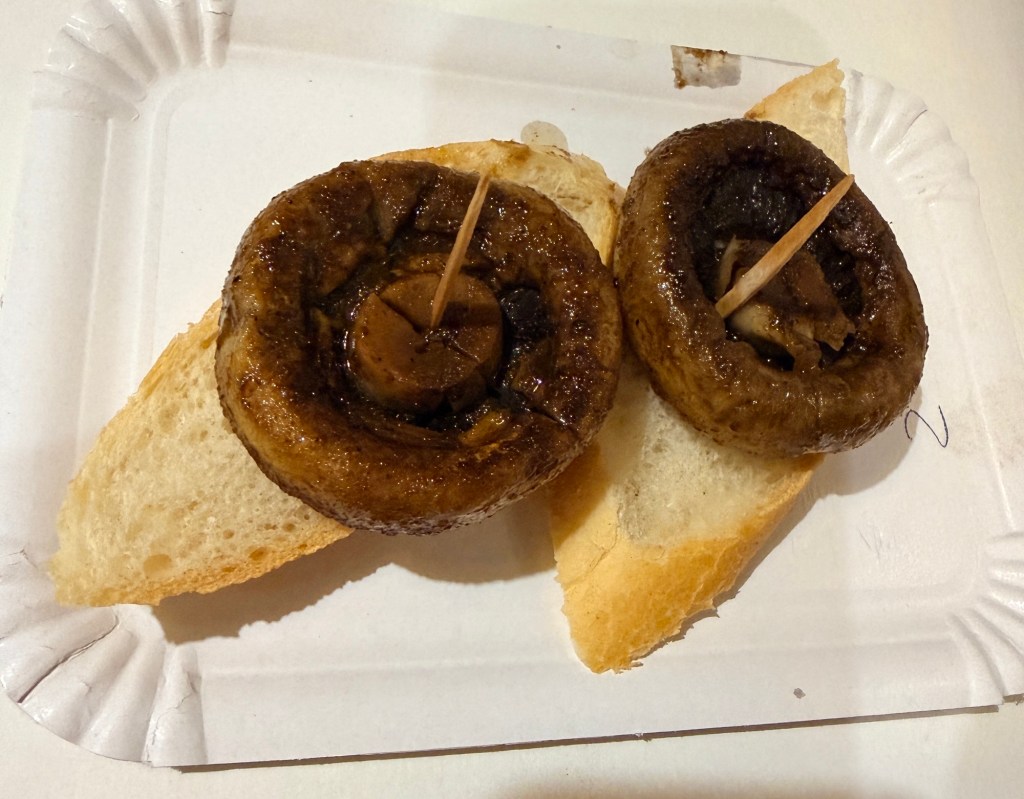
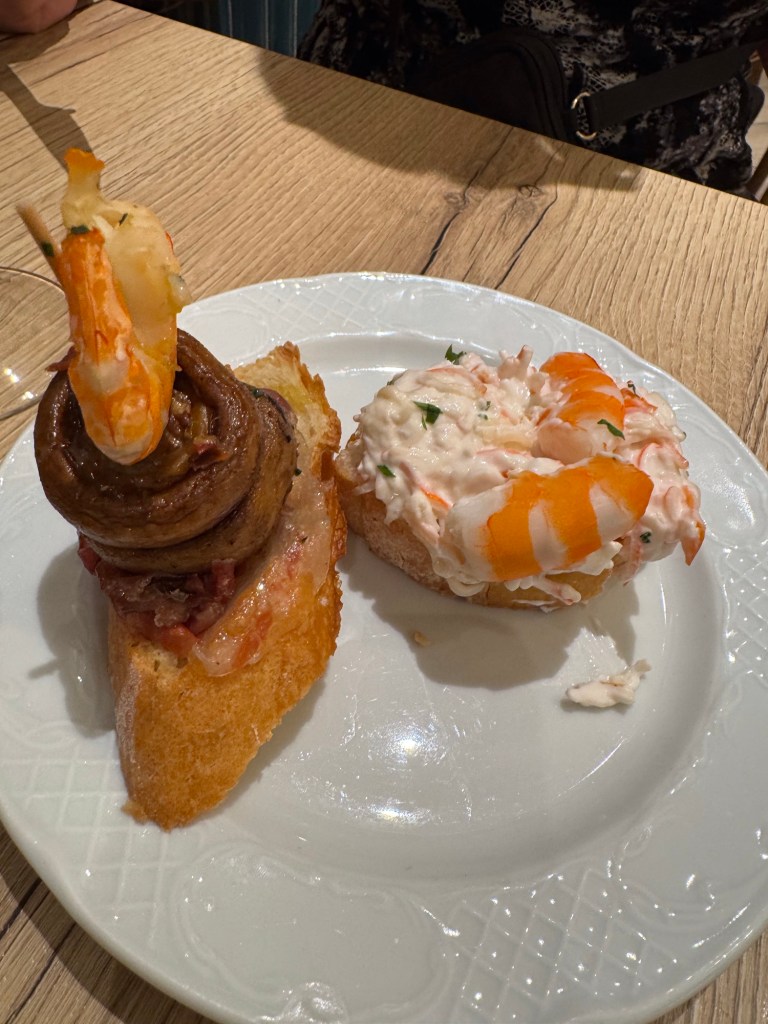
I think we’re getting the hang of Spain now. We’re in Bilbao, old town of course and were doing a Pintxo-Pote. This could be referred to as a pub crawl as its one Pintxo and one half drink at each stop. Again this town has some varying Pintxo varieties which we tried and were equally as delicious.
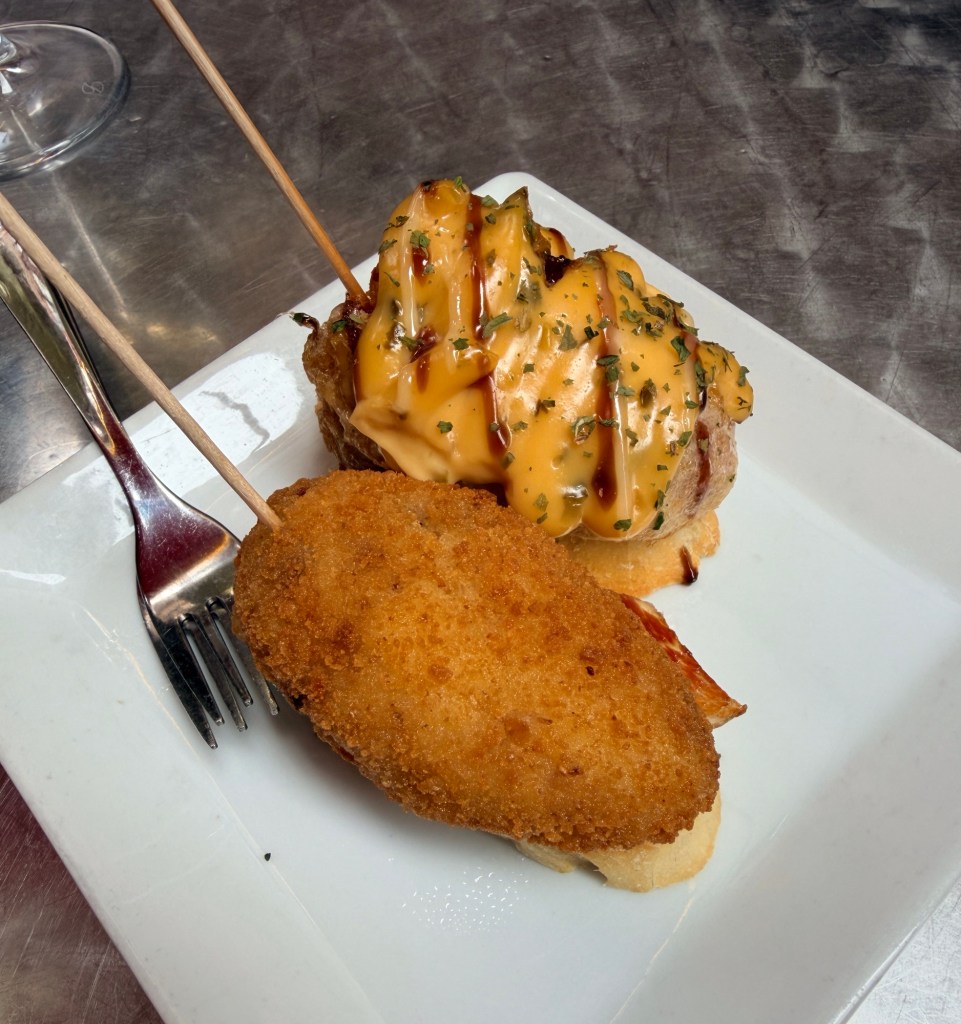
Our hotel had some itinerary suggestions for the surrounding Bilbao area. We took the metro to the port area where we were told to cross the bridge. Well this wasnt just any bridge. It was the Punta Colgante, a transporter bridge with a gondola. It began operating in 1893 and was built as part of the Industrial Revolution and is now a UNESCO heritage site.
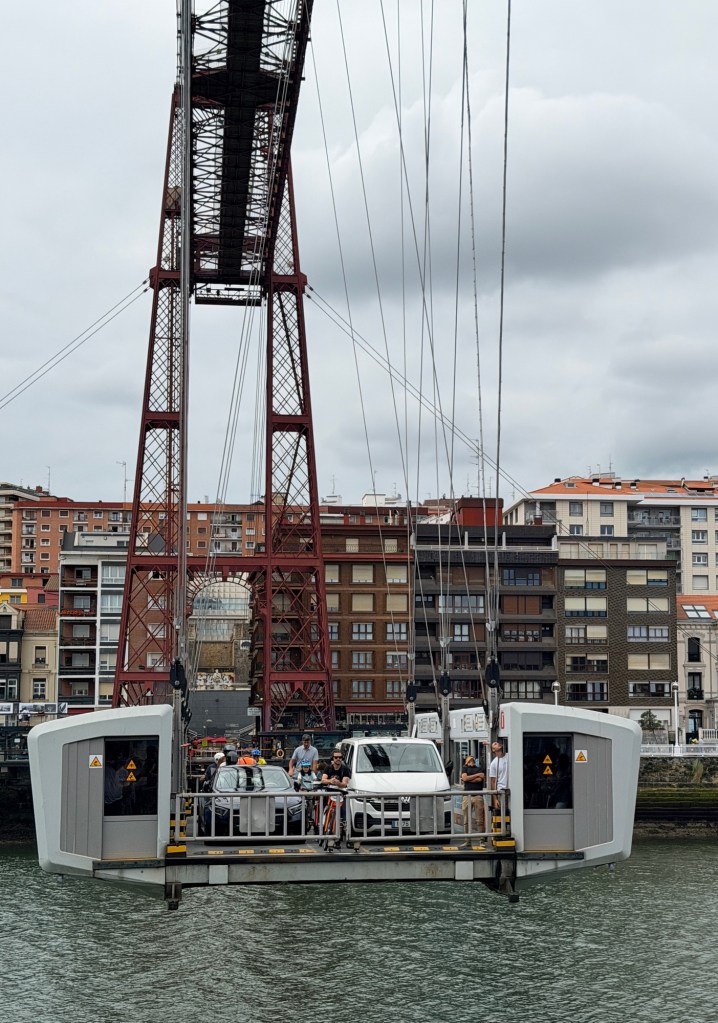
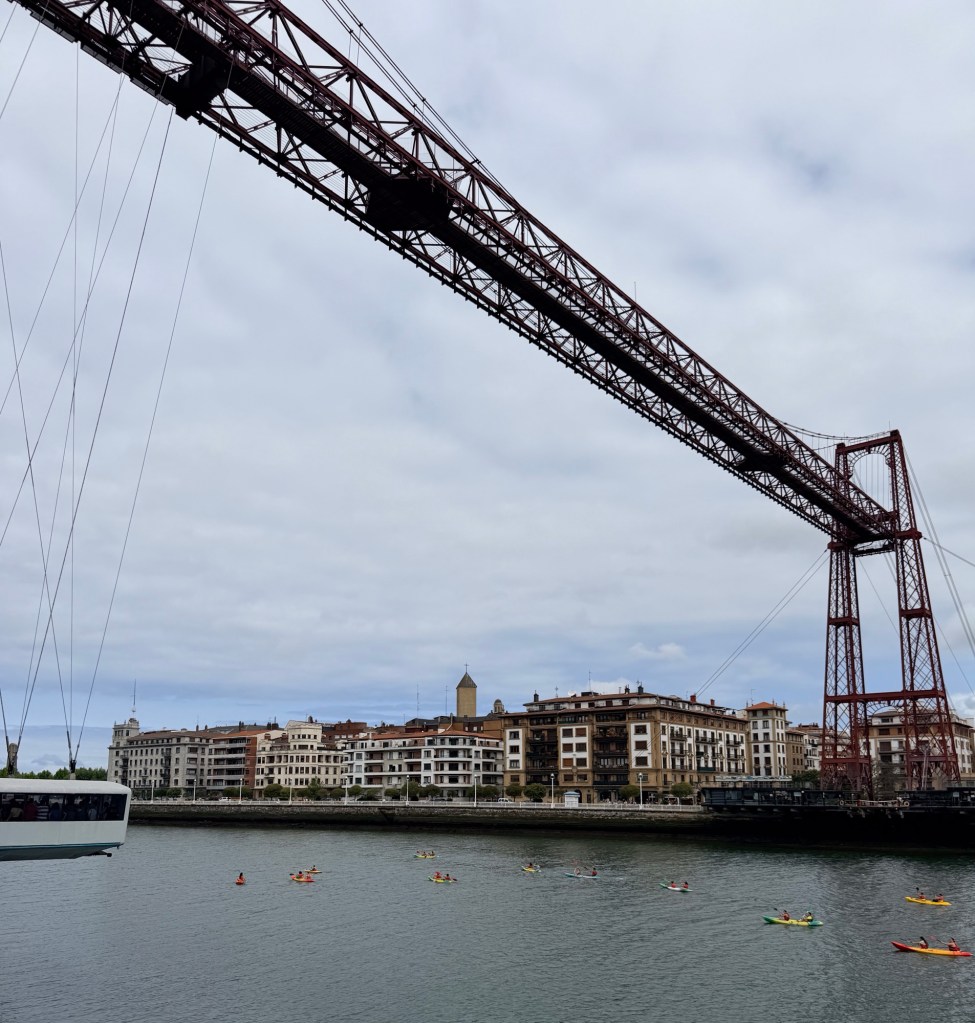
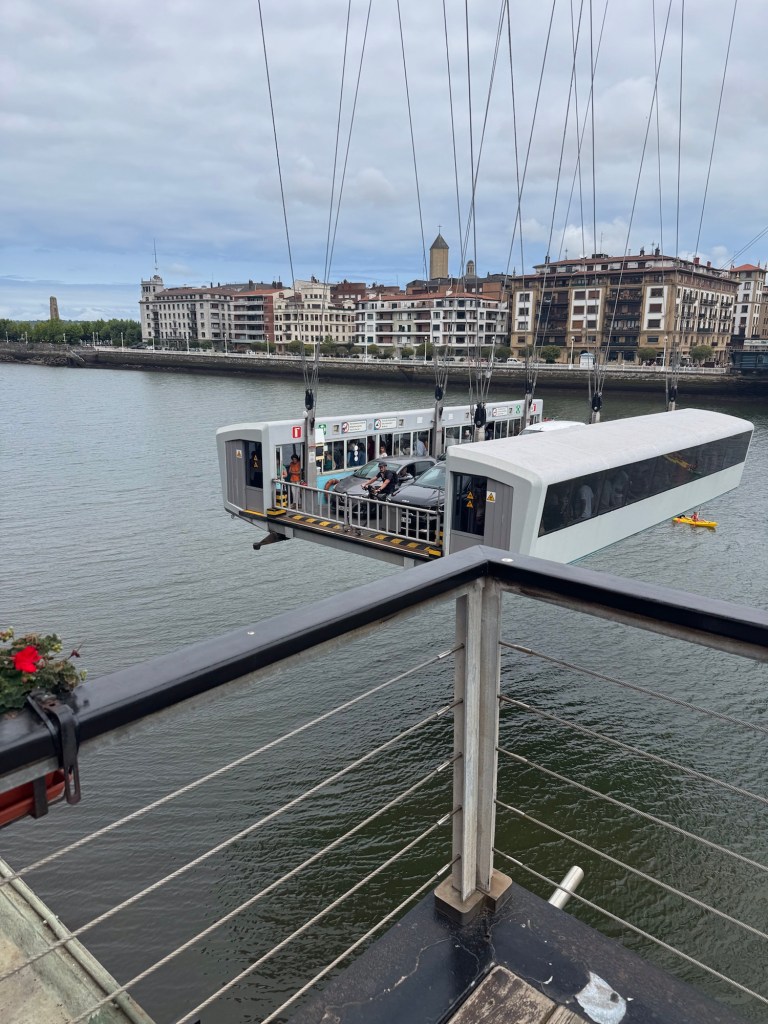
Once in the Portugalete side I was convinced that Spain was just one long fiesta. This time they were celebrating a Portuguese festival, again music and dancing in the streets. Another festival highlight is watching older boys dressed as Kilikis which are big headed characters in dresses playfully chasing and hitting younger children with foam batons as a fun game where the younger children taunt the older boys.
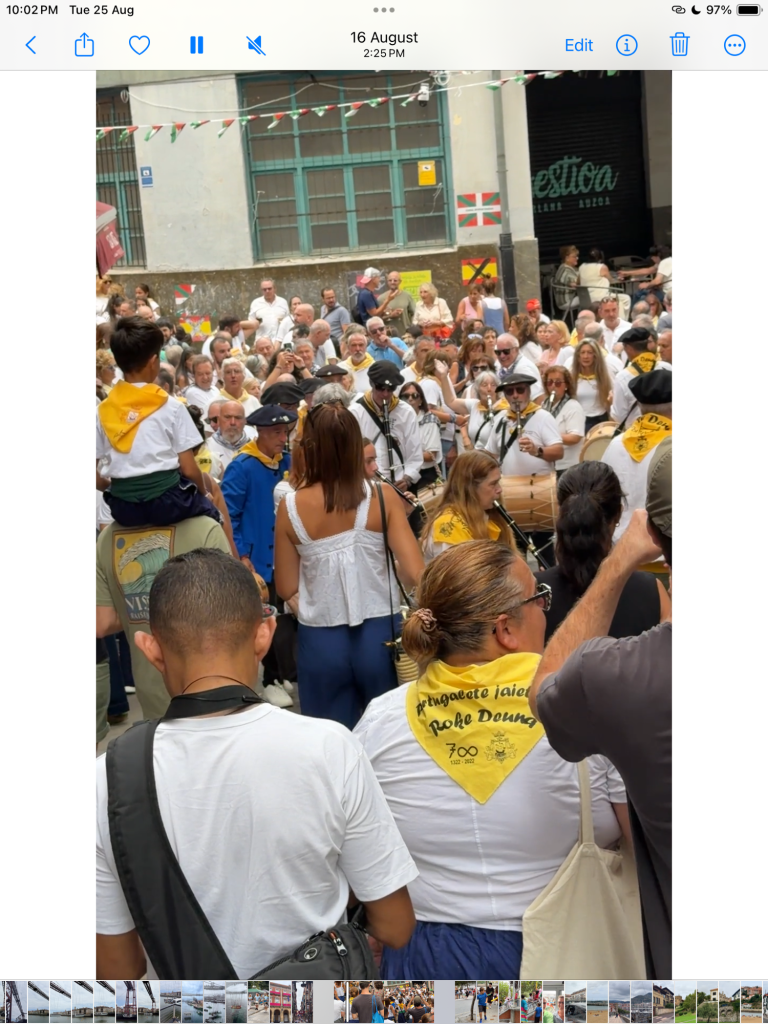
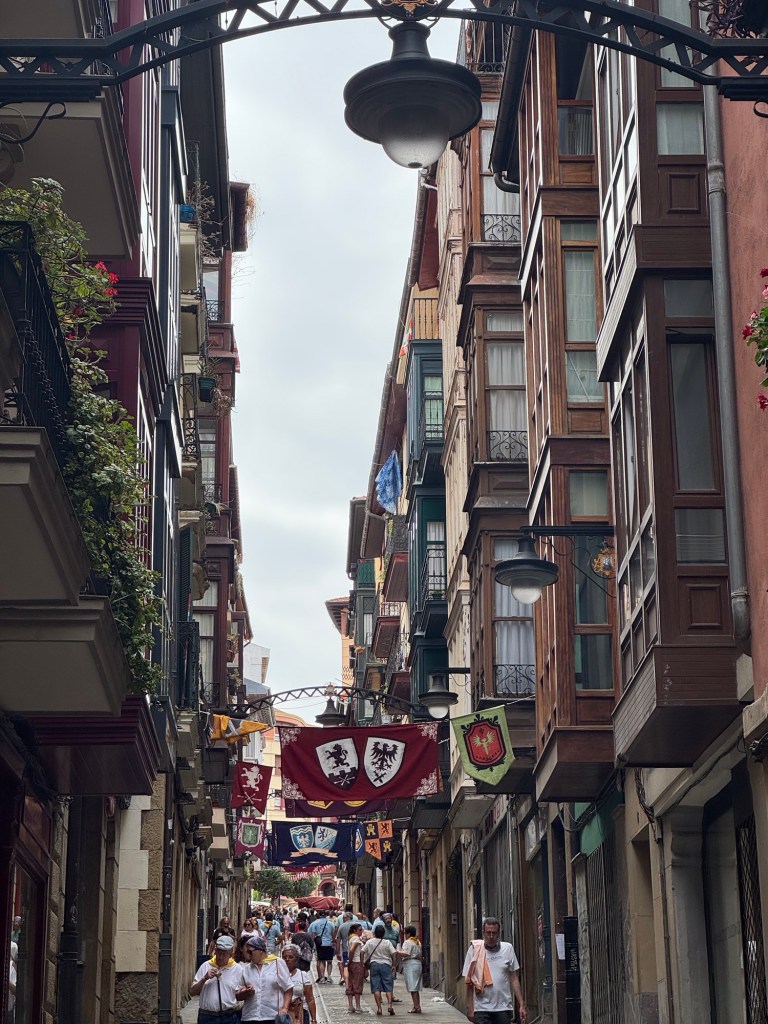
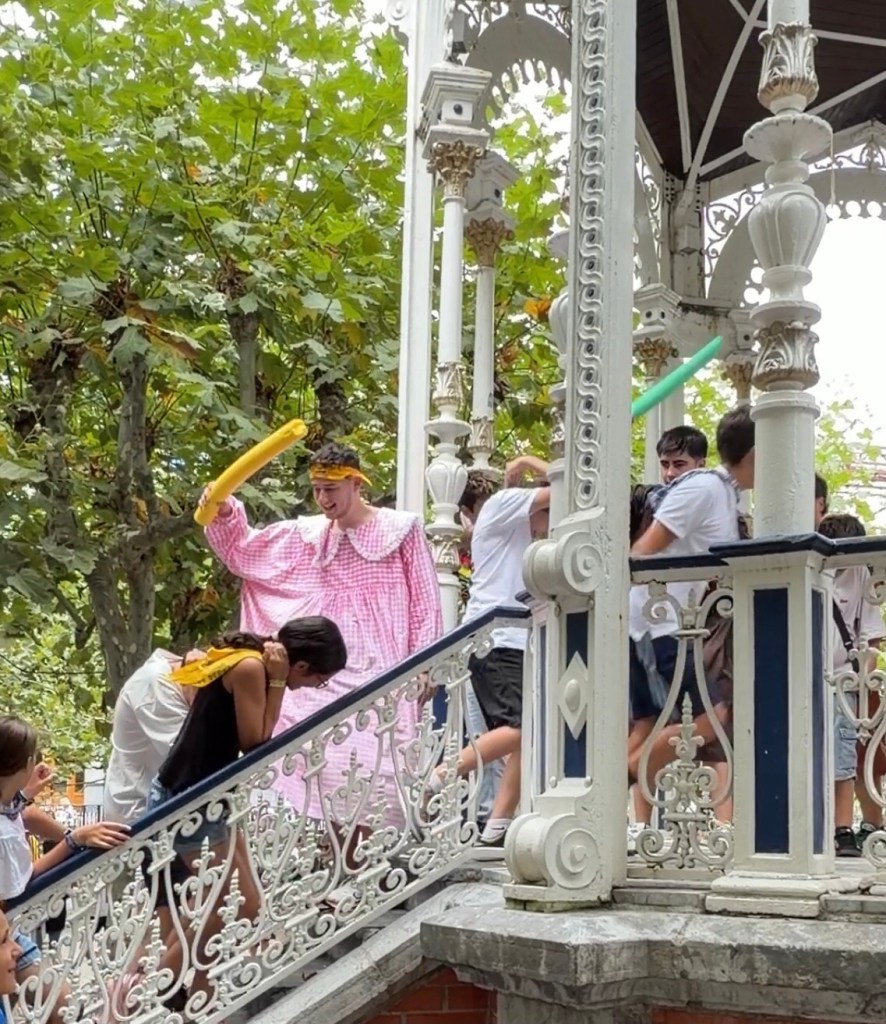
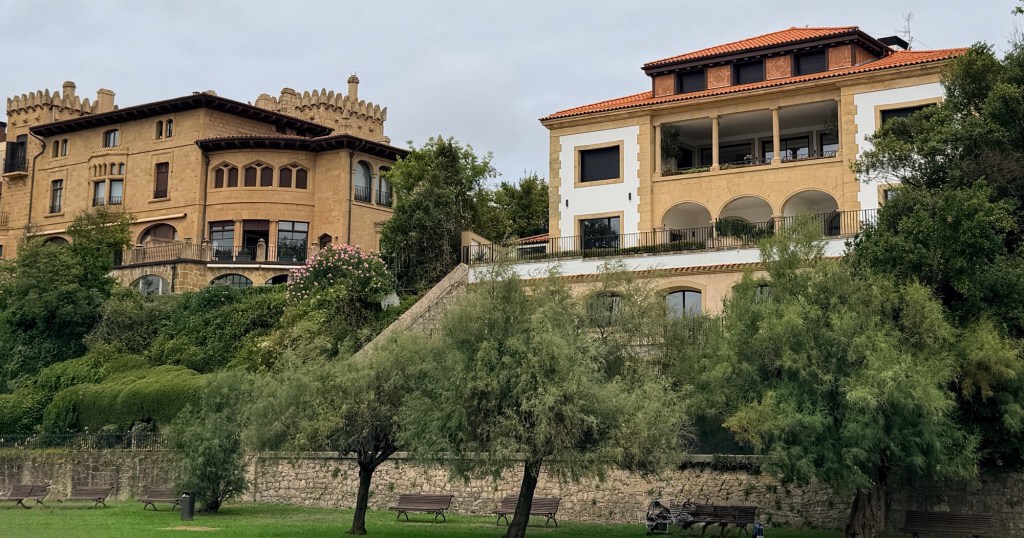
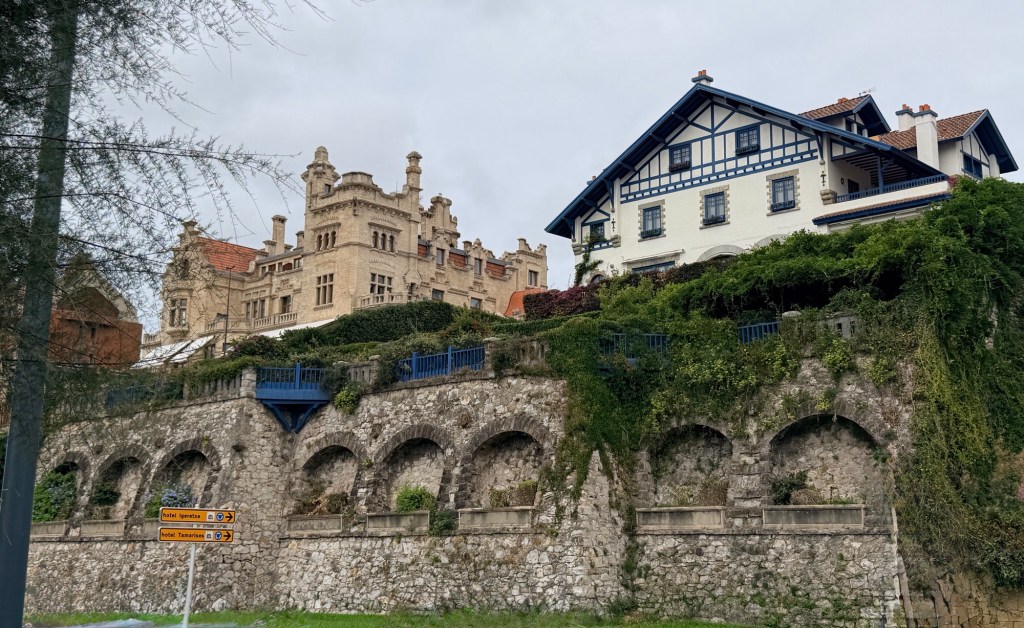
After a walk along that side of the river we crossed the bridge again in our hanging gondola. This time we walked the promenade on the Getxo waterfront, heading towards the old fishing port. There were some absolutely beautiful architecturally designed homes from the early 1900’s here. The gardens were superb, it was such a beautiful area. I only thought half way that we should have hired a bike as it was such a long walk.
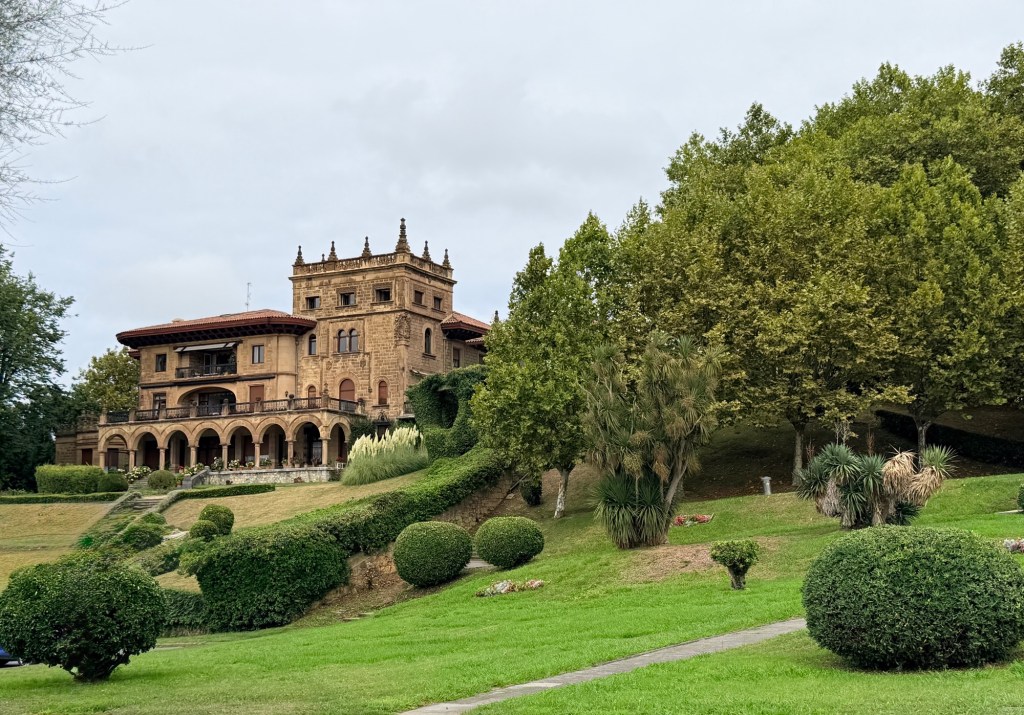
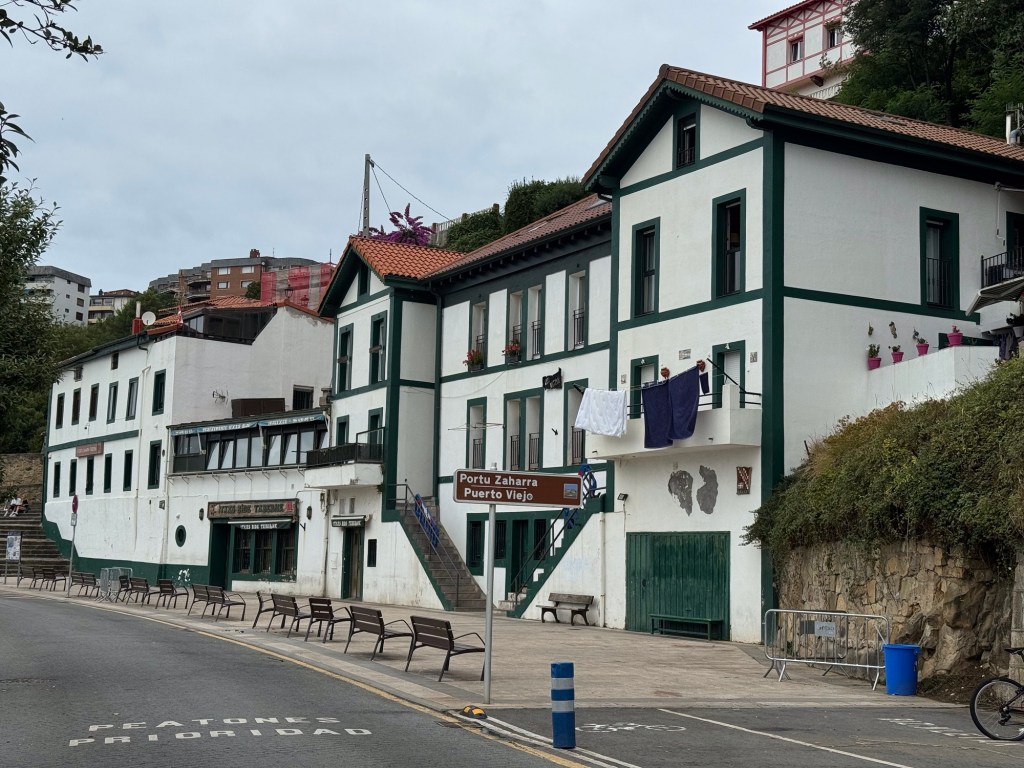
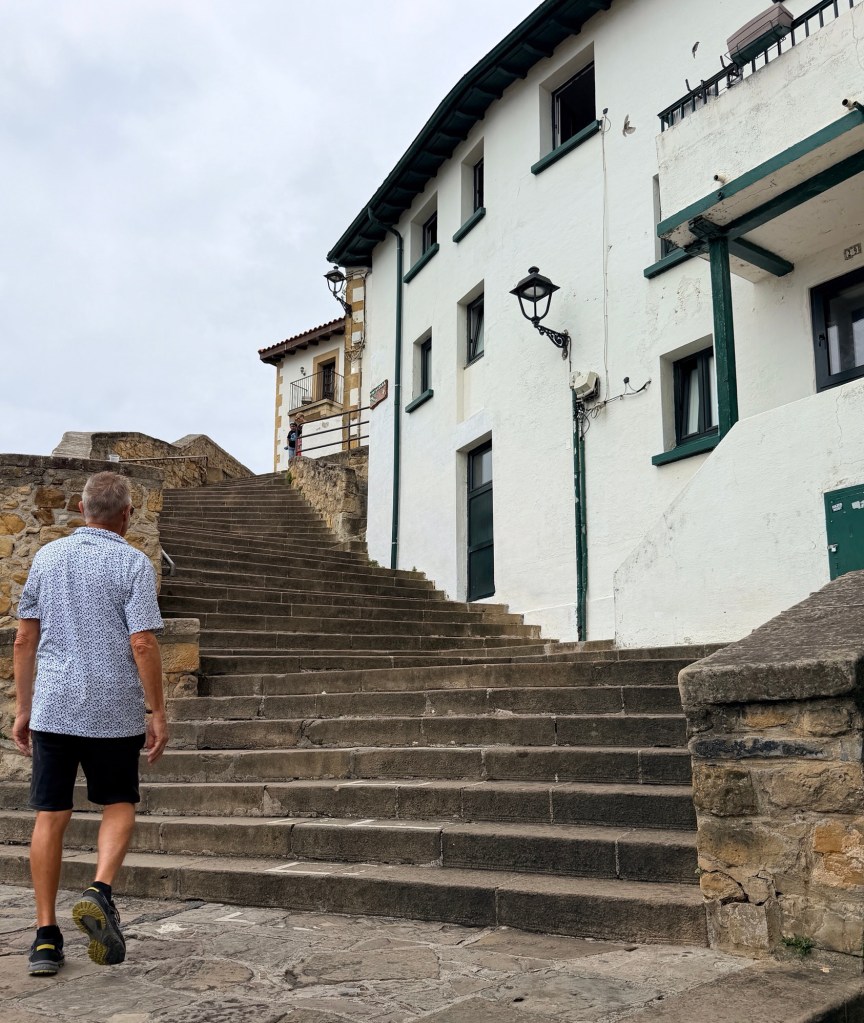
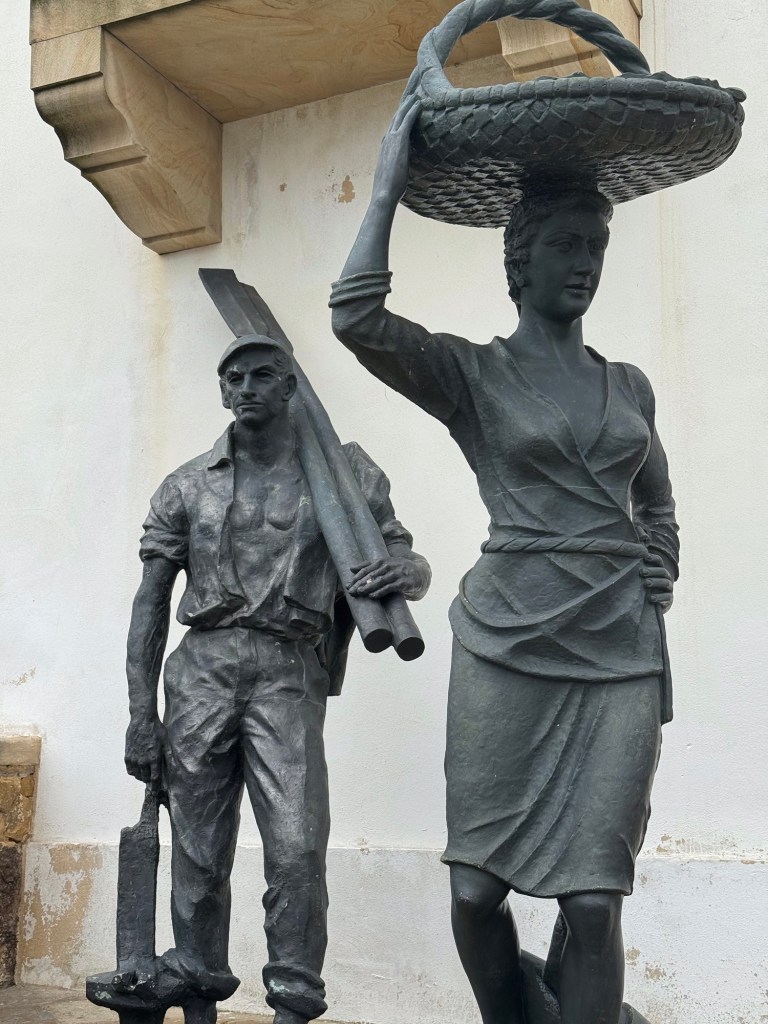
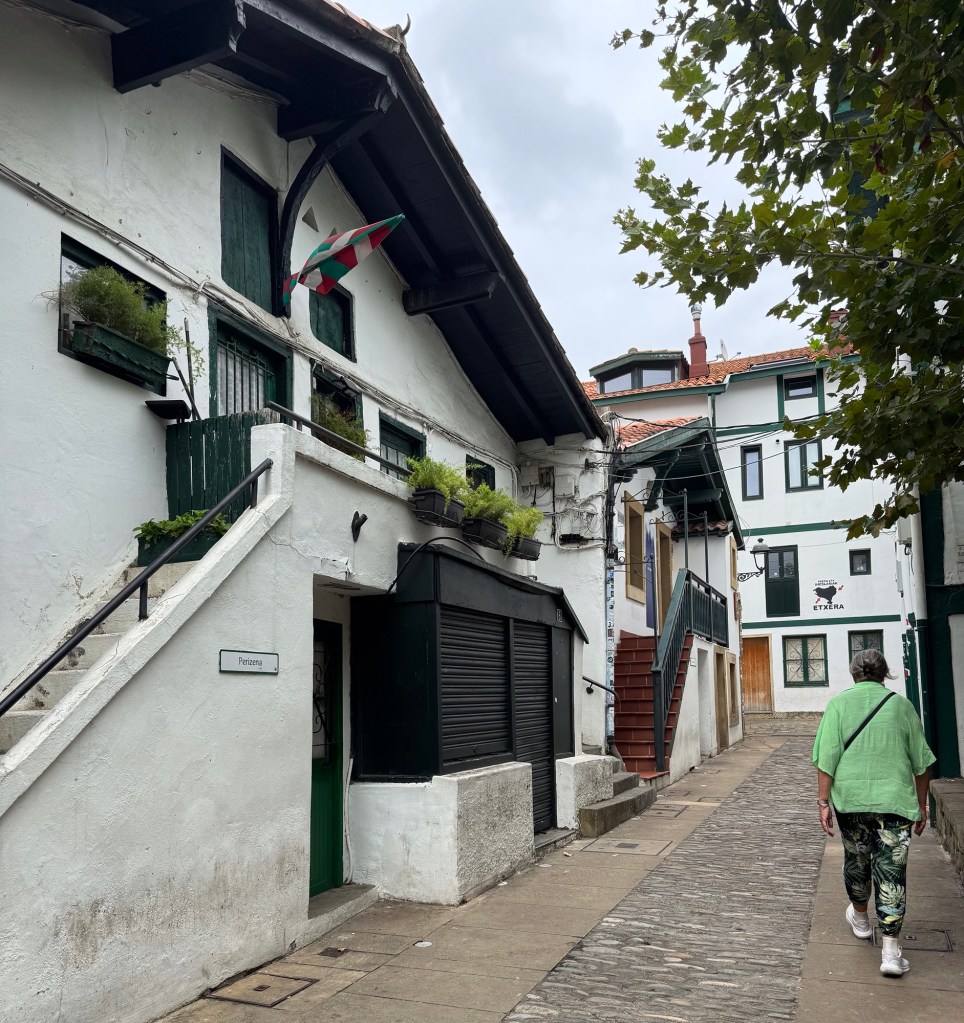
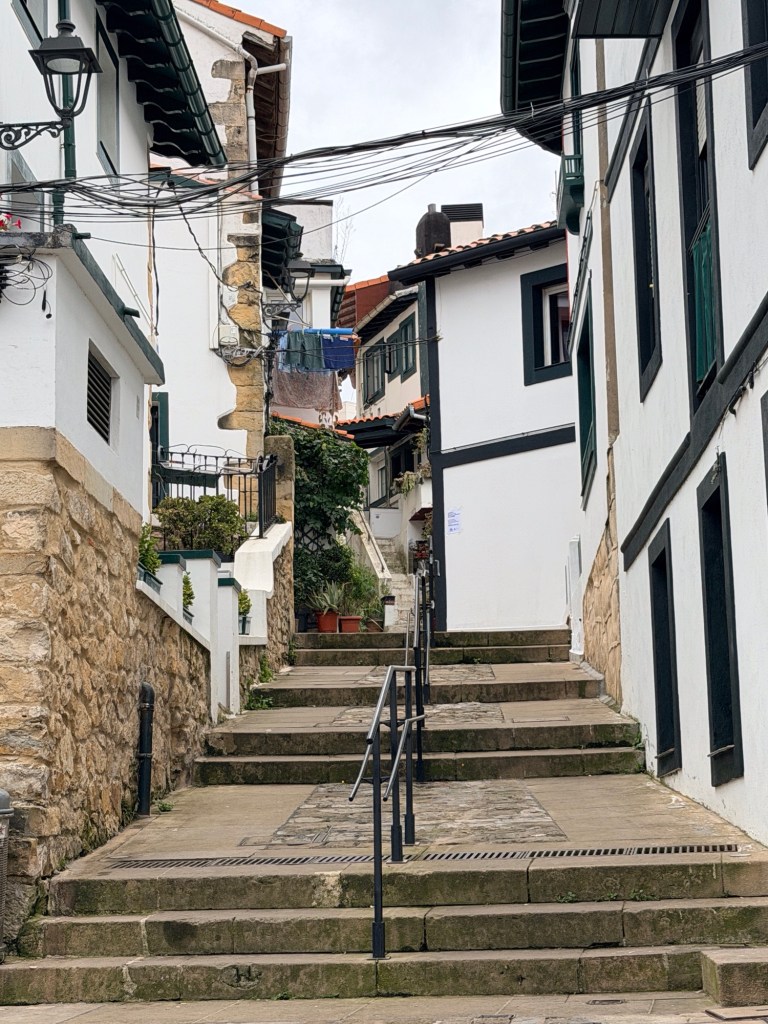
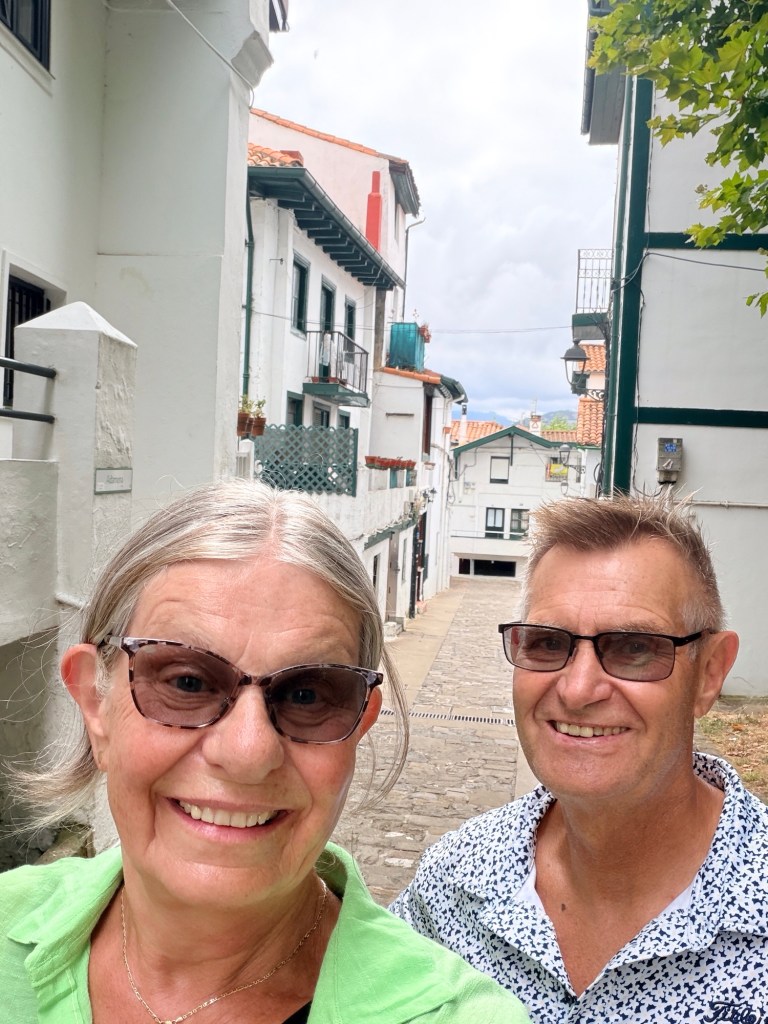
We finally arrived at the old fishing town of Algorta where all the houses and tavernas are painted white. There were quite a few steps and alleys to navigate but the views over Abra bay were worth it.
Before heading back to the hotel we stopped at The Rooftop by the Artist bar in the Grand Hotel for a drink with views over the Guggenheim Museum. It had been a long day.
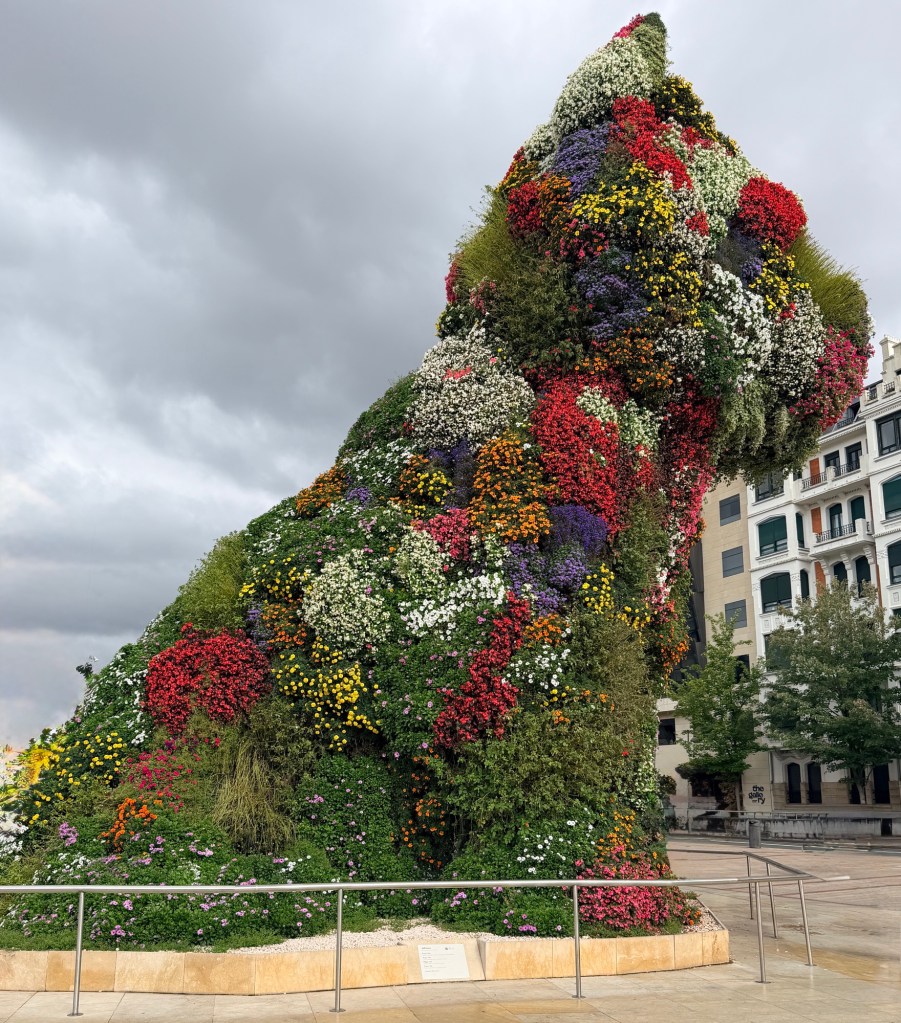
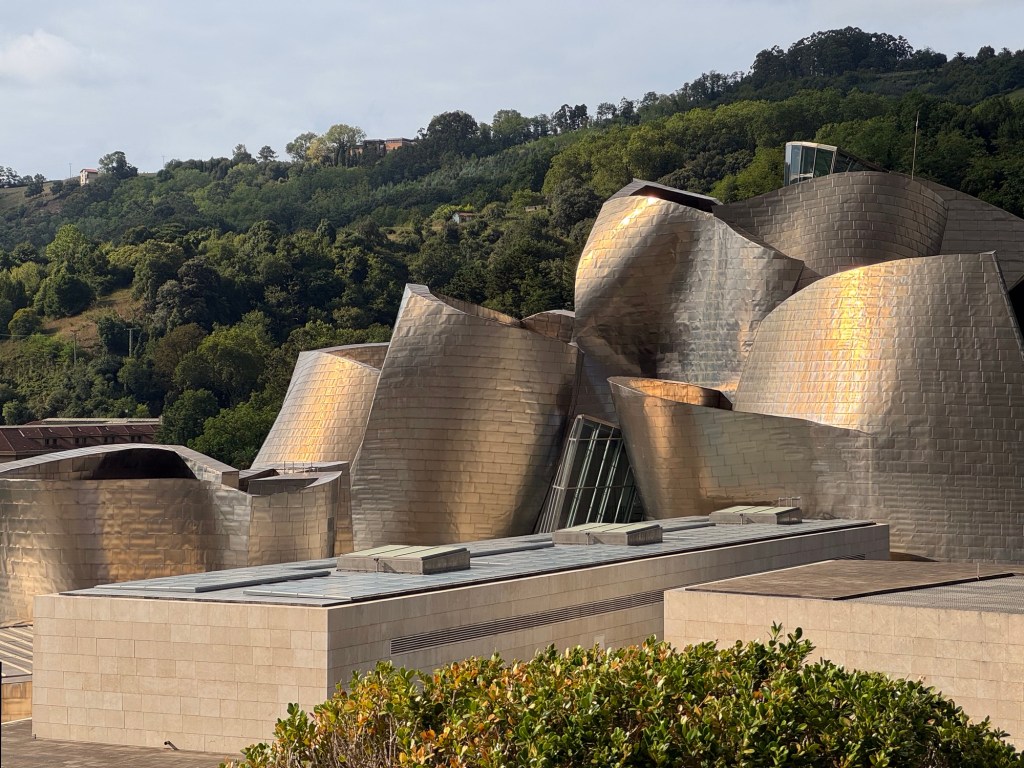
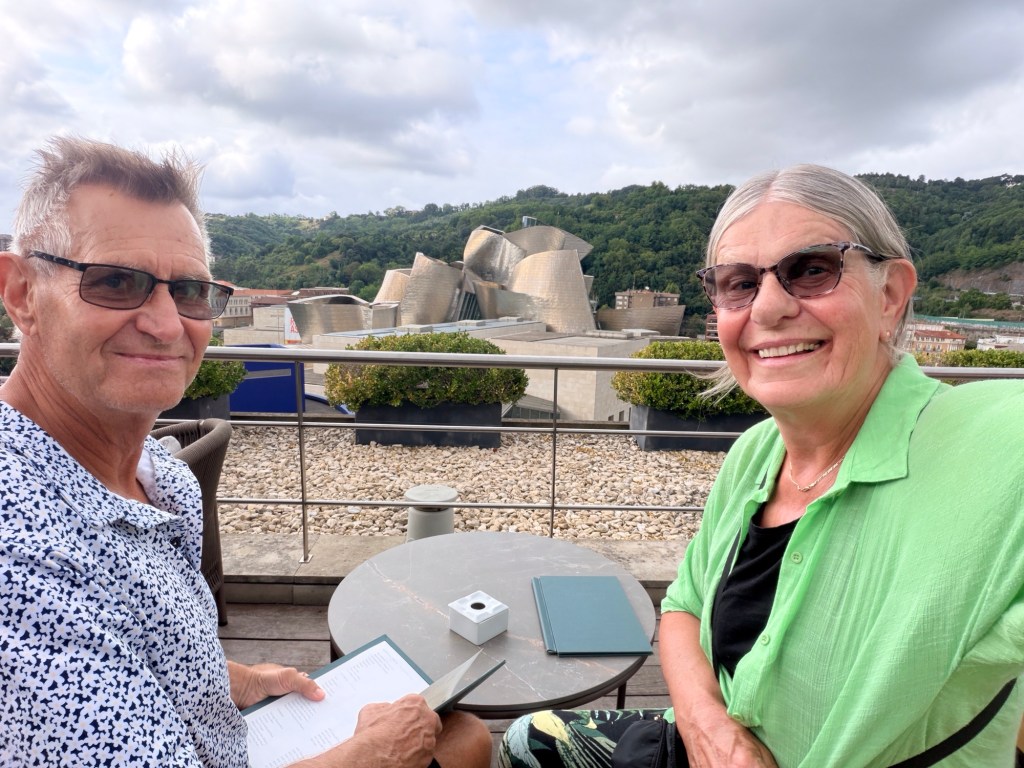
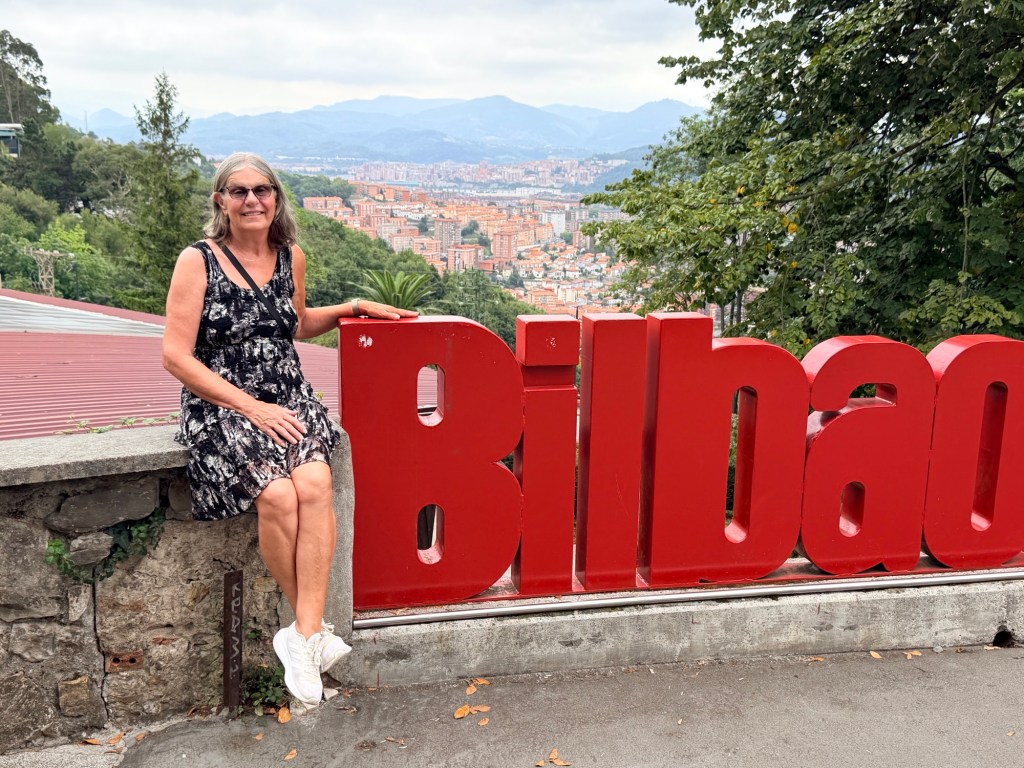
Our last day in Bilbao and we settled on a nice easy day, so I thought. We managed to visit the Ribera market, a fresh food market with a large foodhall presenting all manner of delicious food. This was on our way to catch the funicular up to Artxanda for one of the best views over Bilbao. The temperatures up the mountain were certainly cooler and the surrounding gardens certainly thrived in this environment.
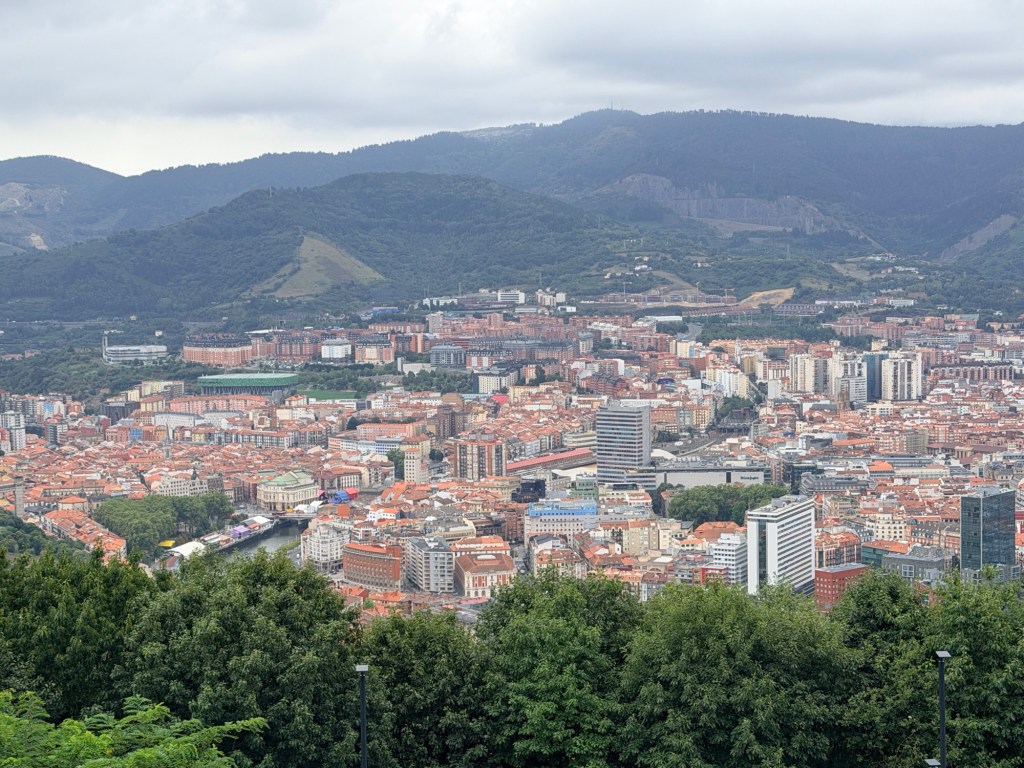
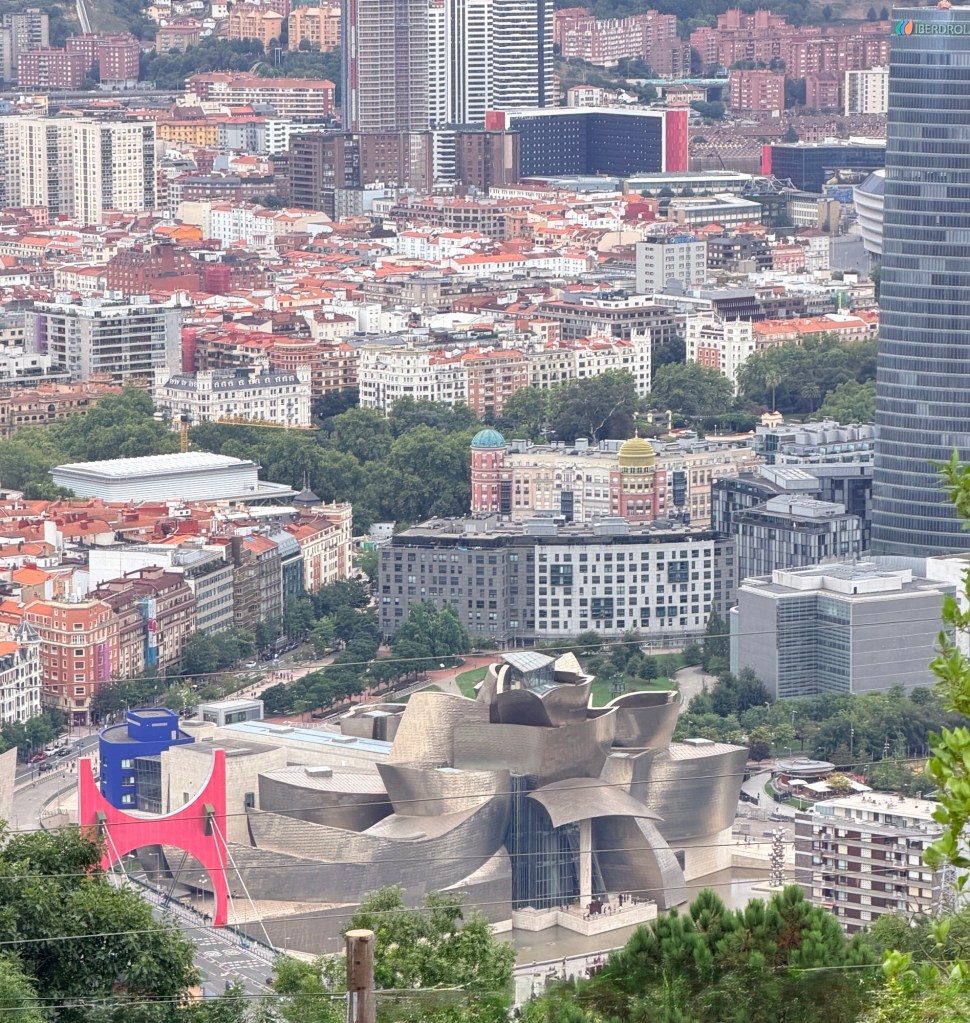
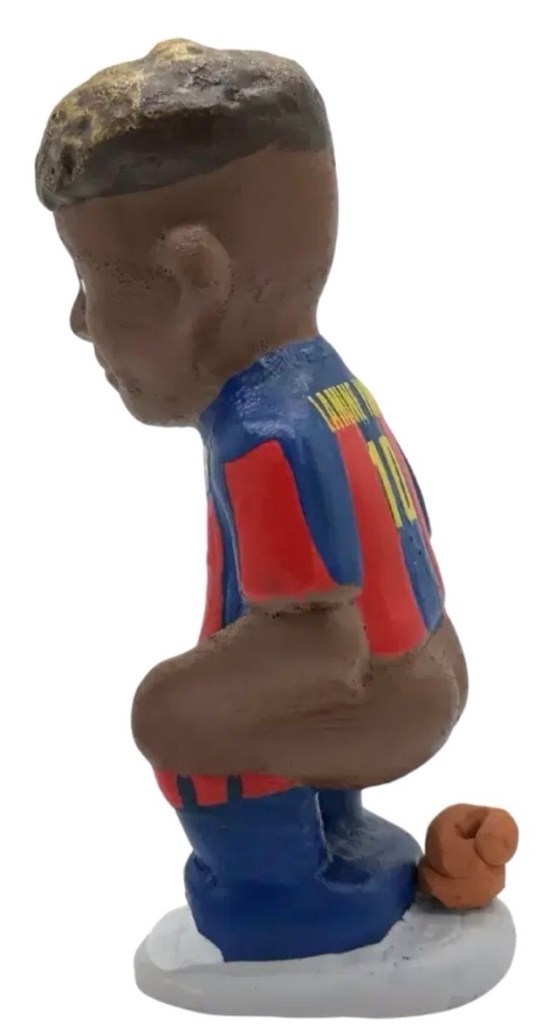
During our walk back Ruthie dragged me into a little shop to seek my opinion. The shop sold figurines of anybody famous, crouched with their pants dropped to their ankles and a blob of poo under them. My curiosity got the better of me and I asked the shopkeeper. It’s called The Caganer, dating back to the 18th century. It’s a symbol of good luck, joy and good fortune in the home. It is said that the defacation fertilises the land for the next year.
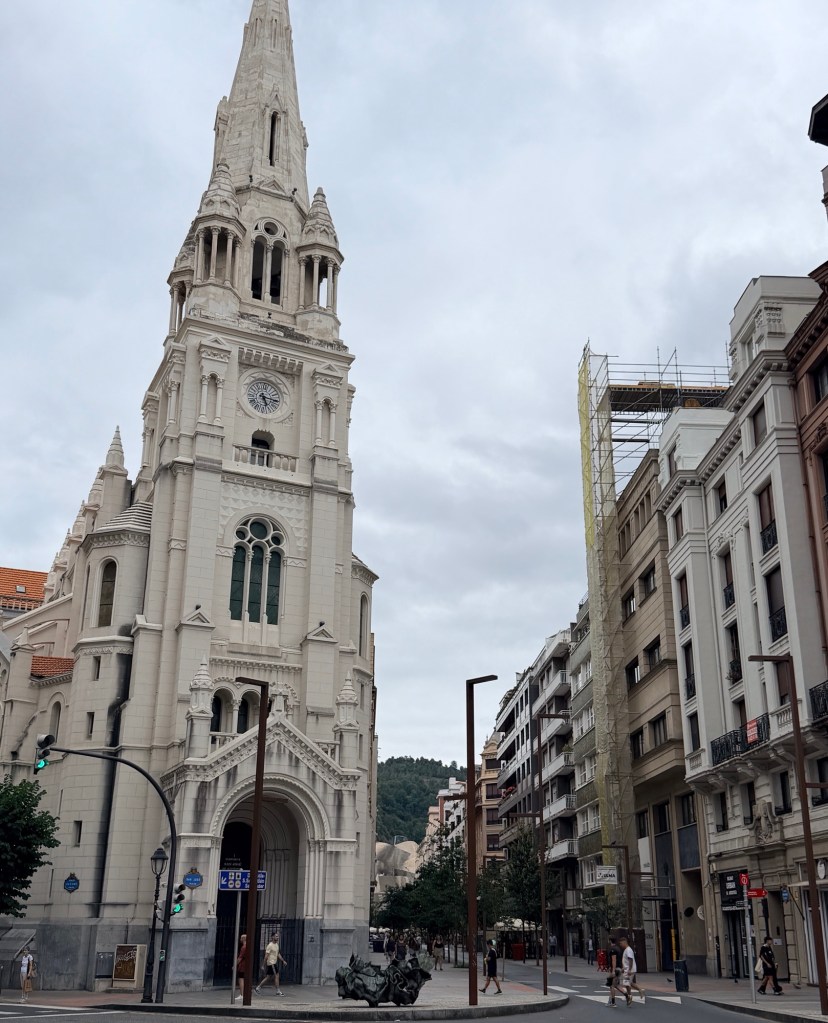
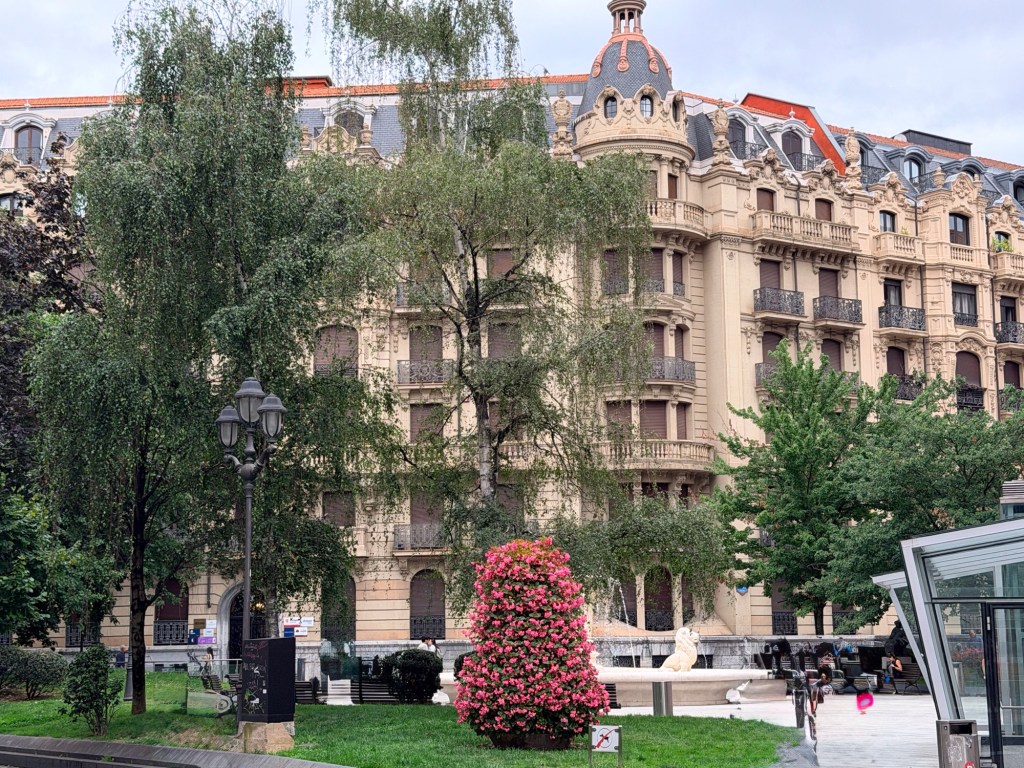
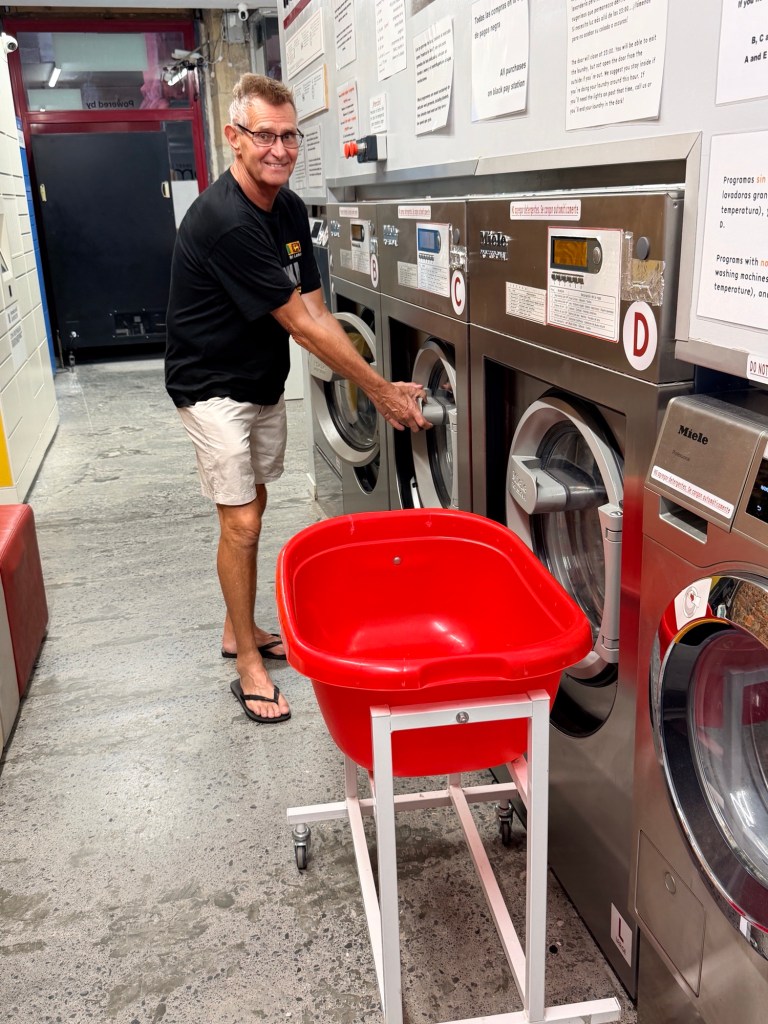
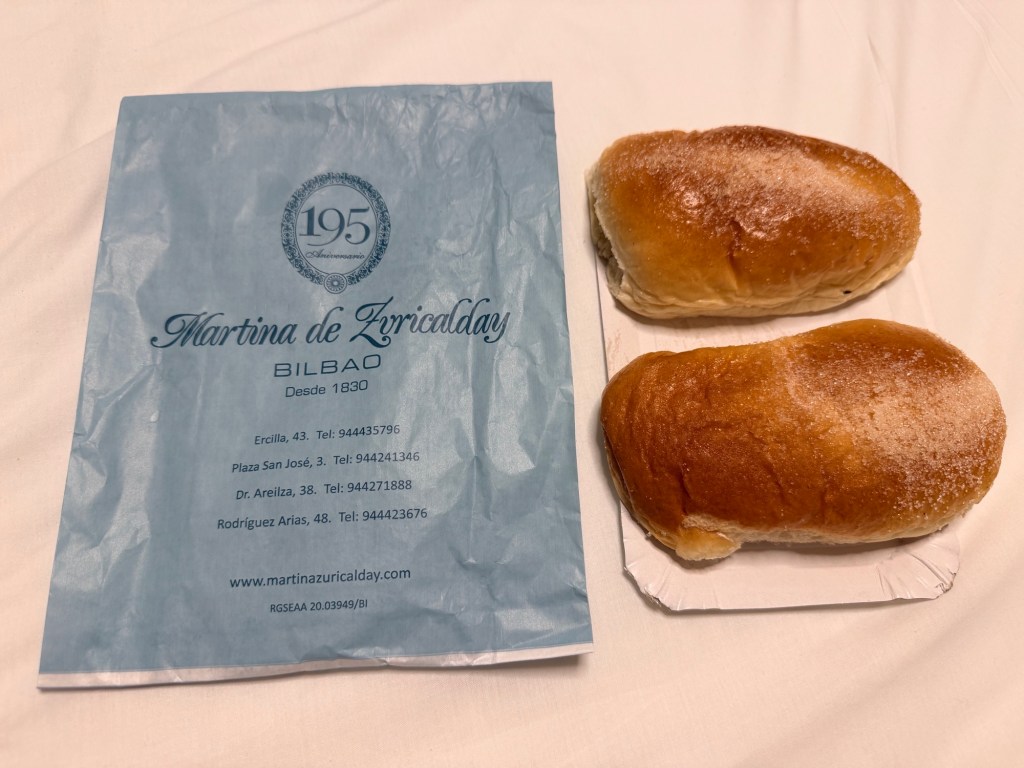
We did manage to get ourselves a little more organised before we move on, even doing some laundry. Of course during washing and drying time we did manage to fit in some more Pintxos and refreshments, including a bollo de mantequilla! This creamy bun was a recommendation of our host and a Bilbao speciality that was delicious.
A bit quieter, good food, clean, Bilboa was a pleasant surprise.
Santander
This town is just meant to be a 2 night stop on our way to our destination. Even though it has a month long festival going on we weren’t getting the same experience as the previous 2 stops. After our arrival we walked the waterfront down to the old fishermans quarters. Most of these seaside towns seem to have this area to cash in on the tourists with their fresh seafood but there wasn’t a tourist in sight. Our Pintxos also seemed to have disappeared. Santander has very little medieval architecture due to a devasting fire in 1941 so is a fairly modern city. It’s a port that has become an important seaside resort.
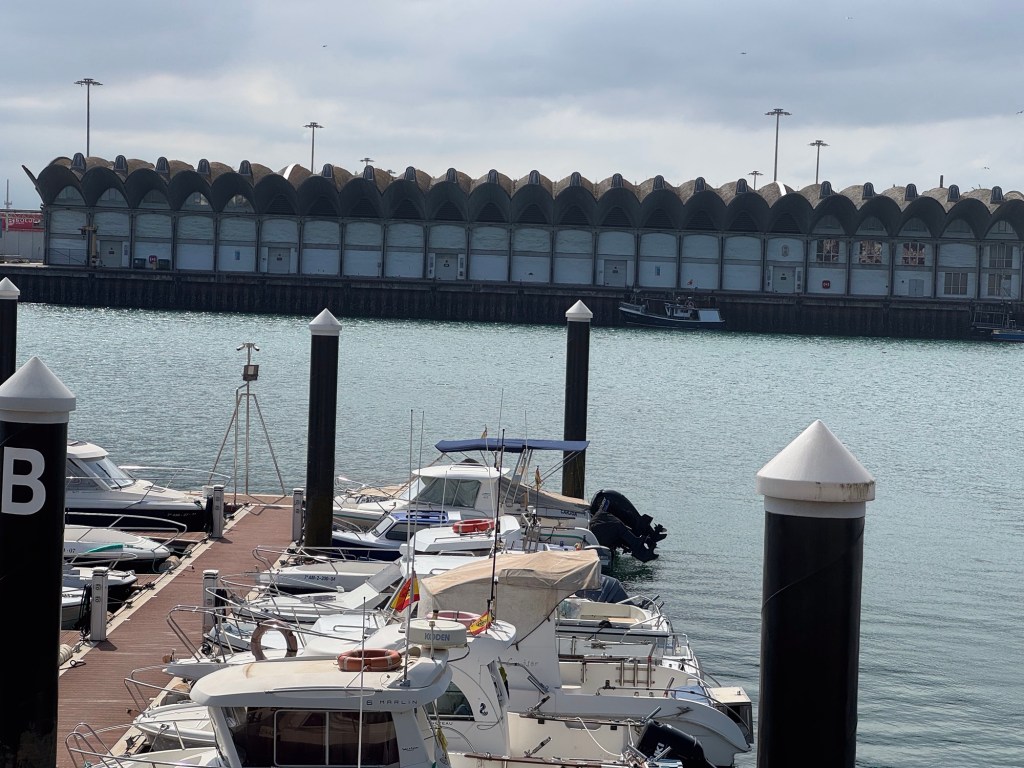
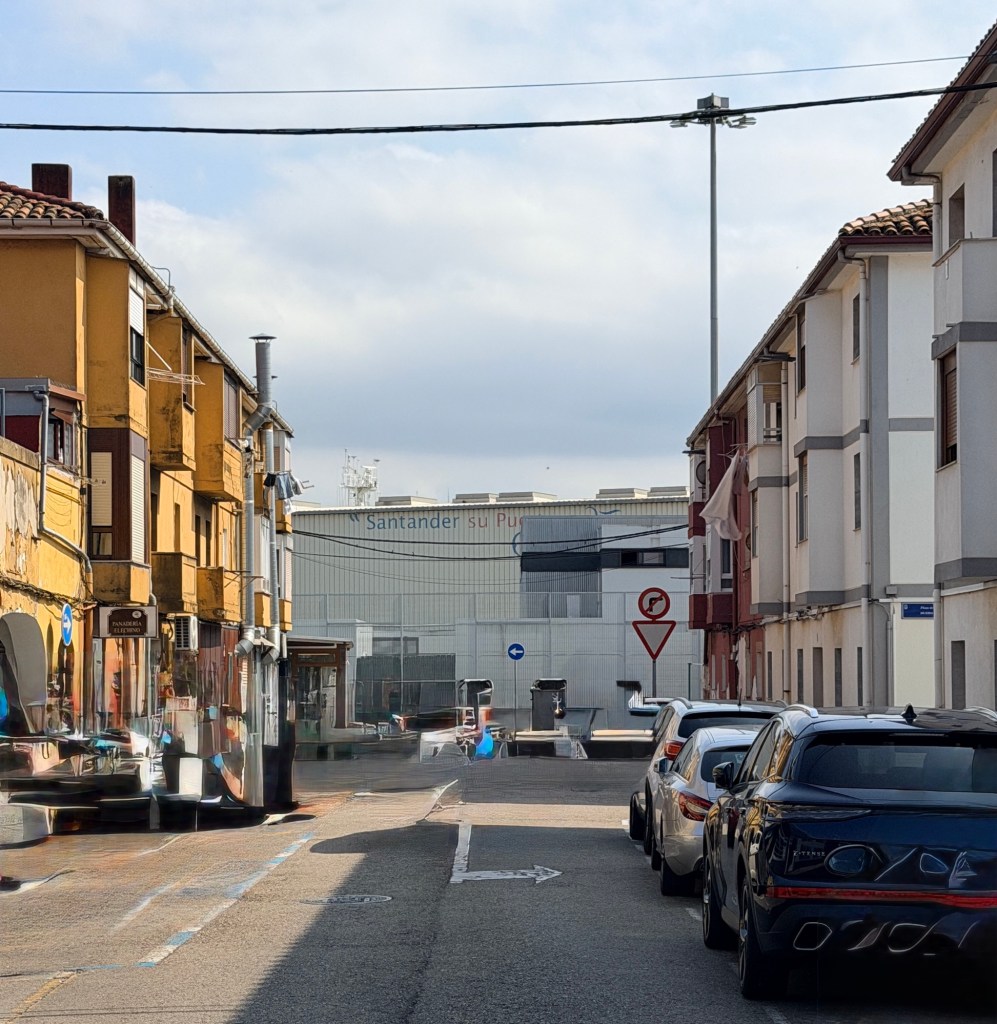
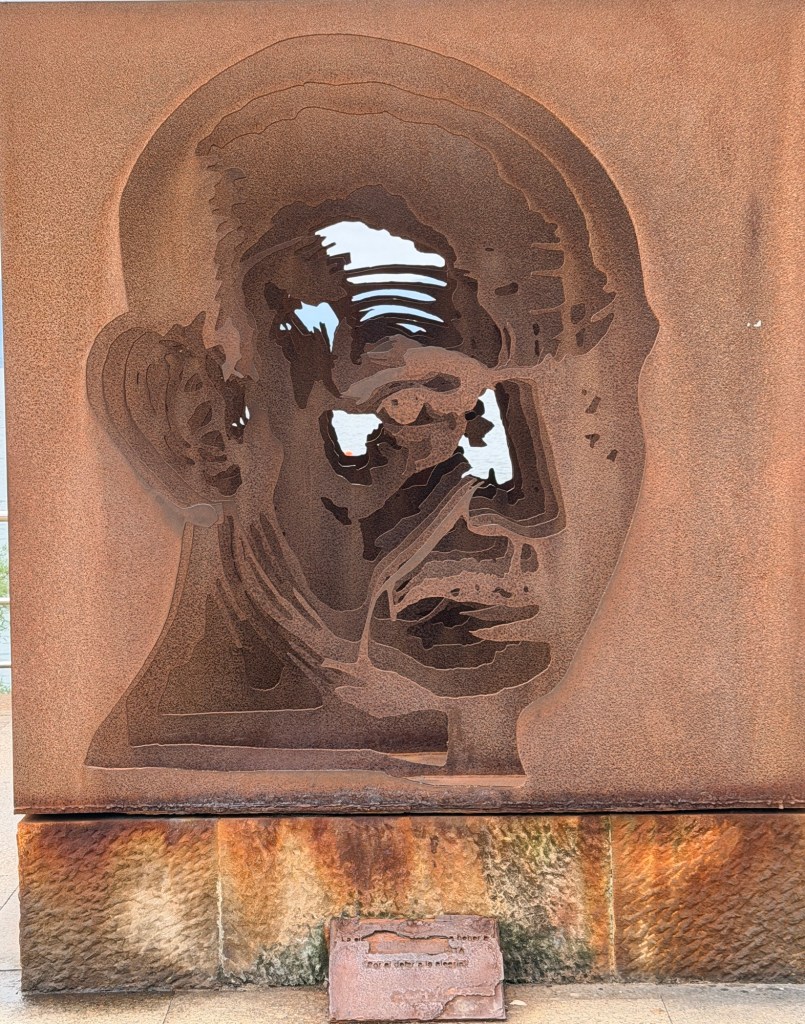
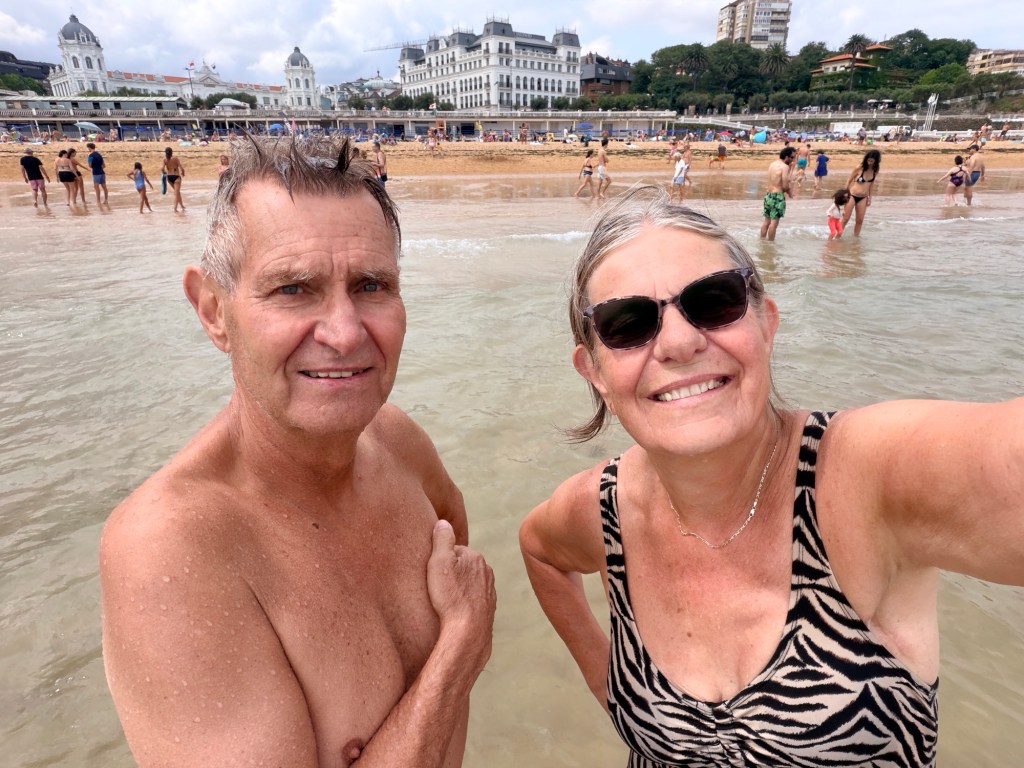
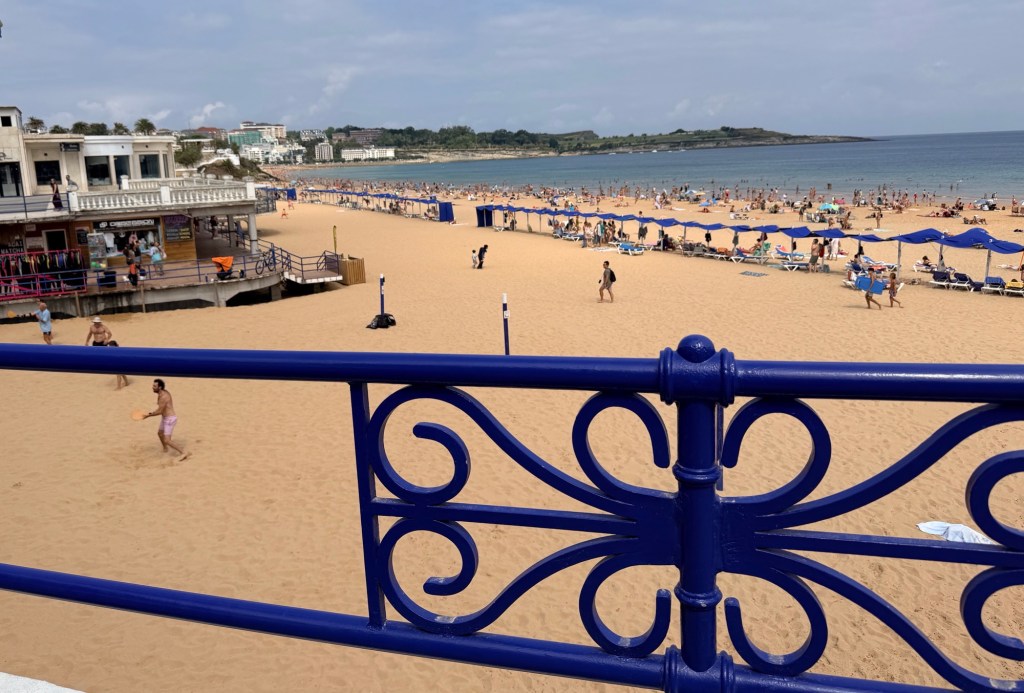
Another day and the weather was good for a swim. We walked a fair distance to reach a really nice beach named Primera Playa del Sardinero. This gave us a whole new perspective of Santander. Modern hotels, a casino, a hive of tourist activity, beautiful sweeping views accross the Bay of Biscay.
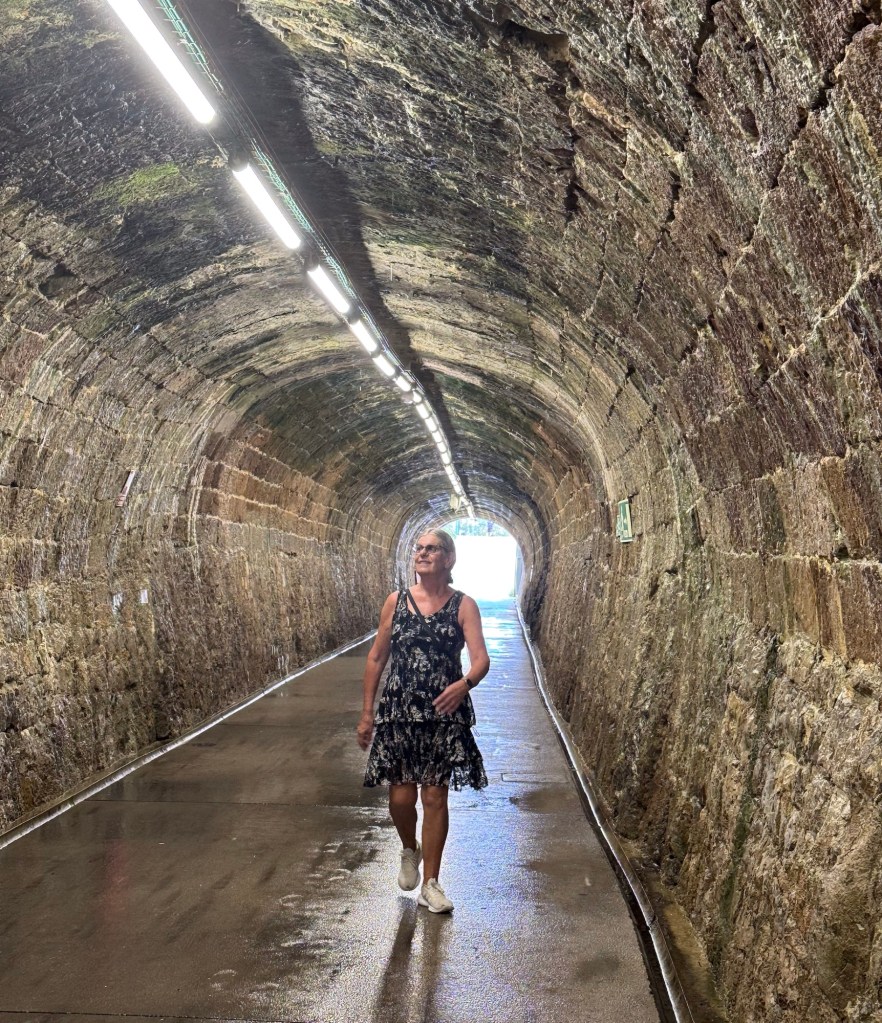
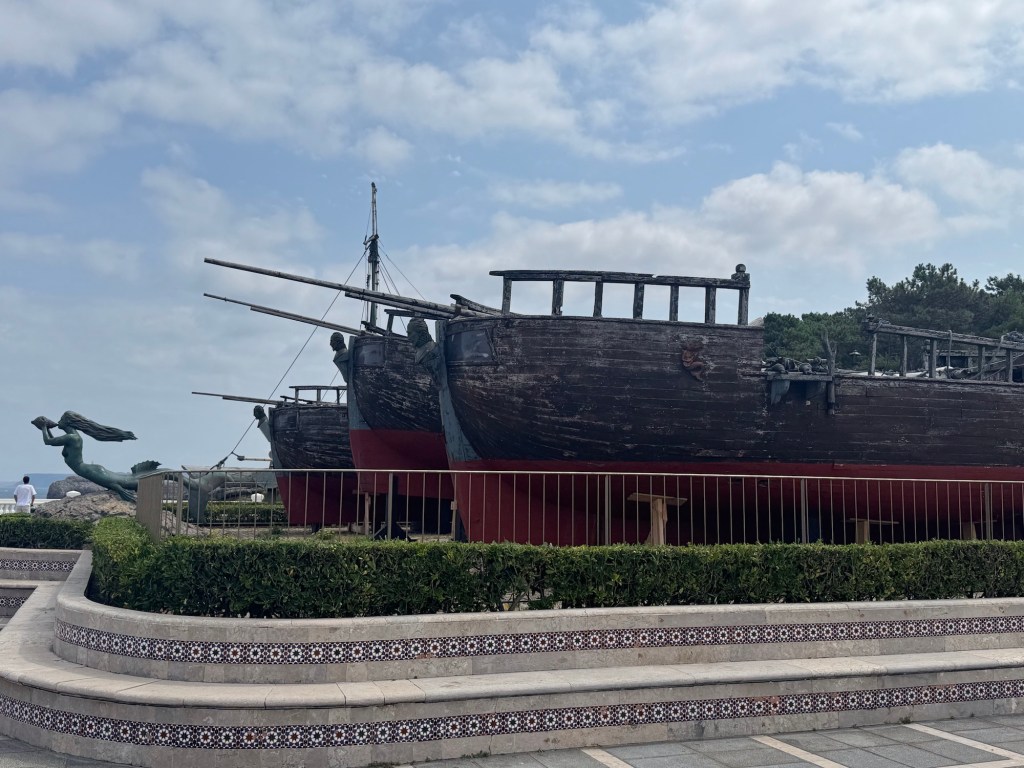
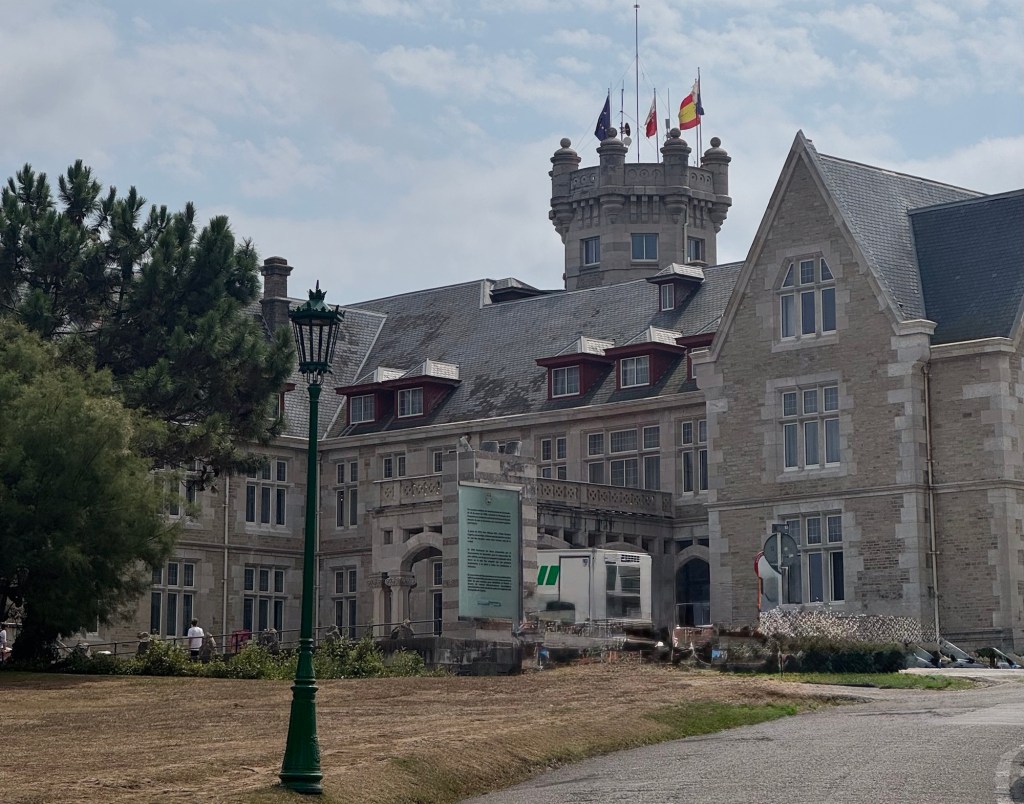
After being refreshed (the water temperature was noticeably cooler) we thought we’d walk a different route home. We stumbled upon the Palacio del la Magdalena which is Santandar’s most famous landmark. It is built on a spectacular peninsula overlooking the bay. Originally the summer residence of the King and Queen, it has undergone many changes of use over the years. It is now municipal owned and attracts many visitors who can appreciate both the Spanish royal history of the early 20th century and the city’s transformation into a fashionable summer resort.
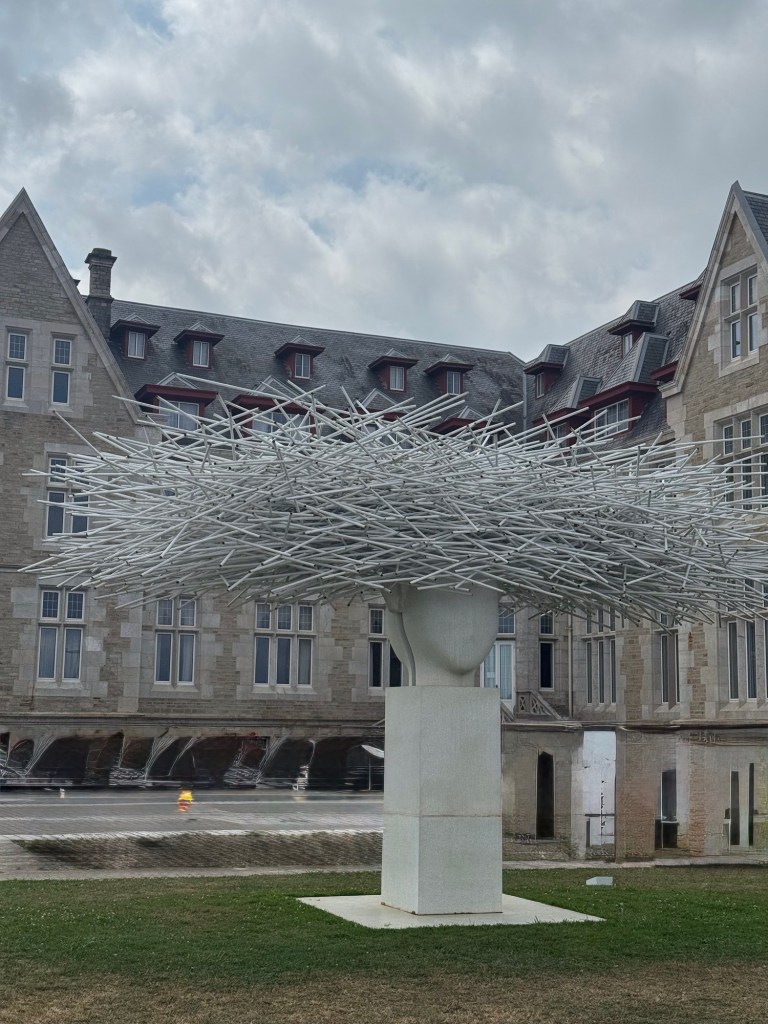
Oviedo
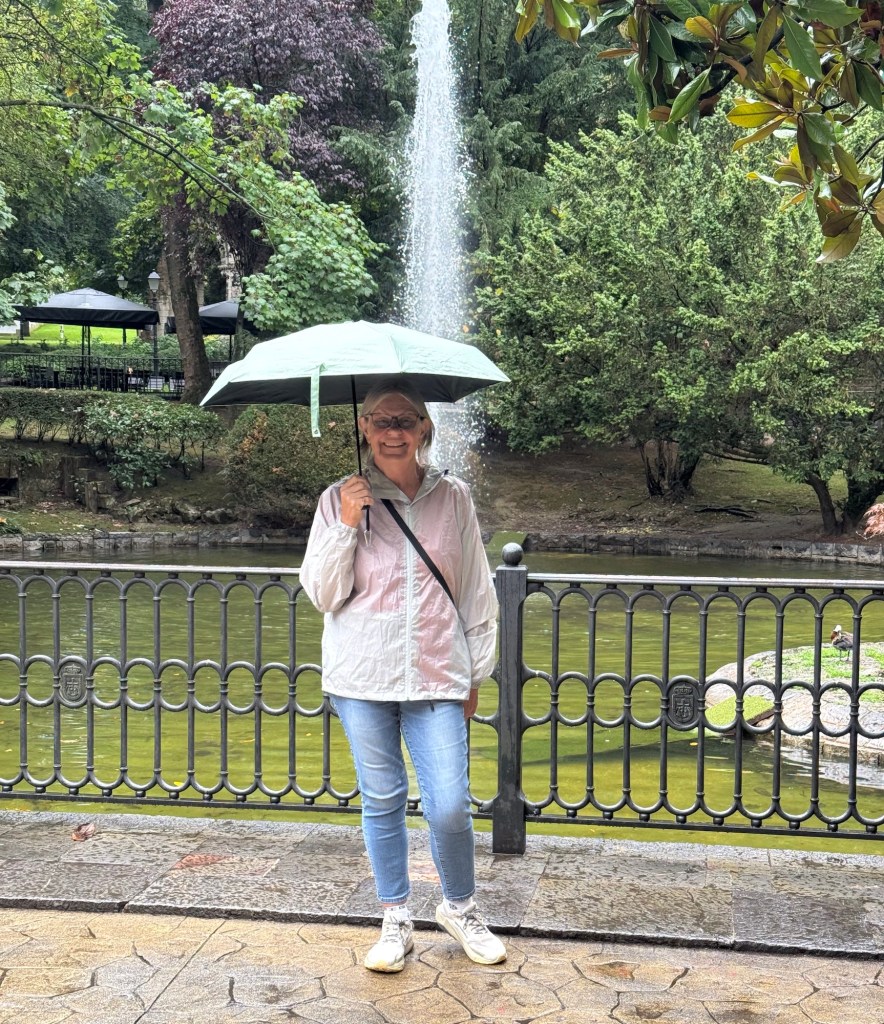
Fine drizzle fell for most of the bus trip to Oviedo. The temperature here was about 20 degrees and my skinny chicken legs in my shorts were feeling it after being in much warmer climate. Luckily I’ve put on a bit of padding around the waist to keep me warm.
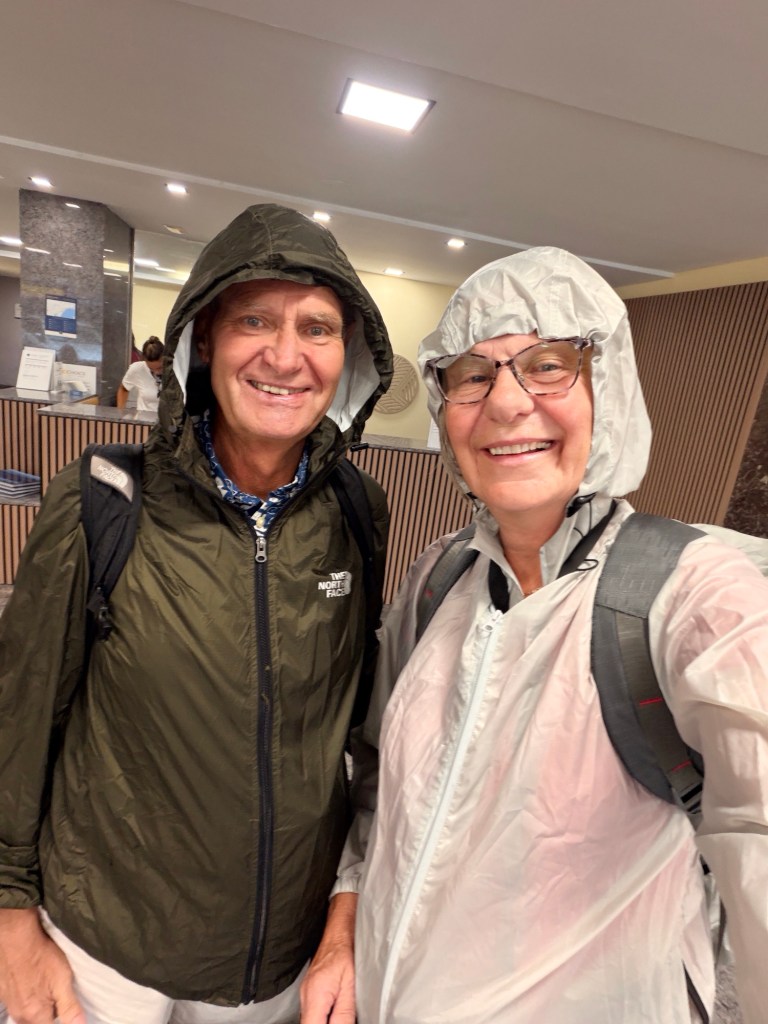
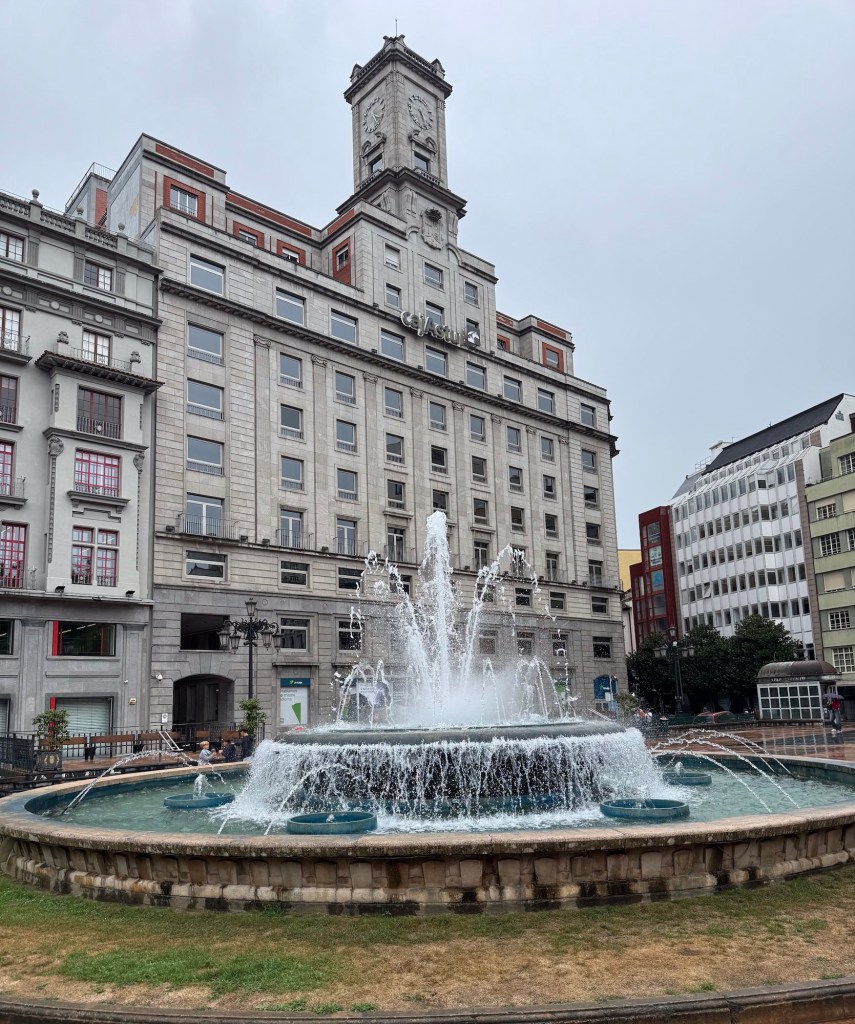
Oviedo is regarded as one of Northern Spain’s most attractive cities. It has a Christian history dating back to the 8th century so there’s a lot of history. In fact it is believed to be the first Camino route. The Camino Primitivo actually means the original way. It began in the 9th century when King Alfonso II “the Chaste” of Asturias walked about 313–328 kilometers from Oviedo to Santiago de Compostela after the tomb of Saint James was discovered.
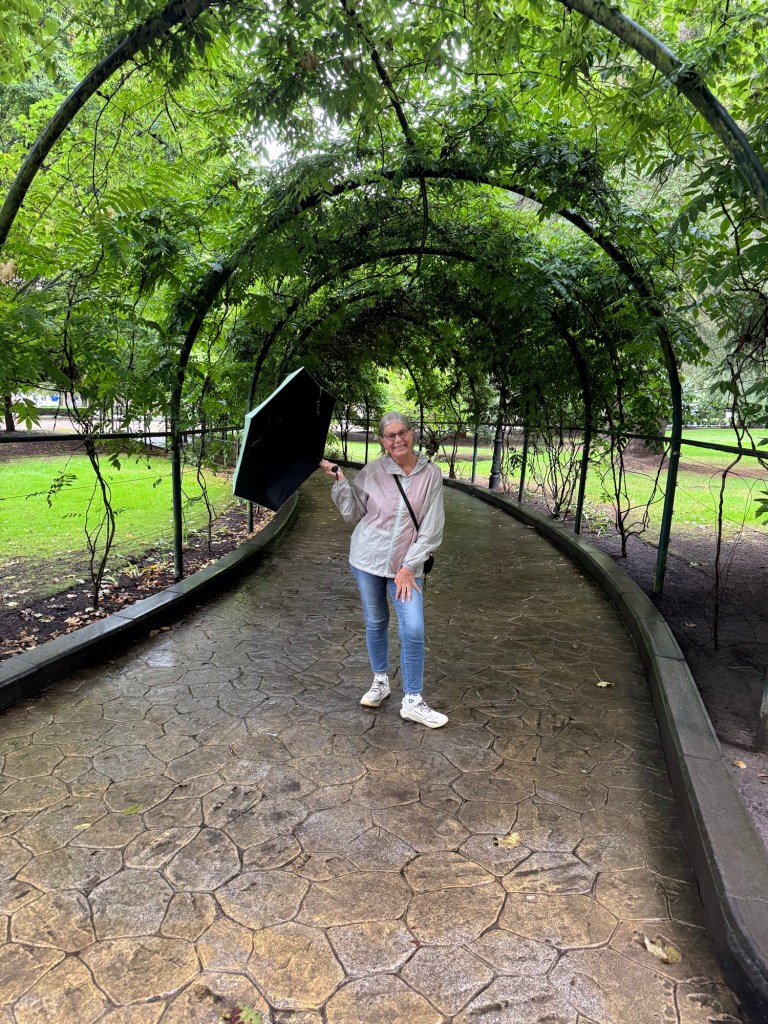
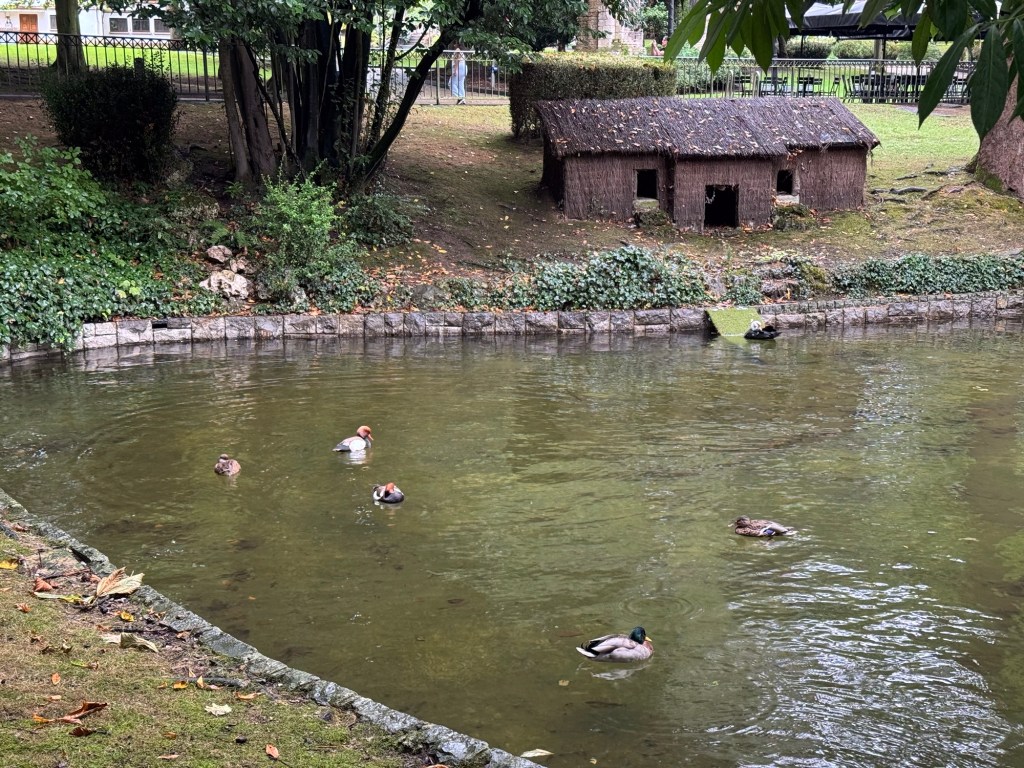
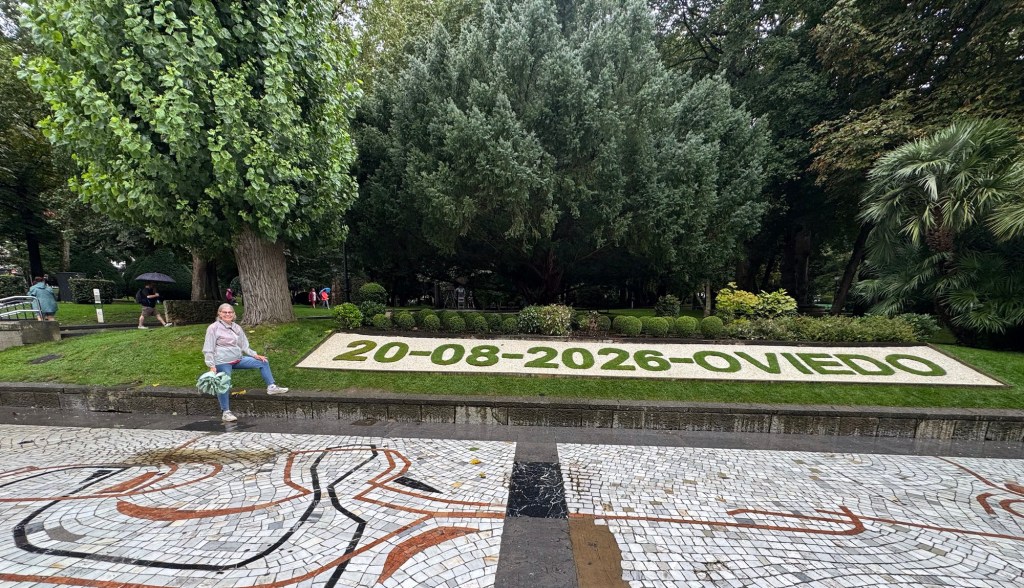
Our first priority when arriving was to buy some waterproofing spray for our boots and backpacks. I keep thinking we’re going to land somewhere where there’s going to be nothing to see or do but that’s not going to happen with Ruthie around! Actually, I’m glad it works that way as we have stumbled upon another wonderful Northern Spanish city. Certainly different to other old towns we’ve visited as the streets are wide and spacious (and not crowded!) Again, beautiful old buildings, manicured gardens and parks, it is regarded as the city of statues with over 100 in the city. Ruthie went shopping in the old town market and I stationed myself at a cafe for coffee and to test my Spanish with the locals.
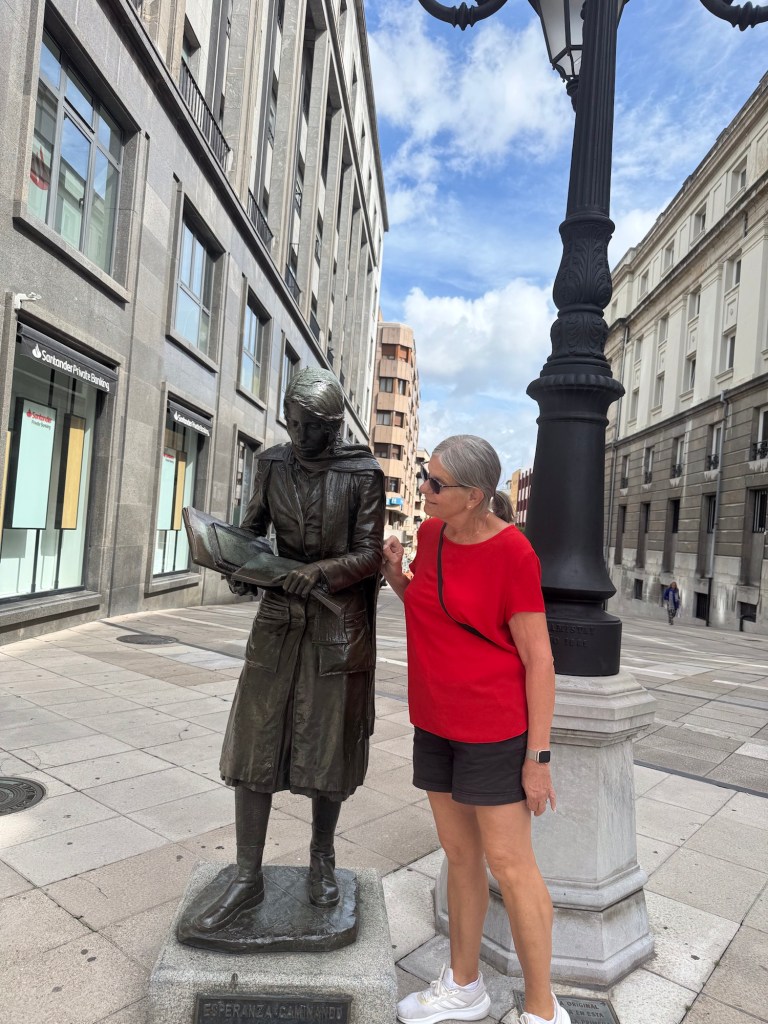
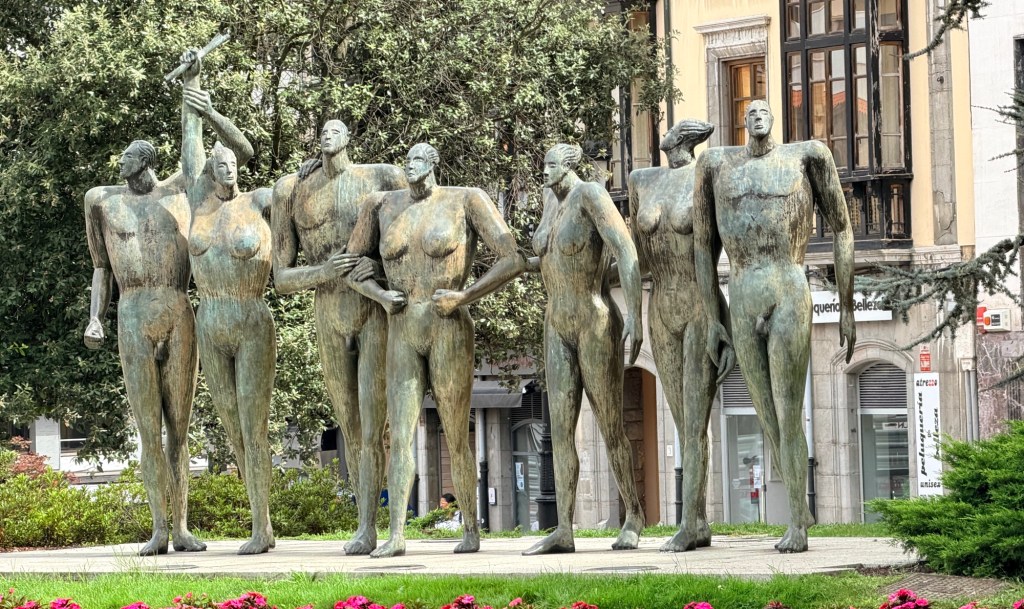
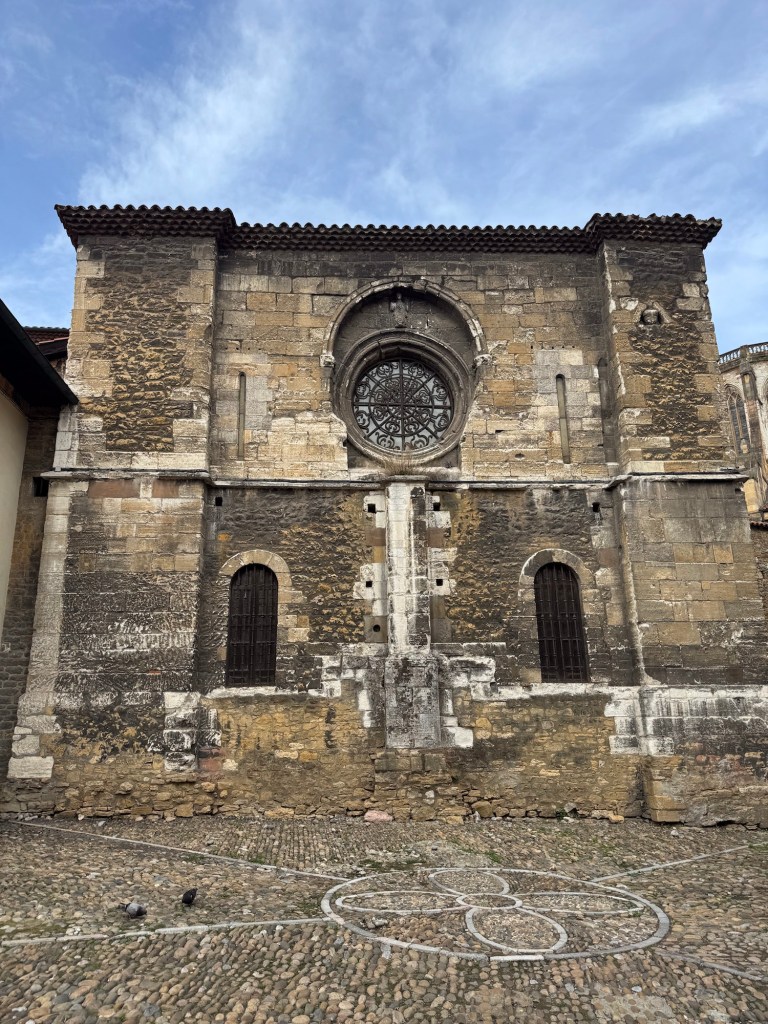
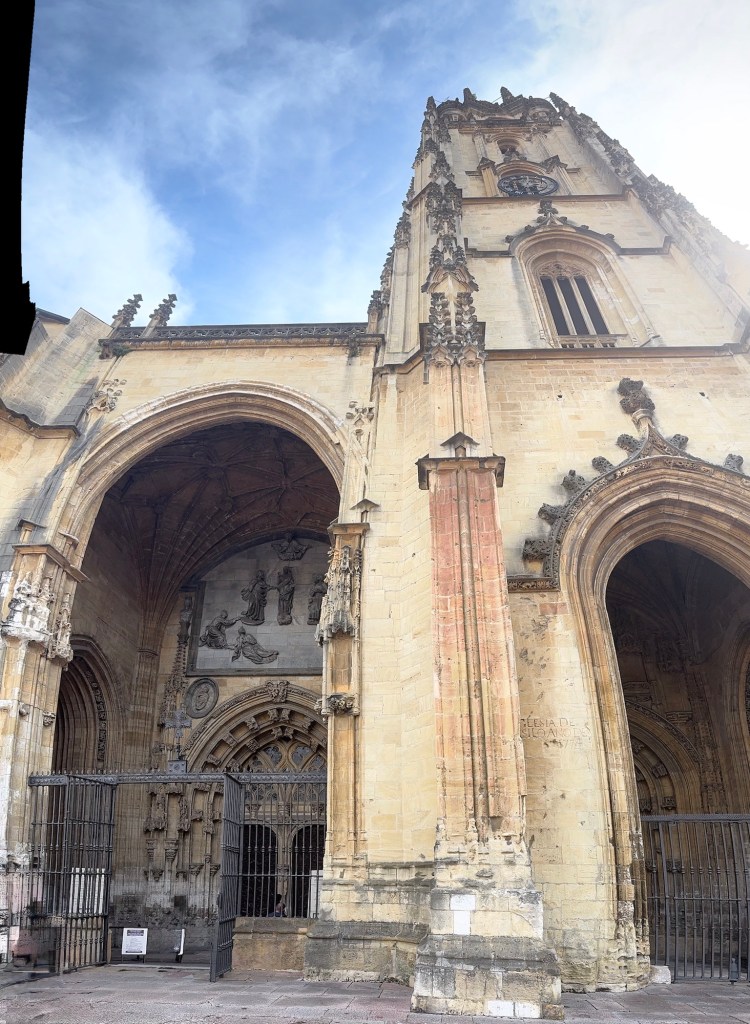
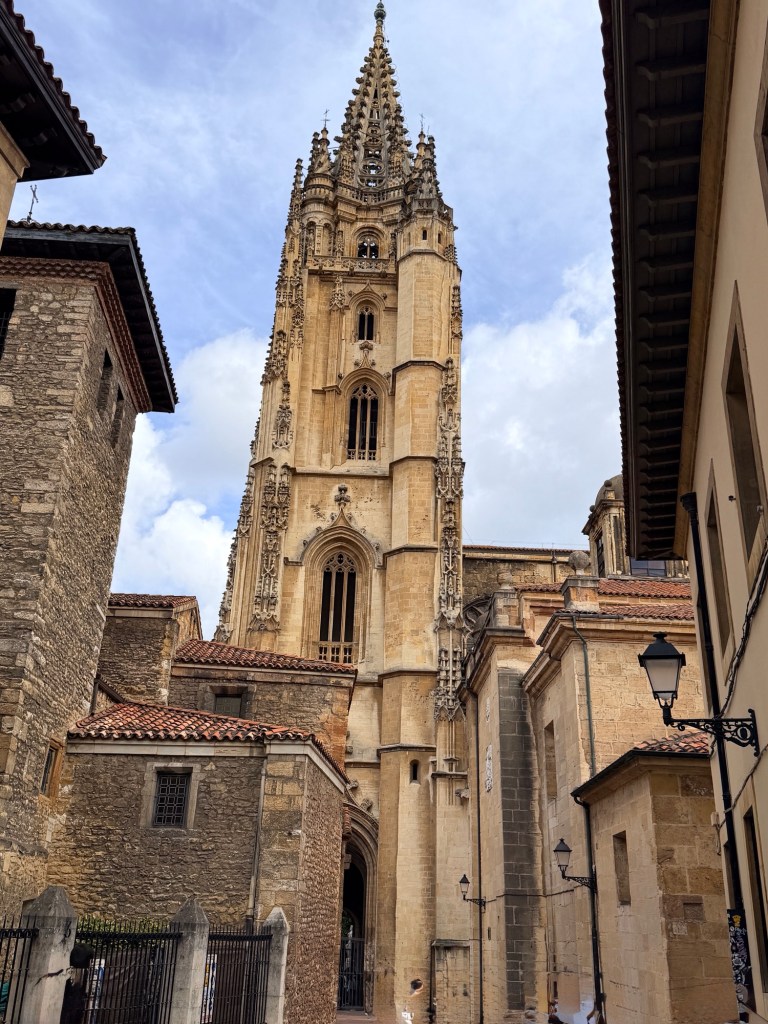
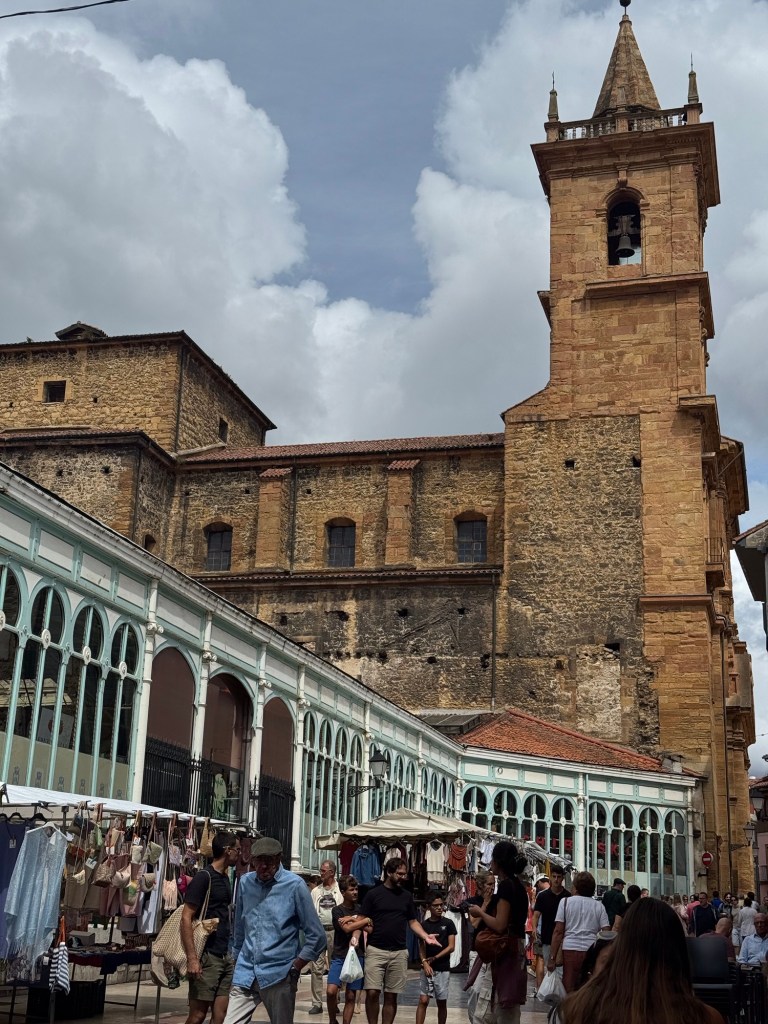
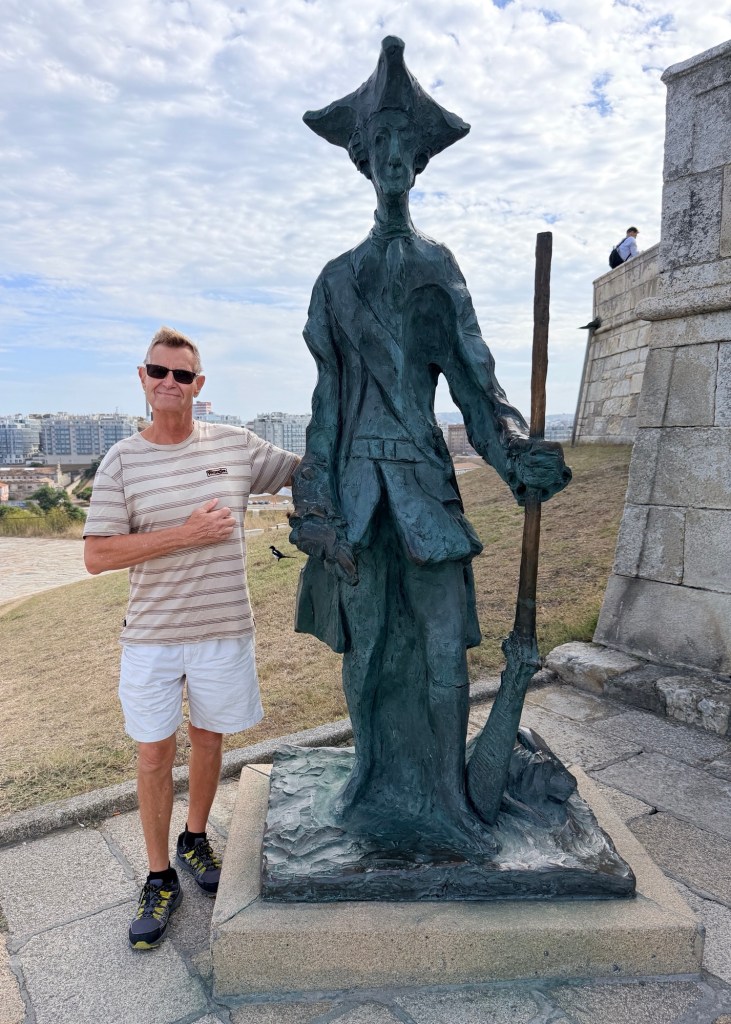
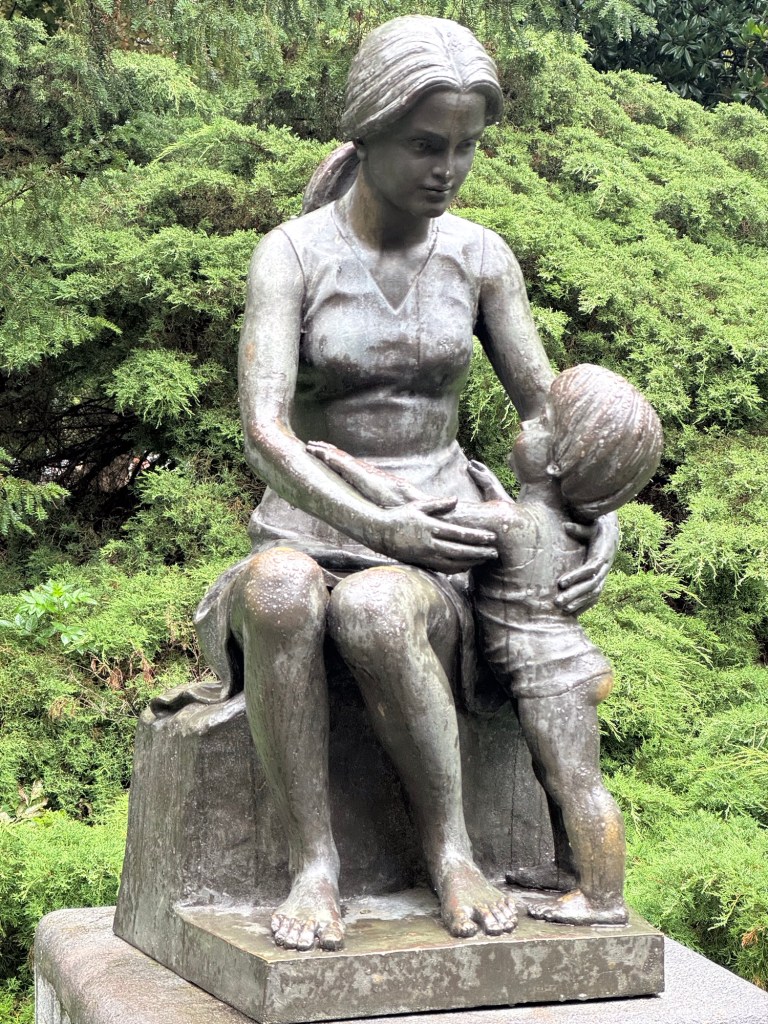
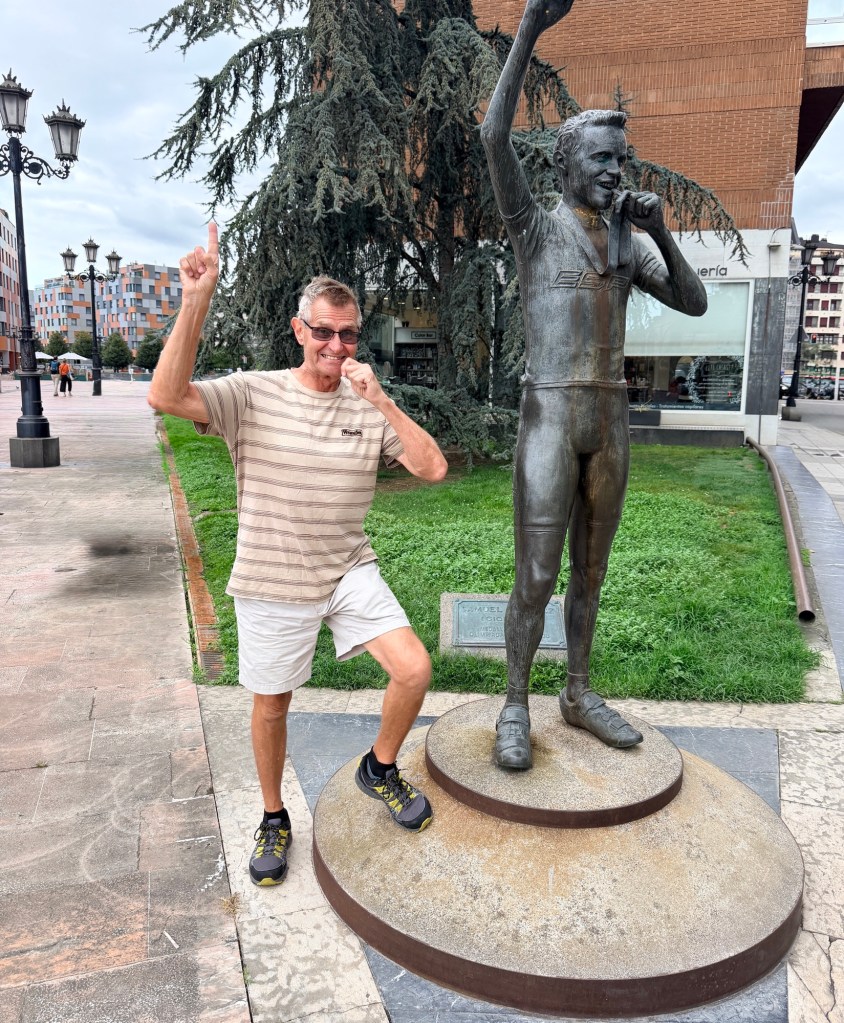
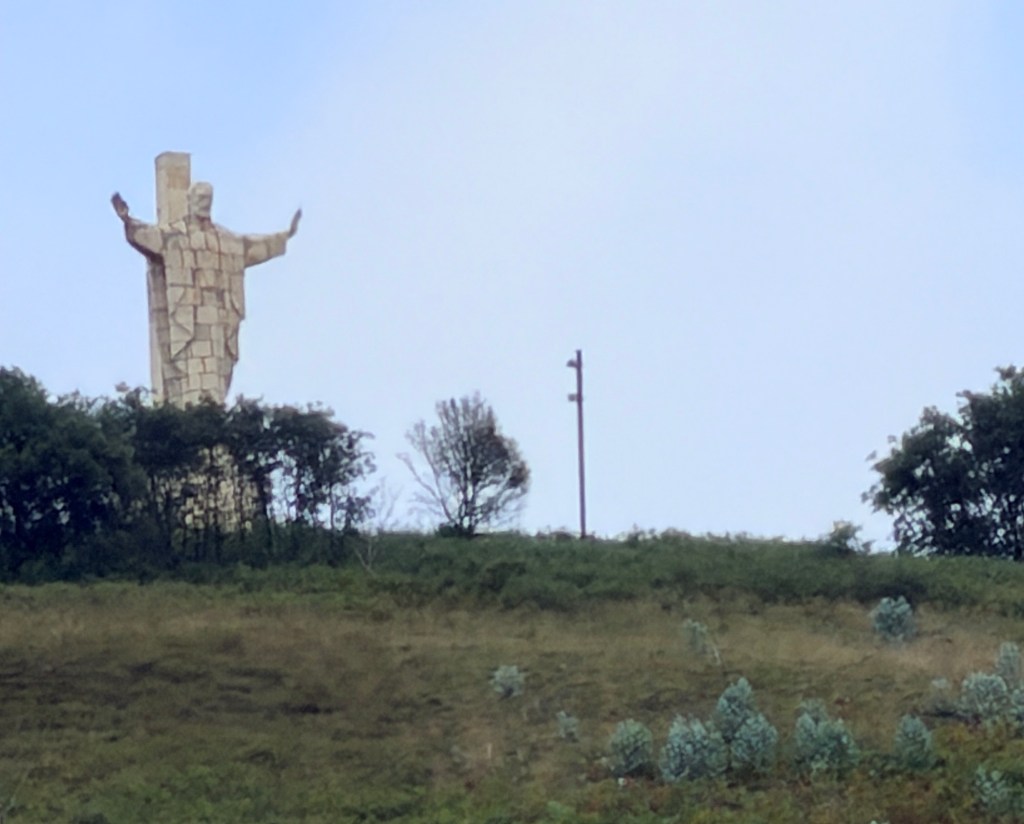
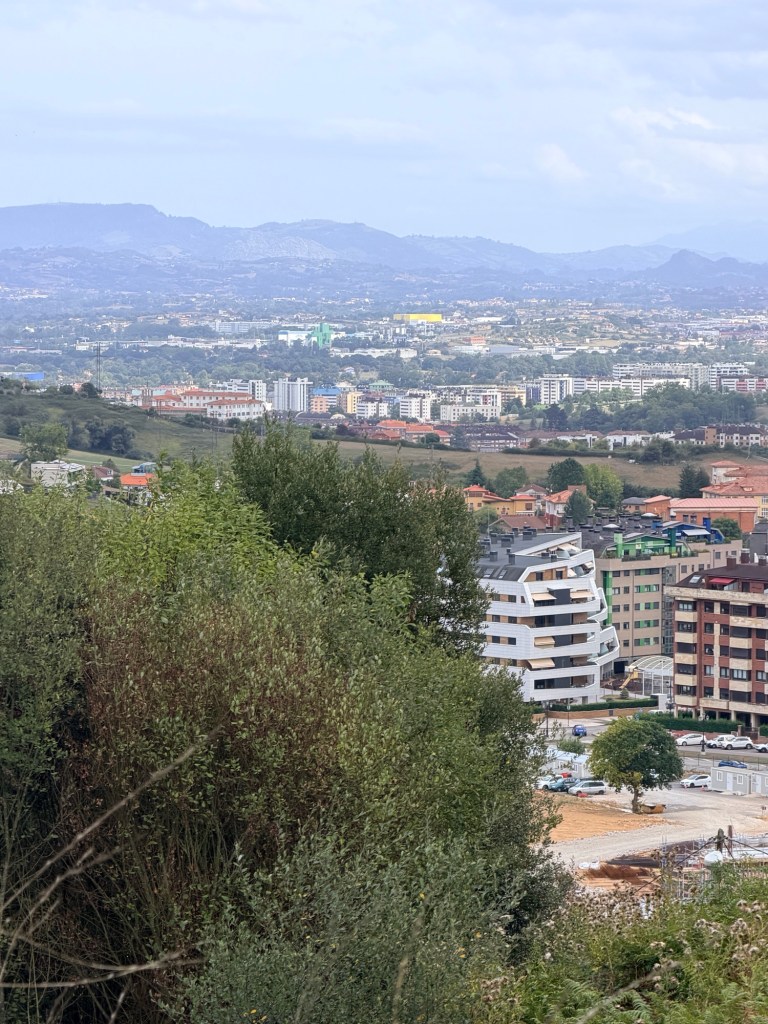
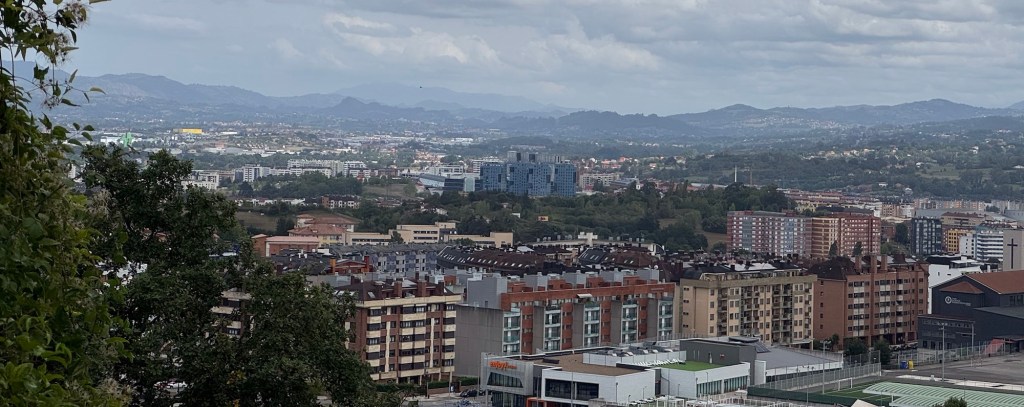
In the afternoon we hiked up to Monte Naranco, well actually we only went halfway, thinking we should save ourselves a bit for our El Camino walk starting shortly. We were up high enough to see the statue up top and get some great views over the city.
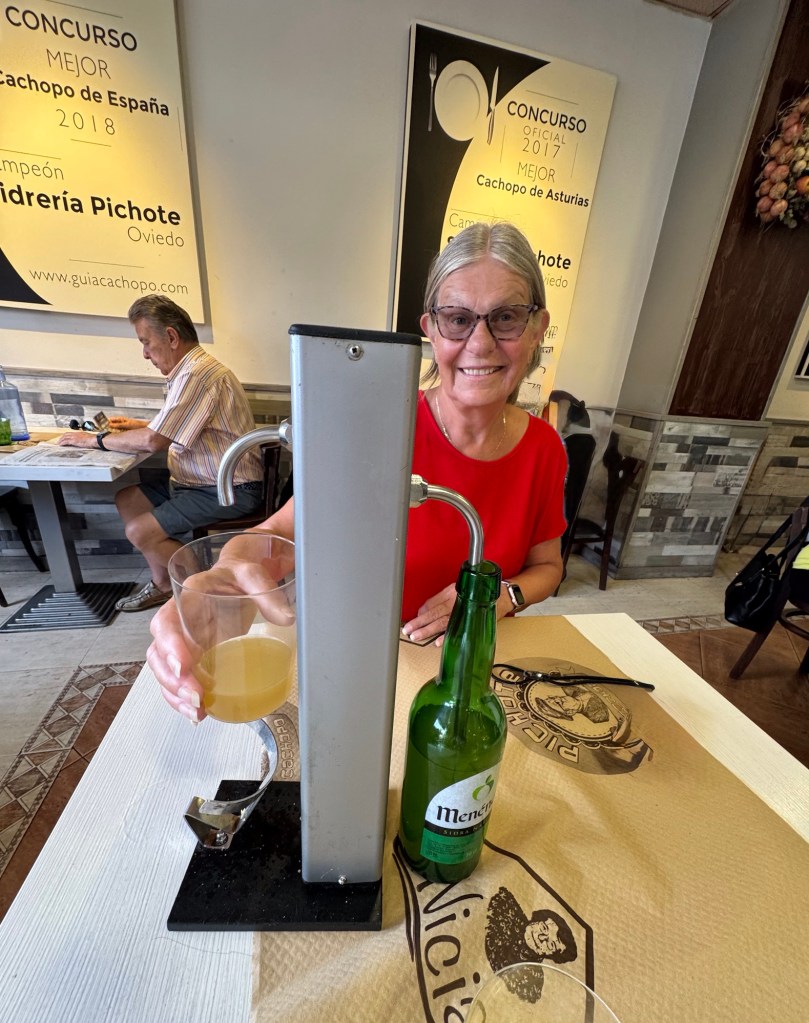
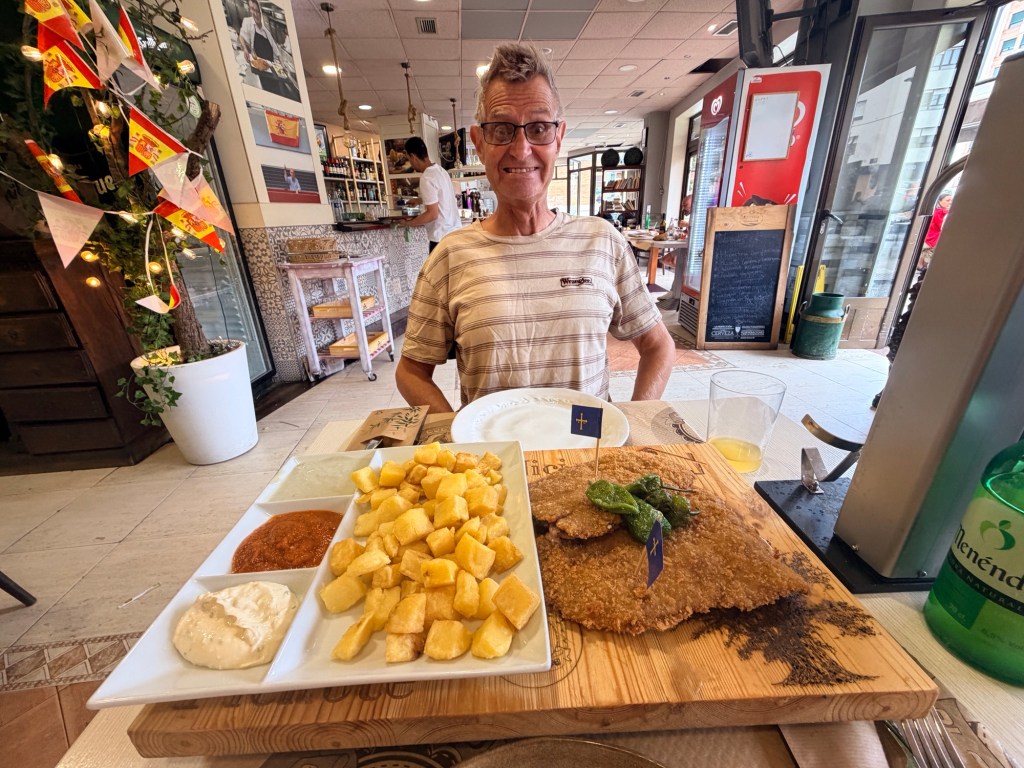
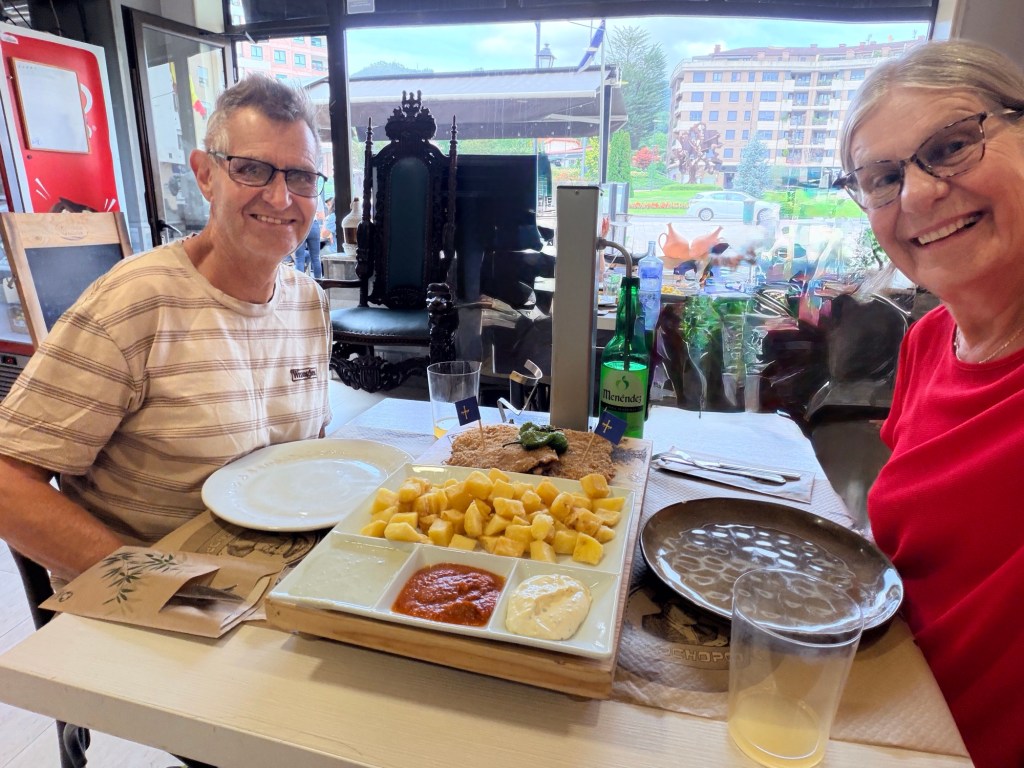
Oviedo is one of the best places in Asturias (the region) to experience a traditional Sidreria – a cider house/bar where Asturian natural cider is poured and enjoyed with local food. Coming down from our hike I googled where the closest cider bar was. It took us off the beaten track but what a little hidden gem. What to have in a cider bar? Cider of course. The bottle arrived at the table with a contraption to pour 2 fingers at a time. This was to ensure it was aerated and stayed fresh. While the cider tasted like home brew this bar has won awards for its Cachopo schnitzel meal . It was the first full meal we’ve had for a while as opposed to all the little bite size food we’ve been living on. It was scrumptious and we both walked away very full and content.
A Coruna
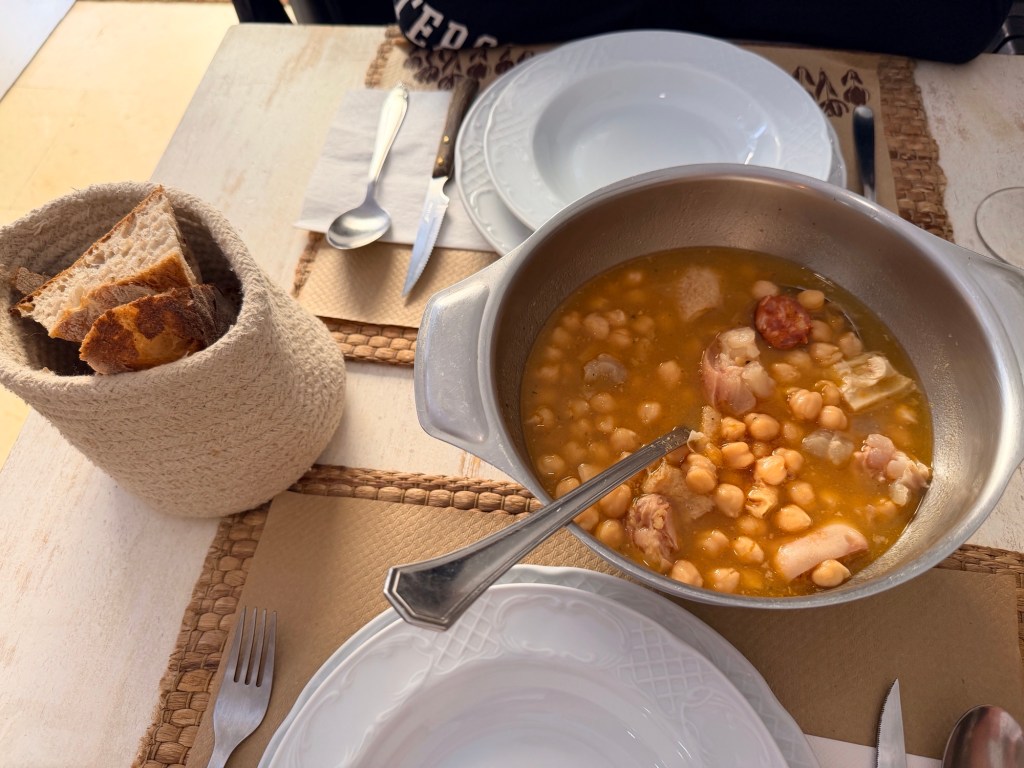
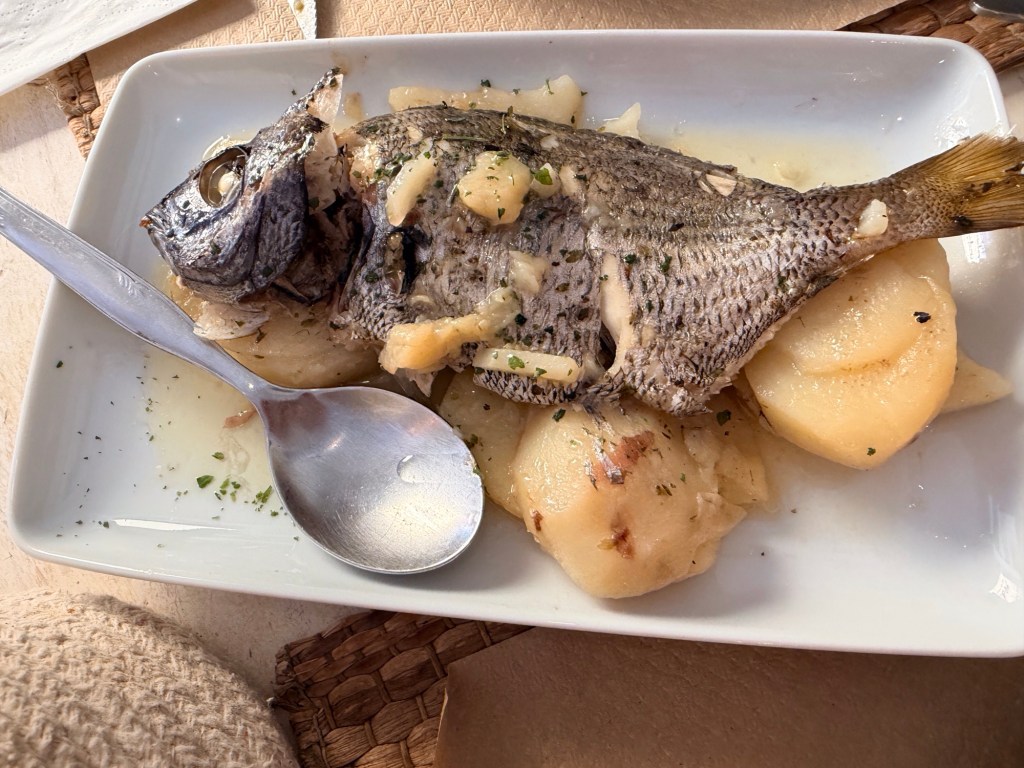
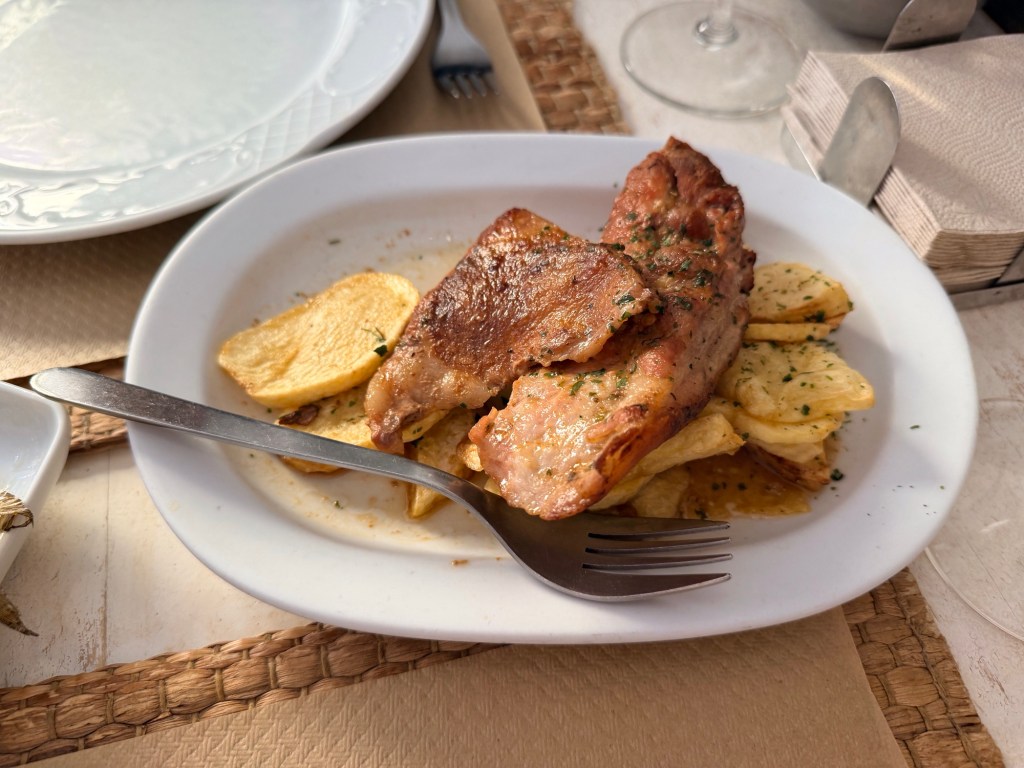
Our accommodation wasn’t ready, so we waited at a little restaurant around the corner. We had a great experience talking to a local lady drinking her Vermouth. She put us onto the local delicacies for lunch. Our selection was a white bean and chorizo stew and the local Galacian oven baked Sea Bass which was roasted in the oven over potatoes and thinly sliced onion. Delicious!
Ruthie had booked us in to a penthouse apartment with a view. By the time we had lugged our bags up 6 flights of stairs, each flight having 18 steps, (that’s 108 steep steps) I would have settled for a penthouse with no view on the bottom level!
It was comfortable though and fully contained.
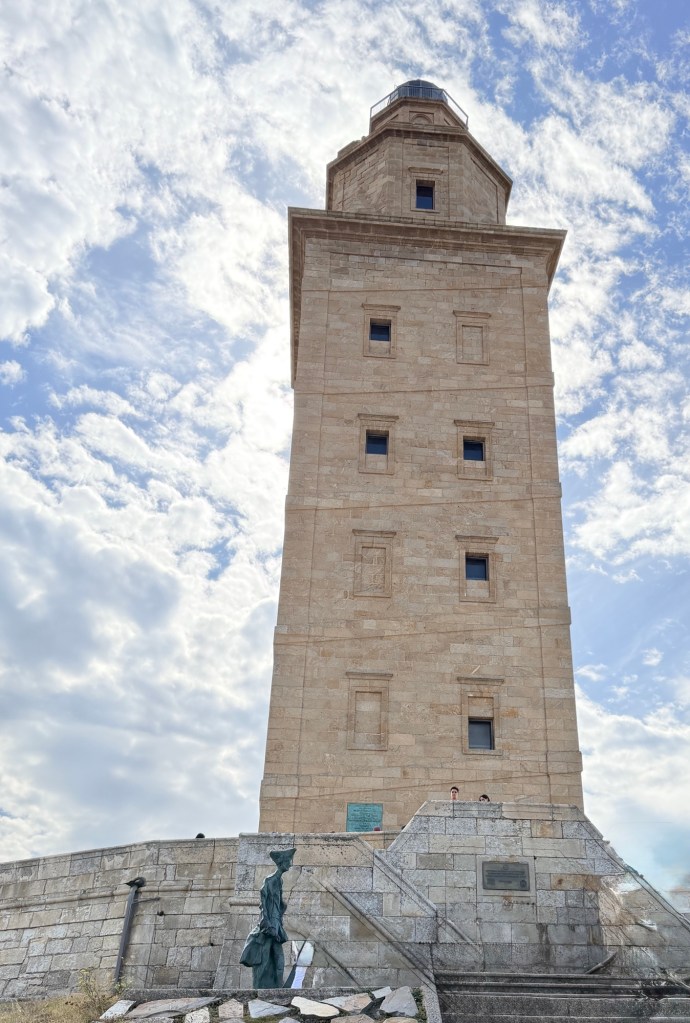
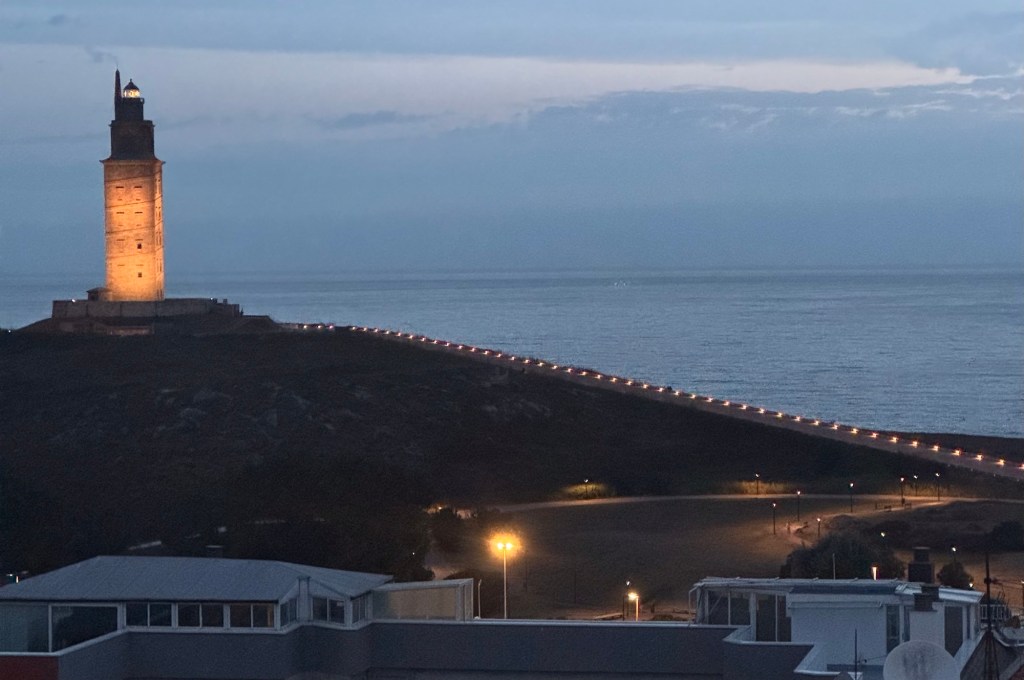
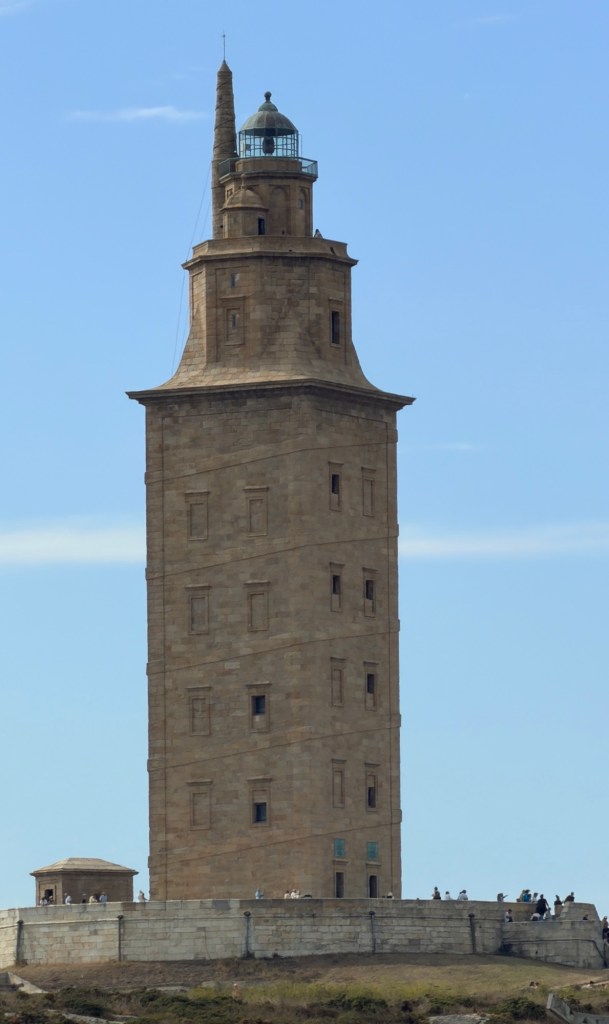
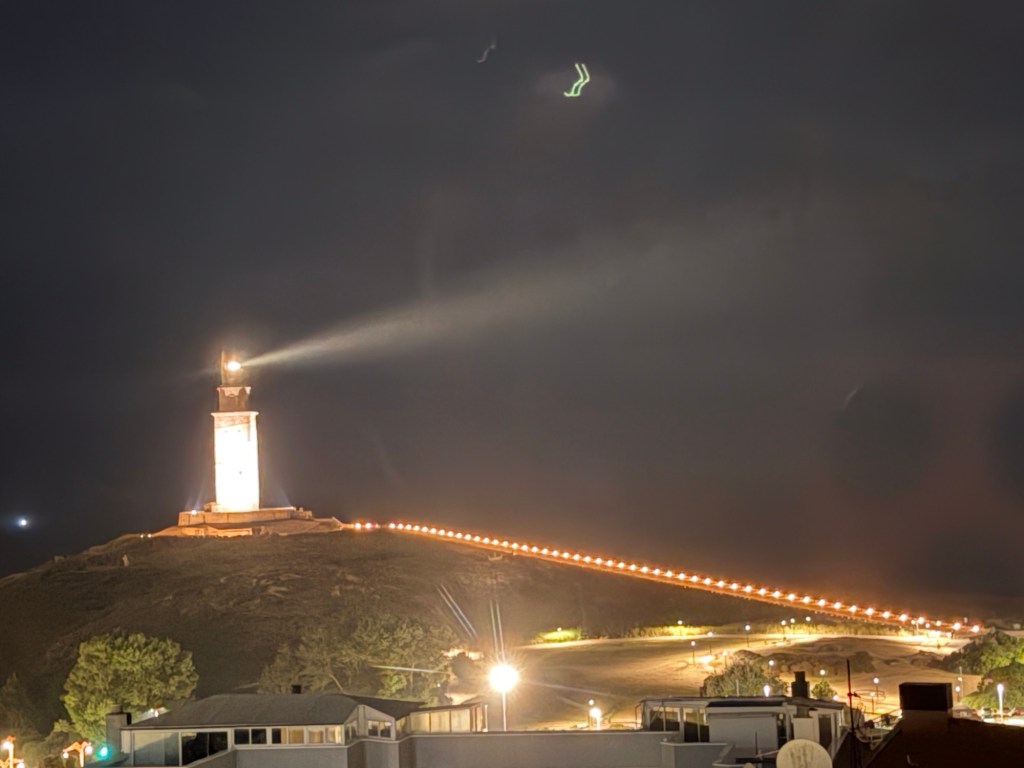
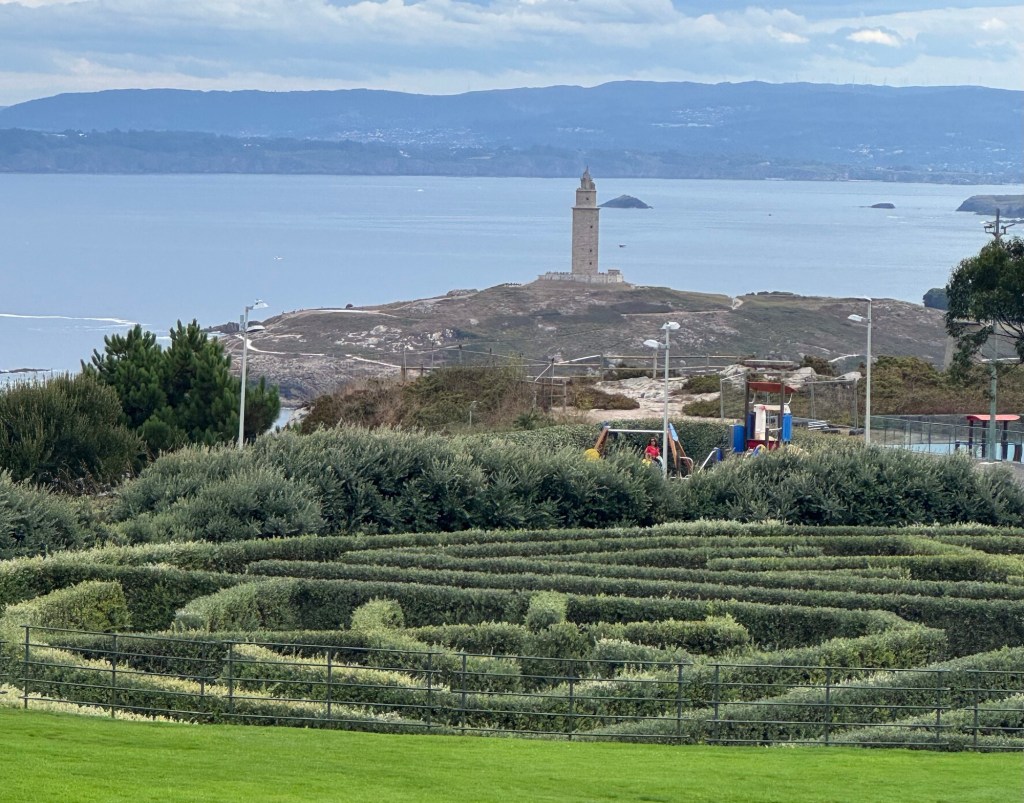
A Coruna is a historic port city on Galicia’s Atlantic coast, with a history stretching back more than 2,000 years. It’s most famous landmark is the Tower of Hercules, a Roman built lighthouse from 1st century AD that still operates. Ruthie soon had us out exploring the lighthouse and surrounds. We even got a great view of the lighthouse from our apartment which was a great sight all lit up of an evening.
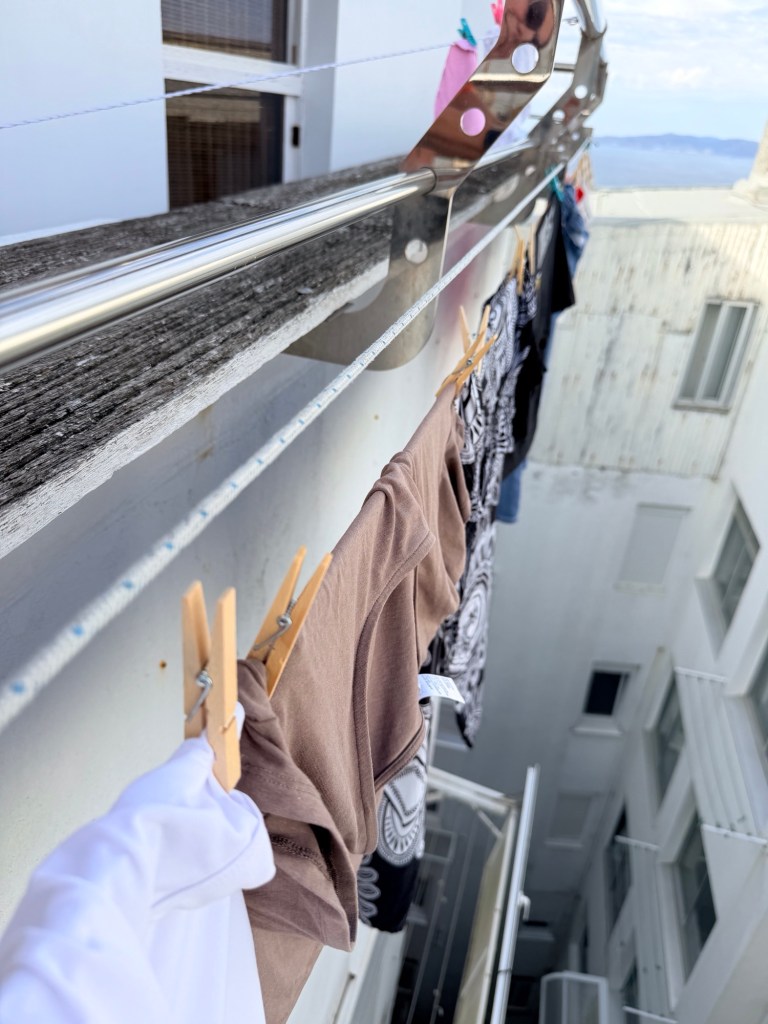
The next day we spent the morning organising our luggage transfer for our upcoming El Camino walk as well as doing some laundry. Our washing hung proudly over the edge of our 6th floor balcony, just like the locals. I was fearful that if the wind blew up we’d never see some of our clothes again.
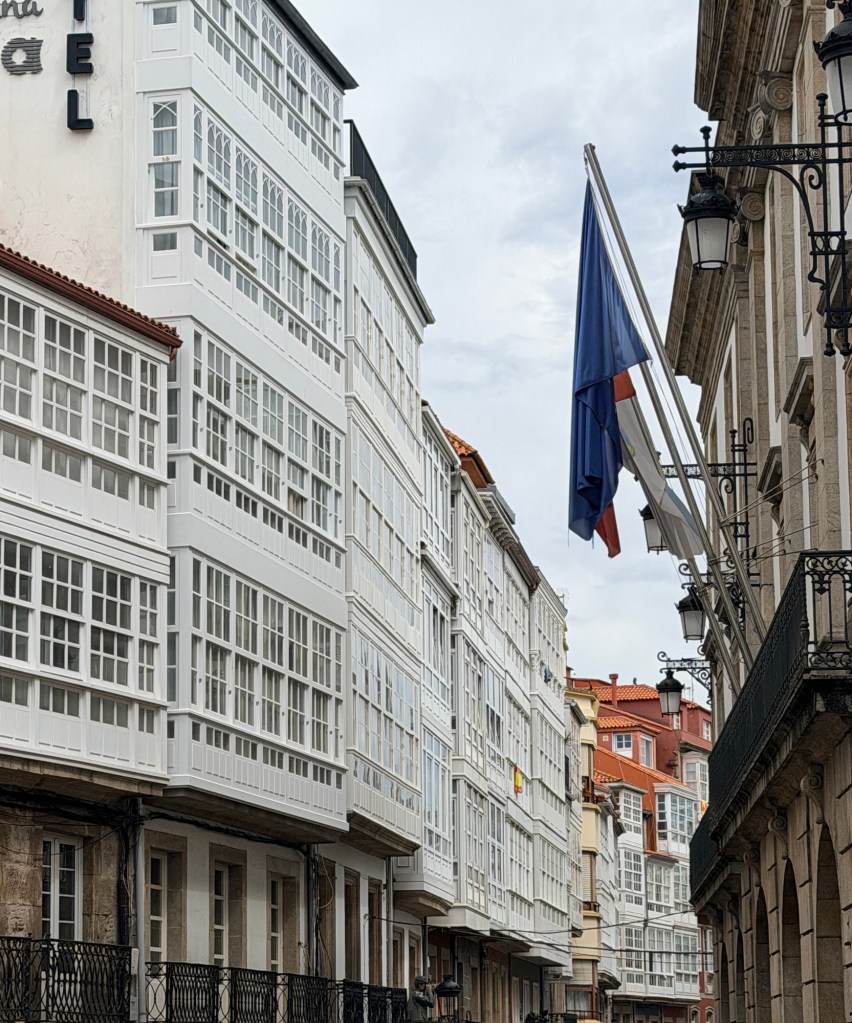
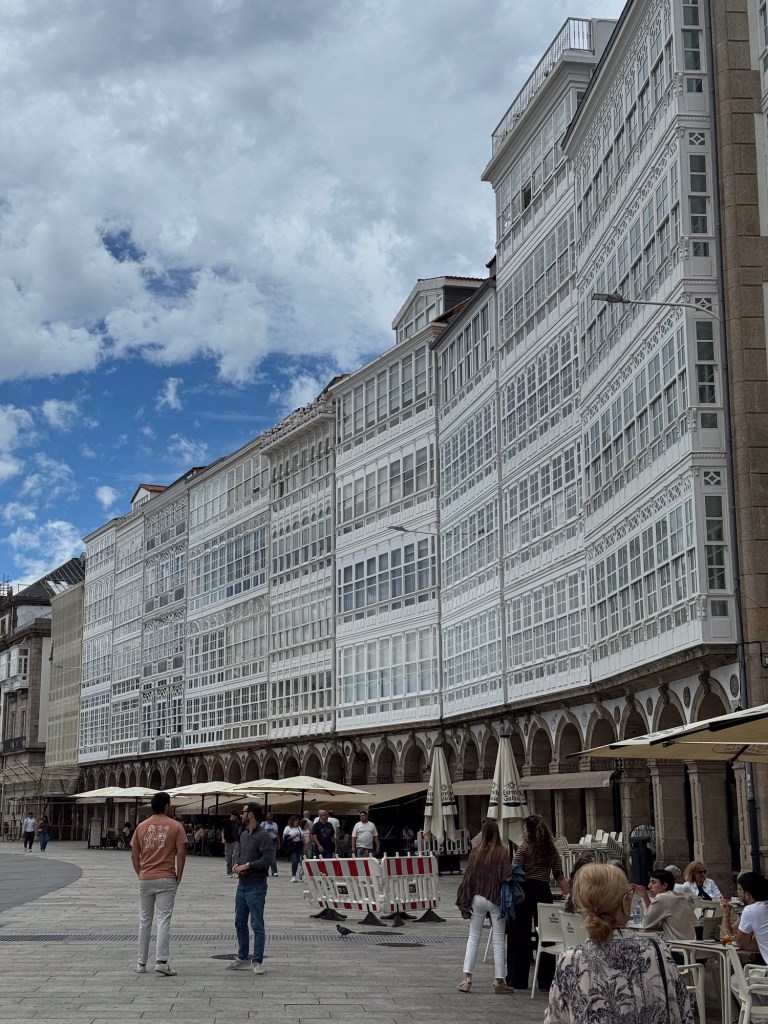
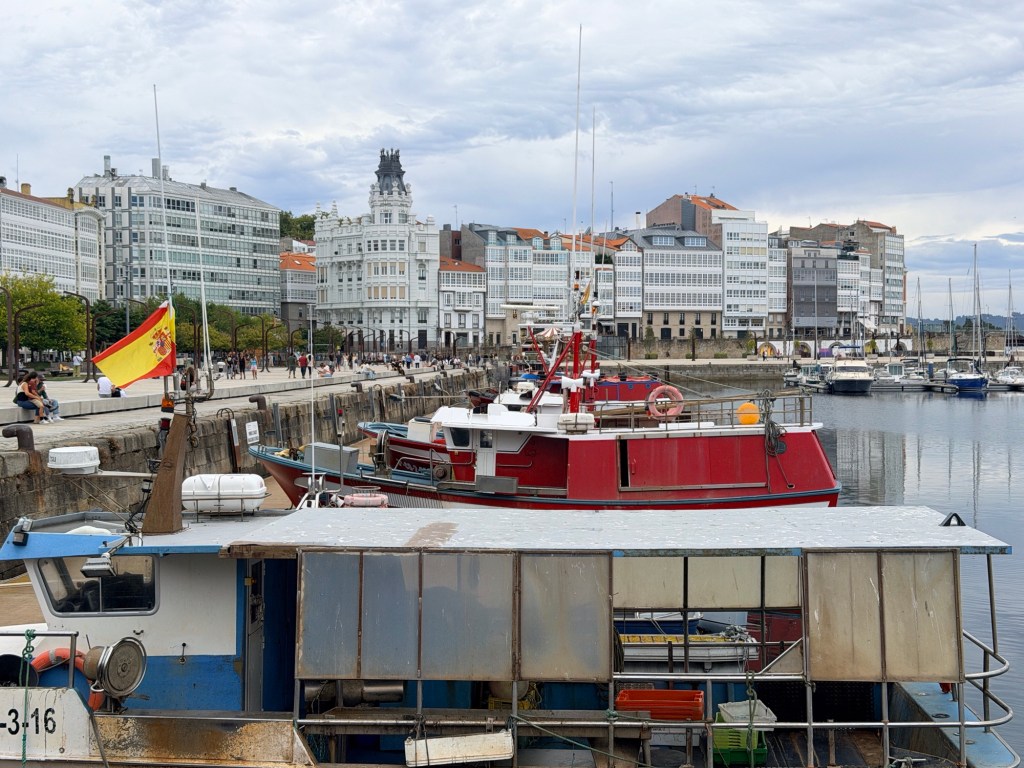
The afternoon was spent walking to the Marina where we came across glass fronted galerias which A Coruna is famous for. These are white painted buildings with many small framed windows. In fact the city is nick named “the city of glass”. A giant custard scroll was enjoyed before we walked back along the boardwalk trail.
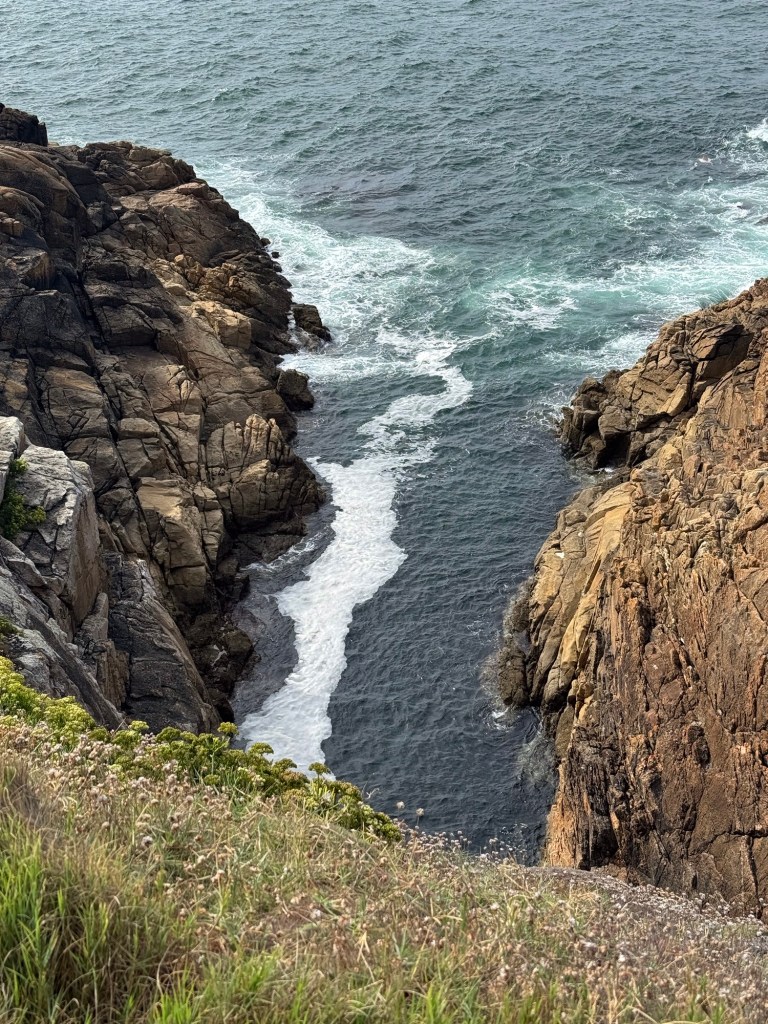
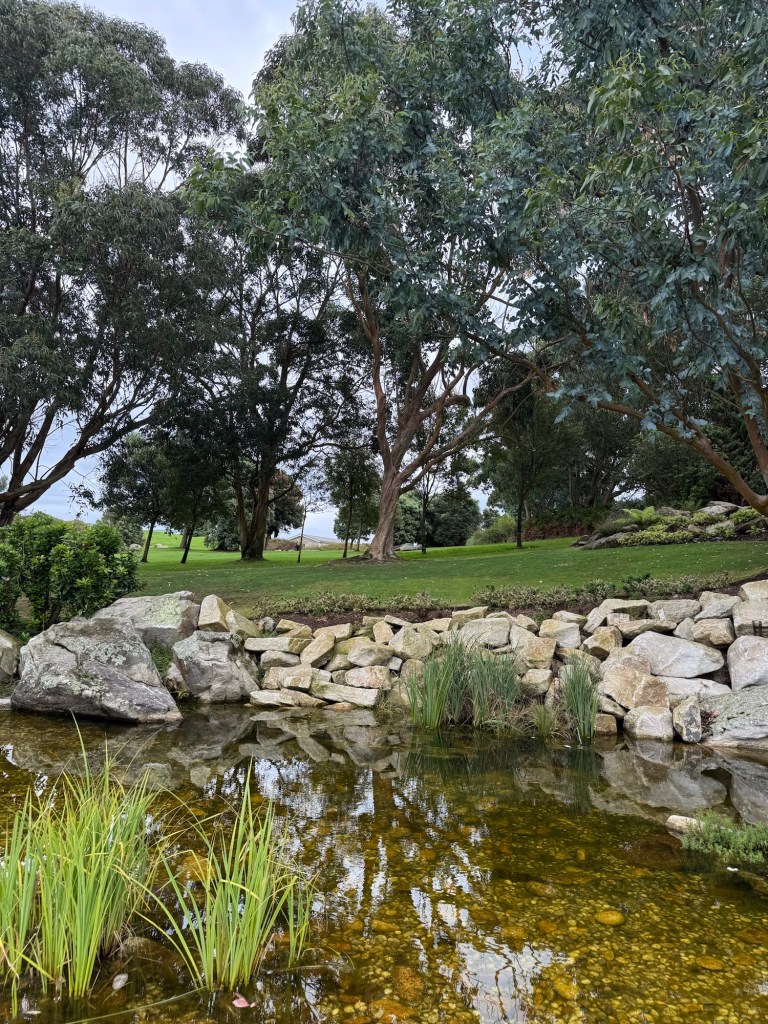
Rain was forecast for the afternoon today so we made the most of the morning by catching the bus to Monte de San Pedro. Another famous landmark that combines military history with spectacular ocean views as well as the city of A Coruna and the Tower of Hercules. There were gum trees along the path we took downwards and the smell of the gum leaves made me feel just a little homesick for the first time in 8 weeks.
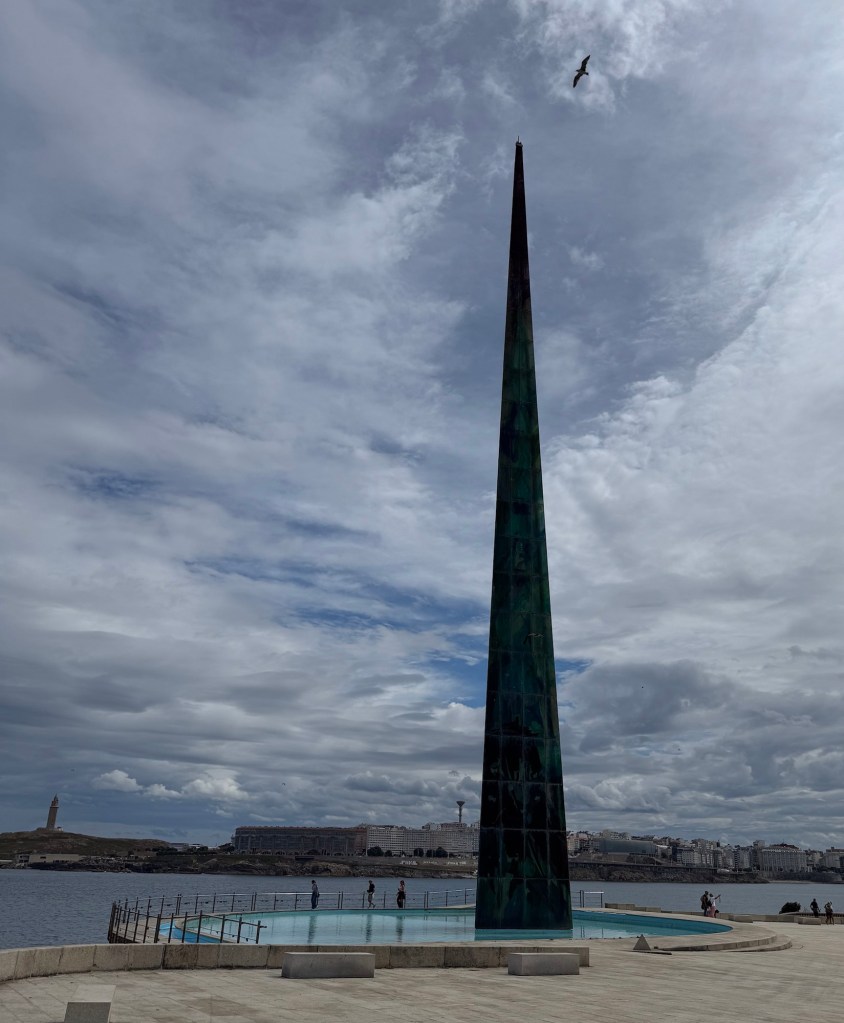
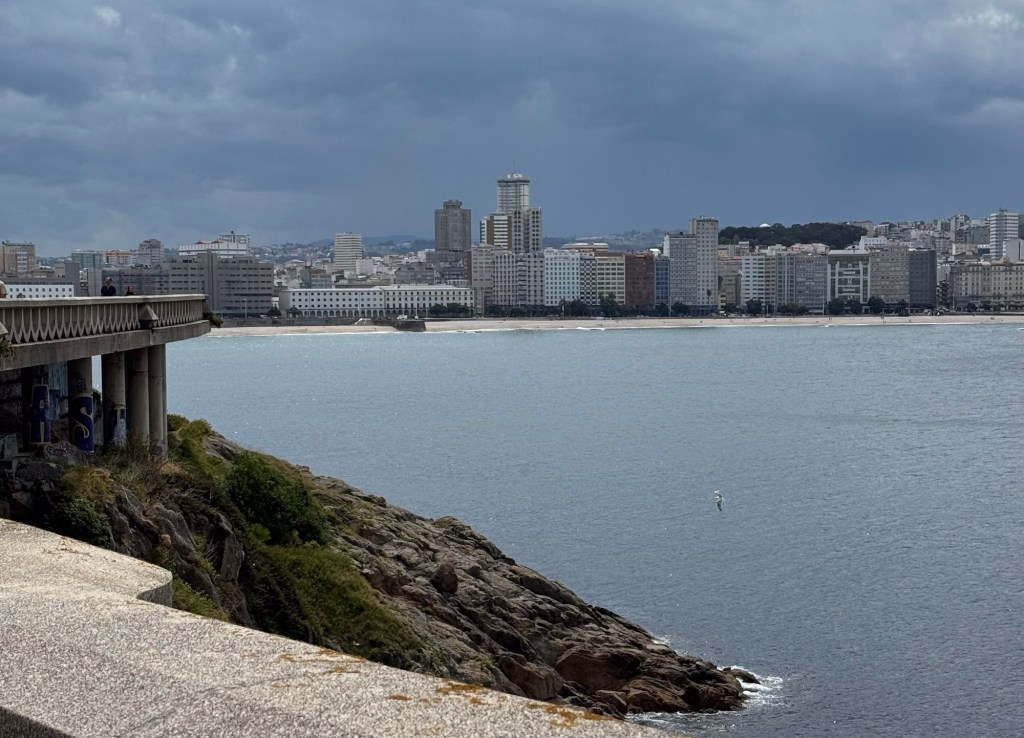
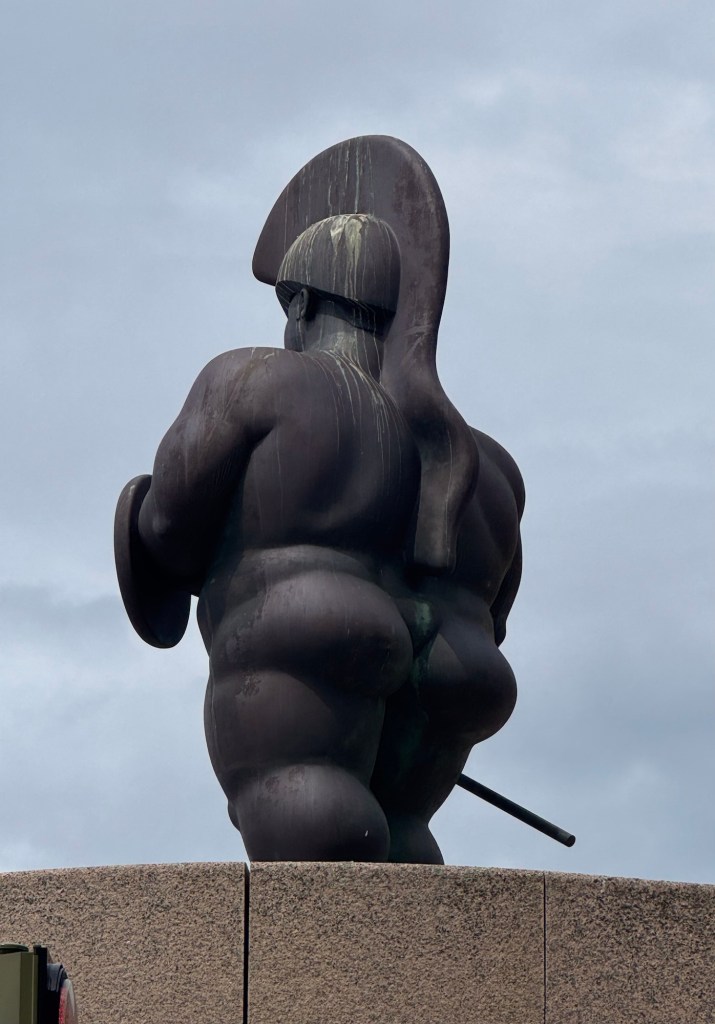
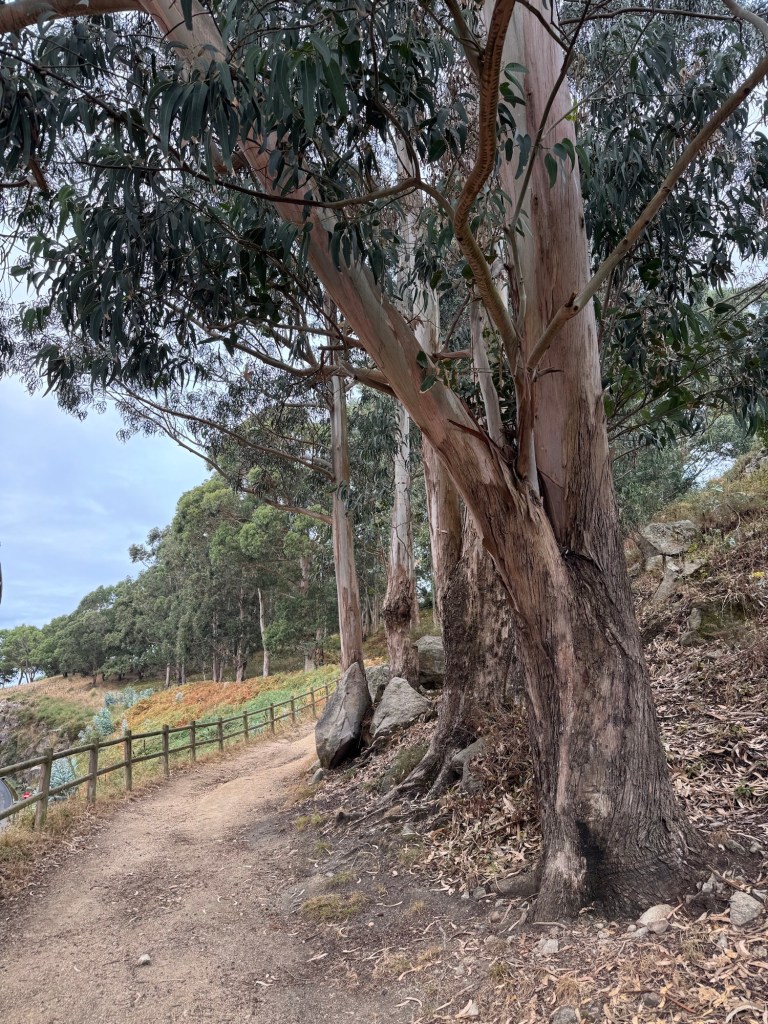
Travelling the Northern Spain coastline has certainly been one of the highlights of this European journey. In fact we love it so much we’ve decided to walk 120k’s of it. Wish us “Buen Camino”.


Ruth and John,
Your blog is fantastic. Erika and I travelled around Spain in 2008. As you know, we travelled a lot and when people ask me my favourite places in the world, San Sebastián is one of the best. The beauty of the La Concha bay, the friendly people, geography, climate, architecture not to mention the food and wine, OMG! I want to return😅 Enjoy the remainder of your time away. Ray🦋